
Cost Of Living In Canada In 2026: Real Expenses And What To Expect When Arriving As A Permanent Resident

Talking about immigrating to Canada should not stop at the immigration process itself. Obtaining permanent residency is an important achievement, but it is not the end of the road. In many ways, it is the beginning of a new stage that is equally important: settling in, organizing finances, and making sure you can truly build a stable life once you arrive.
That is where many newcomers are surprised.
Because arriving in Canada is one thing, and understanding what it really costs to get started is another. The Government of Canada expressly advises newcomers to research the cost of living in the place where they plan to settle, because costs vary significantly depending on location and housing is usually the largest expense. It also offers free pre-arrival services to help eligible newcomers and their families prepare before traveling.
There is no single cost of living in Canada. Costs vary by province, city, family size, lifestyle, and even the type of housing you choose. The purpose of this article is to offer a useful planning framework based on current official sources.
What are the components that make up the real cost of living?
In practice, a newcomer's real budget typically includes six major categories. That broader view is consistent with Statistics Canada's household spending data: shelter accounted for 32.1% of total household spending, transportation 15.8%, and food 15.7% in 2023.
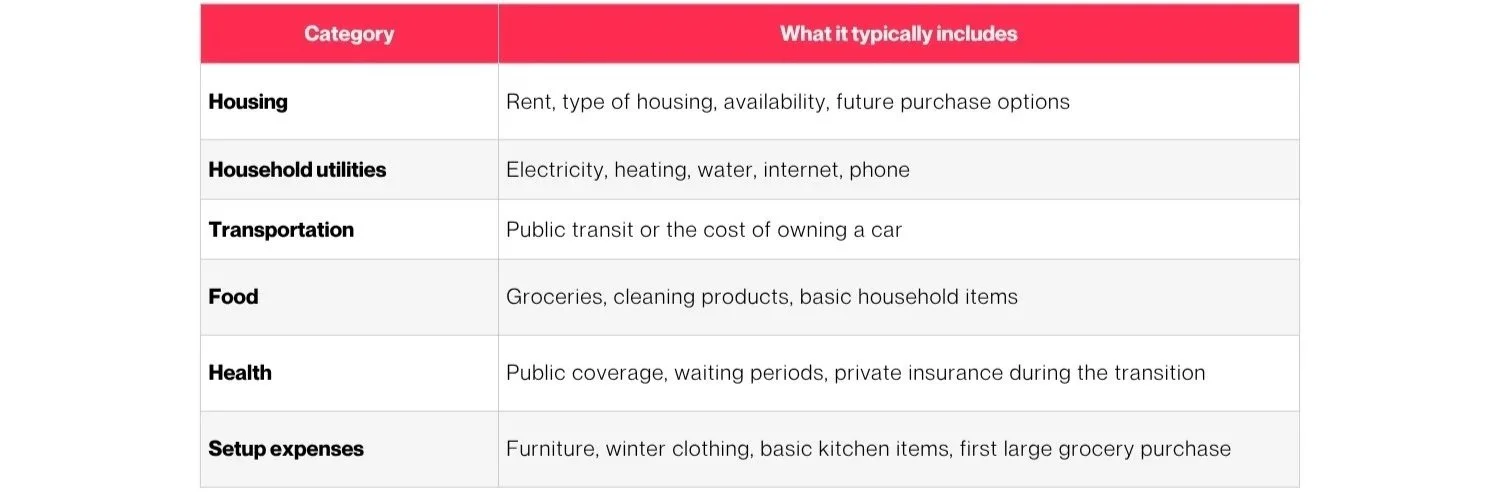
This matters because the first months in Canada are rarely just a normal monthly budget. They often include both monthly living expenses and one-time setup costs at the same time.
Housing: the expense that shapes everything else
Housing remains the most important cost category for most newcomers. CMHC reported that the national vacancy rate for purpose-built apartments rose to 3.1% in 2025, up from 2.2% in 2024. CMHC's 2025 rental data shows wide provincial variation in average rent.
Provincial average monthly rent reference — CMHC, October 2025, CAD
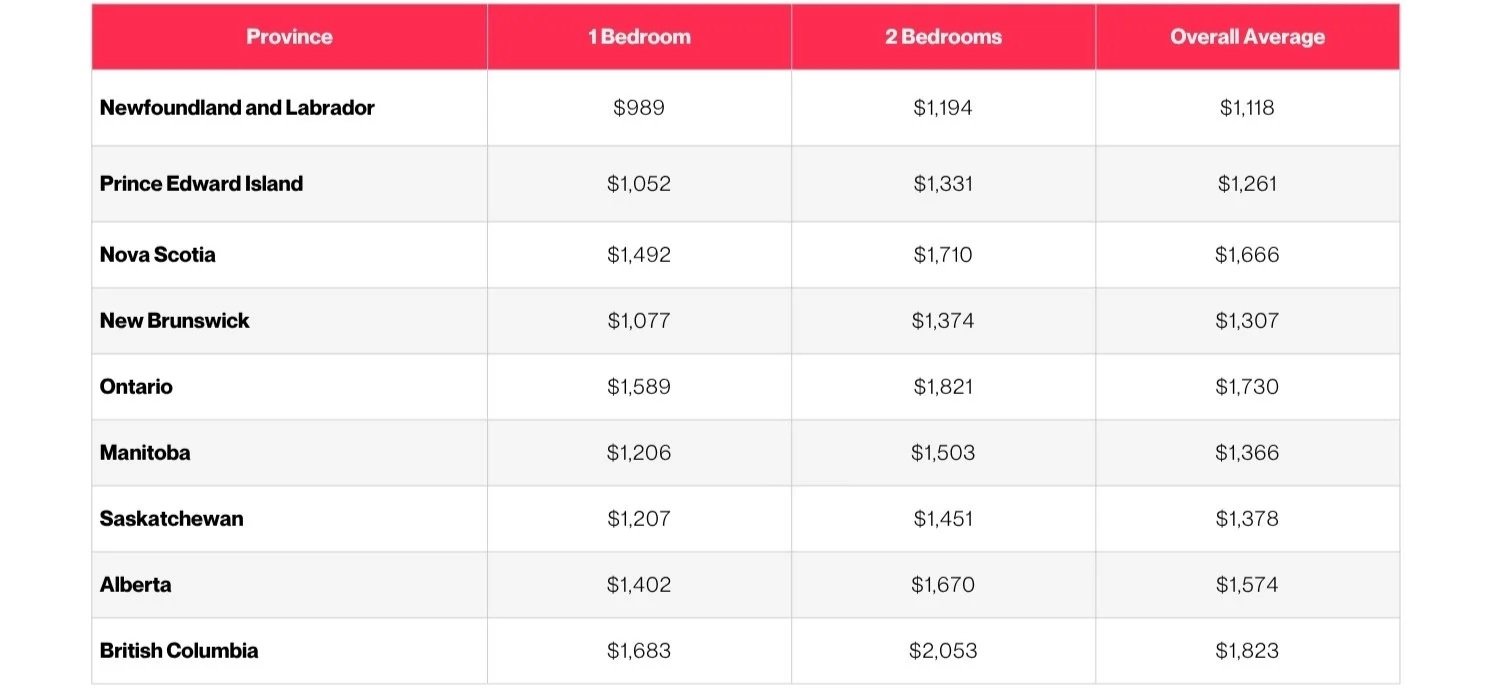
British Columbia and Ontario remain the most expensive provinces to rent in on average, while Manitoba, Saskatchewan, New Brunswick, and several Atlantic provinces remain more affordable. CMHC 2025 vacancy rates: 4.2% in Alberta, 3.3% in Saskatchewan, 3.2% in Ontario, 2.9% in Manitoba and New Brunswick, 2.6% in Nova Scotia, 2.1% in Newfoundland and Labrador, and 2.0% in Prince Edward Island.
Statistics Canada reported Q4 2024 averages of CAD 350,000 for new condominiums in Winnipeg and CAD 597,700 in Halifax, while Vancouver's average for new condominiums exceeded CAD 1 million.
What about the territories?
Canada also includes three territories: Yukon, the Northwest Territories, and Nunavut. The cost of living can be significantly higher than in most provinces, especially for food, heating, and basic utilities. Labor markets are smaller and housing availability may be more limited. Pre-arrival planning for these destinations requires deeper research and a more robust savings buffer than in the southern provinces.
Which provinces make the most sense based on your profile?
A better question than 'which province is cheapest?' is: which province makes the most sense for my goals and family structure? In general terms, Ontario and British Columbia remain strong for access to larger labor markets, while Alberta, Saskatchewan, Manitoba, and selected Atlantic destinations tend to offer a more useful balance for those also thinking about affordability and family life.
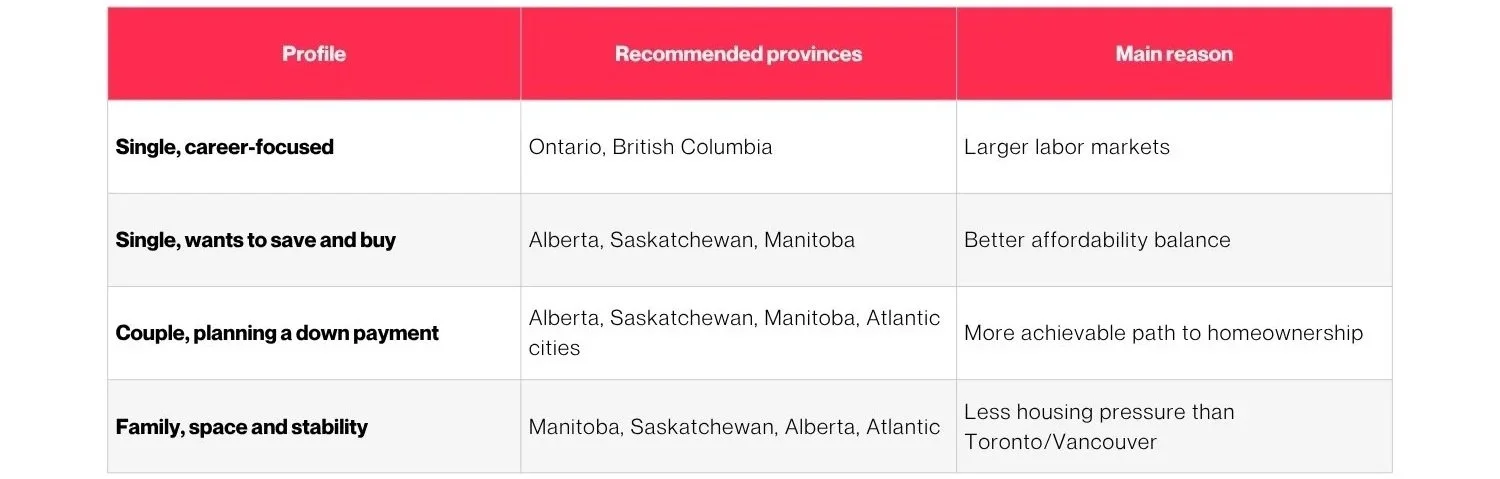
If you arrive alone: Alberta also has a daily budget advantage because it has no provincial sales tax. If you arrive as a couple: Alberta, Saskatchewan, Manitoba, and selected Atlantic cities tend to make more practical sense. If you arrive with a family: Manitoba, Saskatchewan, and Alberta stand out more for those who eventually want to buy a home.
Estimated monthly budget reference for a family of four
The following table is a practical planning reference. The numbers are estimated ranges and will vary by city, family habits, transportation needs, and type of housing chosen.
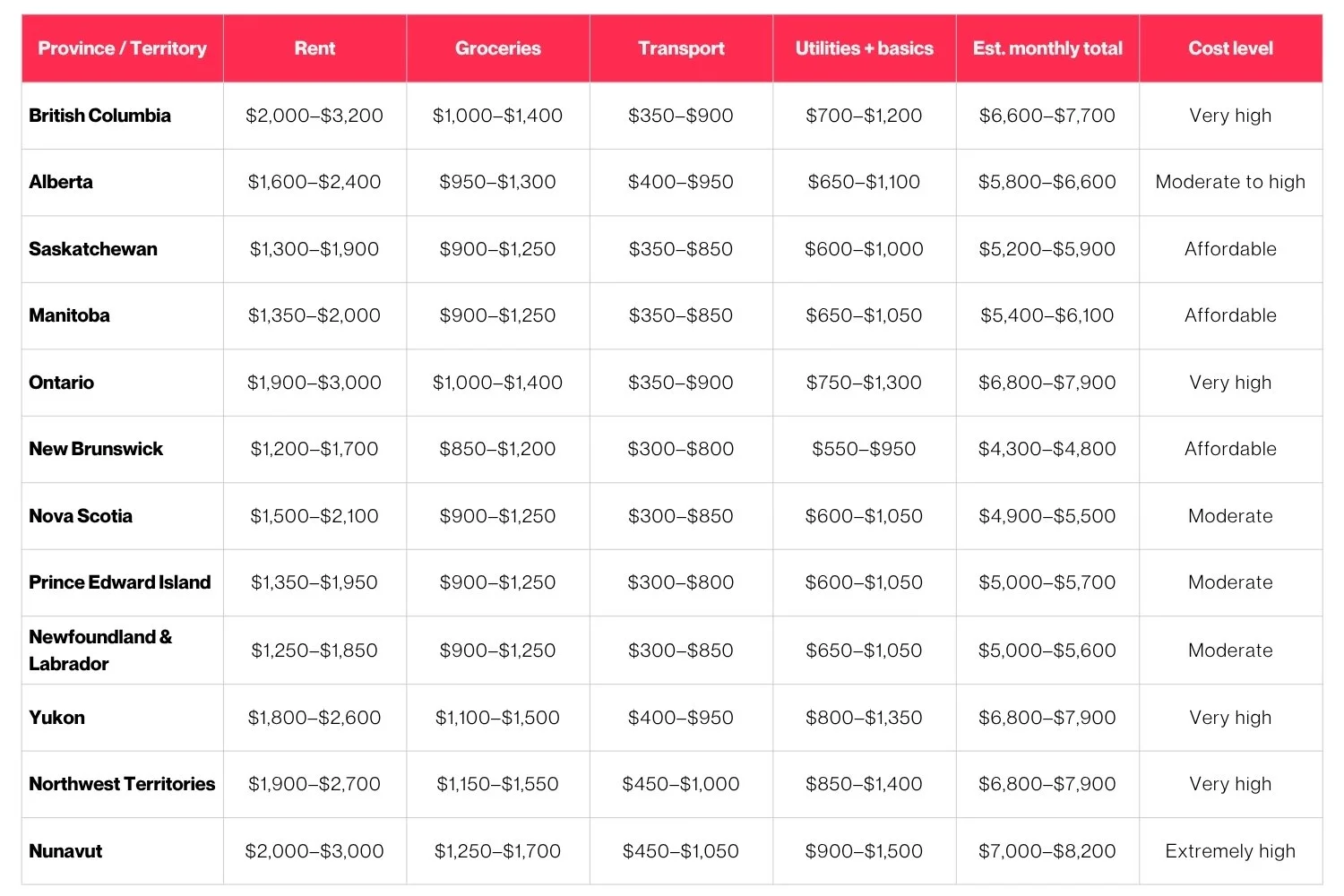
Most affordable overall: New Brunswick, Saskatchewan, Manitoba.
Moderate range: Nova Scotia, Prince Edward Island, Newfoundland and Labrador, Alberta.
Highest cost overall: Ontario, British Columbia, Yukon, Northwest Territories, Nunavut.
For a more detailed guide by province, including pre-arrival services, settlement factors, and resource links, refer to the provincial resource guide that accompanies this article.
Utilities, internet, and phone: the expenses that quietly shift the budget
Rent is only part of housing. The Government of Canada specifically tells newcomers to also plan for additional costs such as heating, electricity, phone, and internet when calculating their living expenses. A unit that looks manageable in monthly rent can feel very different once utilities are added.
Transportation: public transit versus owning a car
In larger urban centers, some newcomers can rely on public transit at least in the first stage of settlement. In smaller cities or less dense regions, a car may become necessary much sooner. Owning a car includes insurance, fuel, maintenance, registration, and repairs — not just the purchase of the vehicle.
Groceries and the basic basket: more personal than people expect
Statistics Canada reported that average household spending on food purchased from stores was CAD 8,659 in 2023. The basic basket in Canada may not look the same as in someone's home country. Products, shopping habits, brands, and household routines can be very different.
The health system: a major advantage, but not something to oversimplify
Newcomers can apply for provincial health coverage, but coverage rules are provincial and some provinces may have a waiting period of up to 90 days before public insurance begins. Private coverage during that period is recommended.
Initial setup expenses: the part people usually forget
Many one-time expenses tend to appear all at once in the first few weeks. These can include:
Basic furniture
Kitchen items and household essentials
Winter clothing or seasonal clothing
Children's items
The first large grocery purchase
Temporary private health coverage, if needed during a waiting period
Why does the savings fund matter so much?
IRCC explains that proof of funds is mandatory for programs such as the Federal Skilled Worker Program and the Federal Skilled Trades Program. The official table updated on July 7, 2025 establishes the following minimum settlement fund amounts:

These amounts increase for larger families. Funds must be available, legally accessible, and not borrowed.
Newcomer support and pre-arrival services can make a real difference
IRCC's official pre-arrival services are free and online for eligible newcomers. Once in Canada, federally funded newcomer services can help eligible permanent residents adapt to daily life, connect with settlement organizations, and access support. This article should be used alongside the provincial resource guide for more concrete planning.
The cost of living in Canada in 2026 should not be treated as a secondary topic. It is part of the immigration planning process itself. Canada continues to offer significant opportunities, but settling well requires preparation, careful budgeting, and a clear understanding of where you plan to live.
What matters most is not choosing the most famous province. It is choosing the province that gives you the strongest possibility of settling well. Because immigrating is not just about arriving. It is also about being able to stay, adapt, and build with stability.
At Global Opportunities
We always recommend starting first with the appropriate legal immigration assessment, because the first step is understanding where your profile is best positioned and which immigration programs you could realistically qualify for. Once that legal part of the process is clear, there is time to prepare financially and make informed decisions about the province or city where you may have the best opportunity to build a stable life.
An assessment with Global Opportunities is always available, and we strongly recommend it for anyone who wants to approach Canada with a strategy that is not only legally sound, but also well-grounded from a settlement and cost-of-living perspective.