
ECA vs Professional License In Canada: Understand The Difference Before Planning Your Move
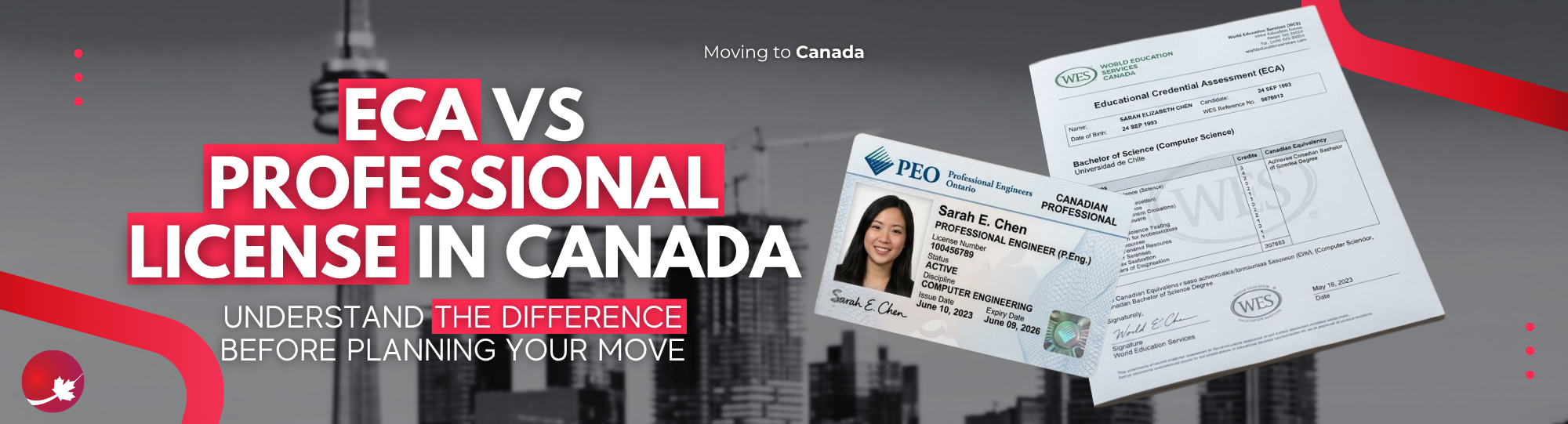
One of the most common points of confusion in immigration planning toward Canada is the topic of credential evaluation. Many people have heard that they need to have their foreign degrees evaluated before applying. Others have been told they need to obtain recognition of their professional credentials before they can work in their field in Canada. And many assume these two processes are the same thing. They are not.
There are two completely separate processes that every internationally trained professional needs to understand. The first is the Educational Credential Assessment, known as ECA — an immigration tool used to verify the academic equivalency of a foreign degree in the context of a visa or permanent residence application. The second is the licensing or registration process that allows a person to practice a regulated profession in Canada — a process managed by provincial regulatory bodies, not by IRCC, and one we consistently recommend initiating after obtaining permanent residence.
This article explains both clearly, in separate sections, so there is no confusion between them.
THE EDUCATIONAL CREDENTIAL ASSESSMENT (ECA)
What is an ECA and what is it used for?
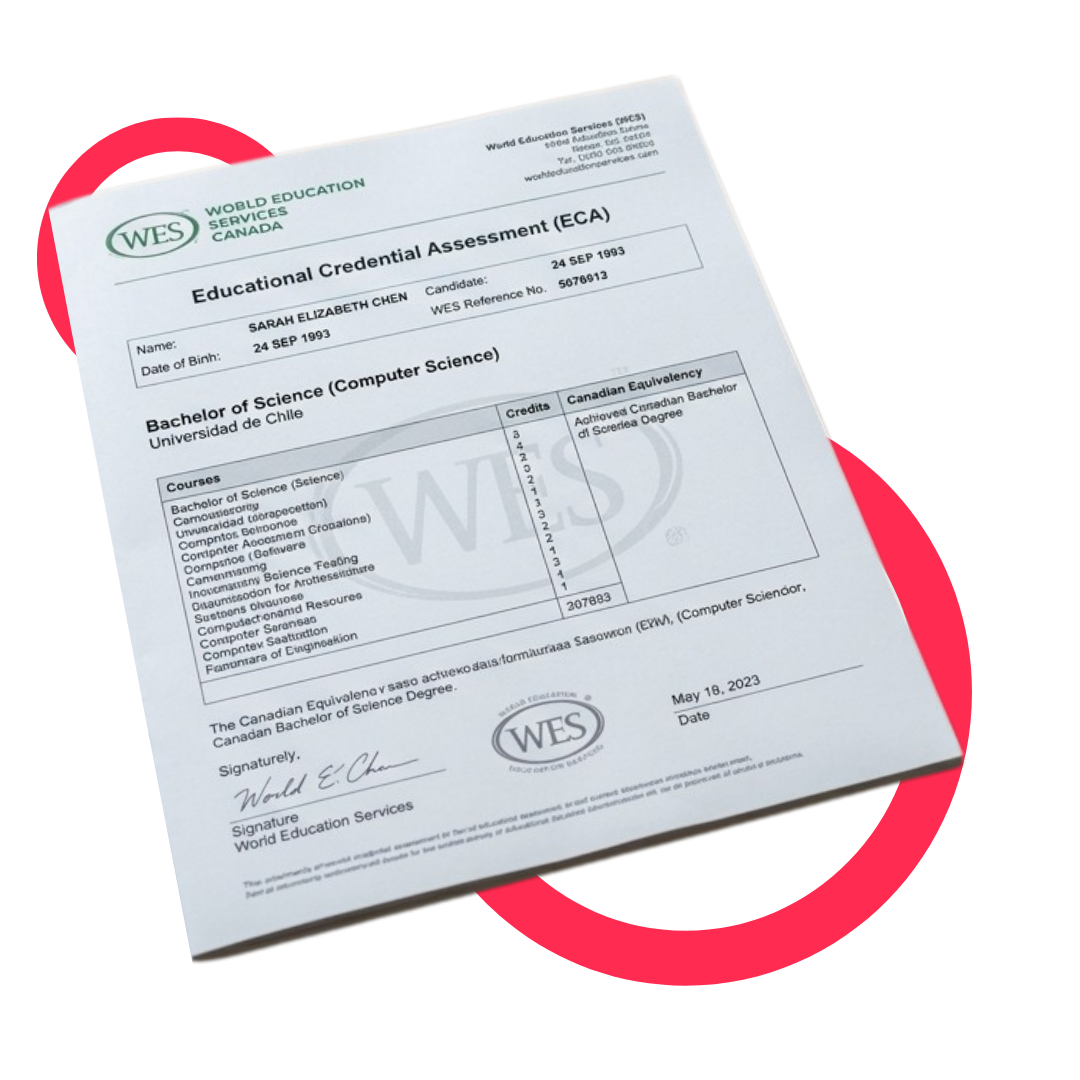
An Educational Credential Assessment, or ECA, is an official evaluation of a foreign educational credential — a degree, diploma, or certificate obtained outside Canada — that verifies it is authentic and equivalent to a Canadian educational credential.
The ECA is an immigration tool. Its primary purpose is to help applicants demonstrate the Canadian educational equivalent of their foreign degree when applying through certain immigration programs. The Government of Canada requires an ECA for Express Entry applications under the Federal Skilled Worker Program, and the result is used to calculate points under the Comprehensive Ranking System. (canada.ca)
An ECA does not evaluate professional competence. It does not certify that a person is qualified to practice a profession in Canada. It does not replace a license or professional registration. And it does not authorize anyone to work in a regulated field. Its sole purpose in the immigration context is to establish the academic equivalency of a foreign credential.
Who needs an ECA?
An ECA is required for applicants under the Federal Skilled Worker Program who obtained their highest level of education outside Canada and want that education considered in their Express Entry profile. Without a valid ECA, IRCC cannot assign the corresponding educational points to the application.
Which organizations are valid for an ECA?
This is one of the most important practical questions, because IRCC designates specific organizations to perform ECAs and not all organizations are accepted for all types of credentials. Using the wrong organization can result in a document that IRCC does not accept.
For most general educational credentials — bachelor's degrees, master's degrees, doctorates, and diplomas in non-regulated fields — the following are some of the organizations designated by IRCC:
World Education Services (WES)
International Credential Assessment Service of Canada (ICAS)
Comparative Education Service – University of Toronto School of Continuing Studies (CES)
International Qualifications Assessment Service (IQAS) — Government of Alberta
International Credential Evaluation Service (ICES) — British Columbia Institute of Technology
These organizations evaluate the academic equivalency of foreign credentials and produce reports that IRCC accepts as part of Express Entry applications. For most professions that do not have a specific designated professional body for ECA purposes, any of these organizations can be used. Engineers, for example, can use a general ECA provider like WES for their Express Entry application.
However, for certain regulated professions, IRCC specifically requires the ECA to be performed by a designated professional organization rather than a general credential evaluation service. This is a critical distinction that applicants in these fields must know before requesting an assessment.
Professions with a specific designated ECA organization
The following professions must have their ECA completed by the designated professional body for that field. A general ECA from WES or similar organizations is not accepted by IRCC for these professions in the Express Entry context:
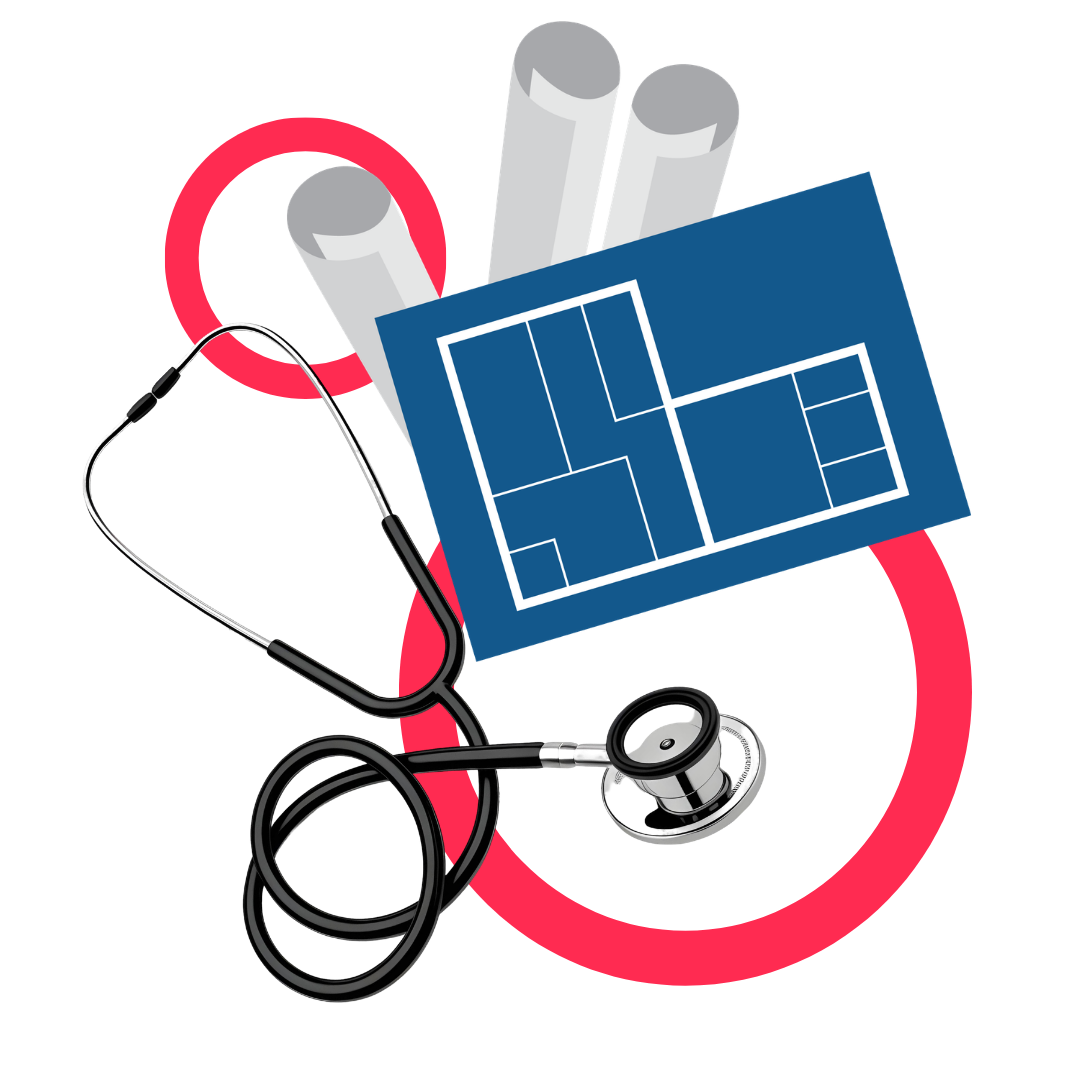
Physicians: The designated organization is the Medical Council of Canada (MCC). Physicians who obtained their medical degree outside Canada must have their credentials assessed by the MCC for Express Entry purposes.
Architects: The designated organization is the Canadian Architectural Certification Board (CACB). Architects trained outside Canada must use the CACB for their ECA for immigration purposes.
Pharmacists: The designated organization is the Pharmacy Examining Board of Canada (PEBC). Internationally trained pharmacists must use the PEBC for their ECA. The PEBC process has specific steps and requirements that differ from a standard general ECA.
Registered nurses: The designated organization is the National Nursing Assessment Service (NNAS). Registered nurses applying through Express Entry must have their credentials assessed by NNAS.
For these professions, applicants must contact the designated organization directly, understand their specific process and timelines, and ensure they complete that process — not a general ECA — before submitting their Express Entry profile.
Key practical points about the ECA
Before requesting an ECA, always verify the current list of designated organizations on the official IRCC website, as this list can be updated. Confirm whether your specific profession requires a general ECA provider or a designated professional body. Consider processing time: ECA timelines vary by organization and can range from a few weeks to several months. And keep in mind that ECA results currently have a validity of five years for immigration purposes.
LICENSING TO PRACTICE A REGULATED PROFESSION IN CANADA
What is the licensing process and how is it different from the ECA?
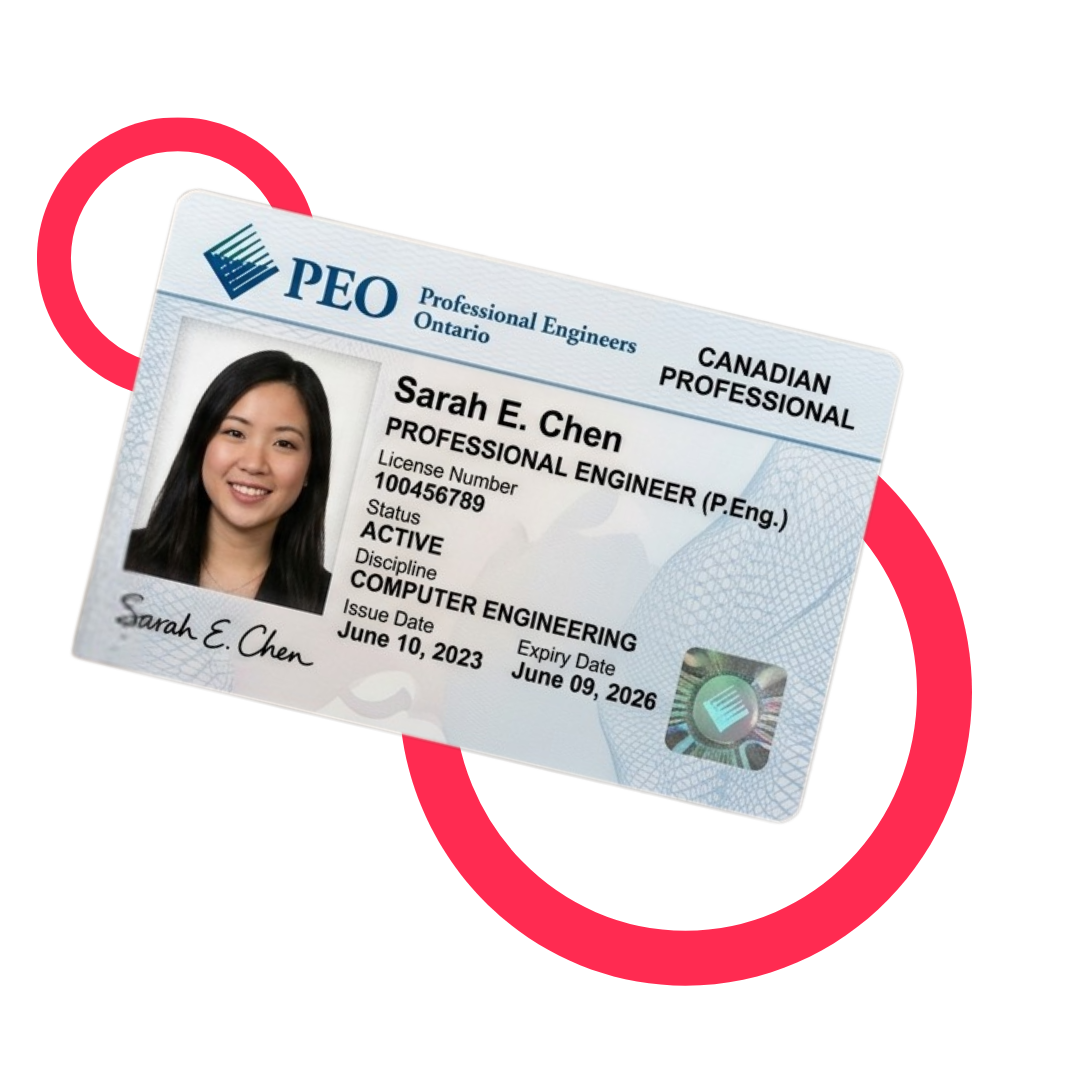
The licensing process is a completely separate path from the ECA. It has nothing to do with IRCC. It does not happen during the immigration application. And completing an ECA — regardless of which organization performed it — does not grant the right to practice a profession in Canada.
In Canada, regulated professions are governed at the provincial level. That means a physician, pharmacist, architect, nurse, or lawyer cannot arrive in Canada and begin practicing their profession. They must apply to the relevant provincial regulatory body in the province where they plan to work, meet that body's specific requirements, and obtain a license or registration before they can practice legally.
Why we recommend starting the licensing process after obtaining permanent residence
The licensing process is variable, involves in-person steps that can generally only be completed from within Canada, and carries significant timelines and costs. Investing heavily in this process before having secure immigration status in Canada carries real financial risk.
For most regulated professions, the full licensing process can only be completed once the person is living in Canada as a permanent resident. That is why at Global Opportunities we consistently recommend that internationally trained professionals focus first on obtaining permanent residence through the appropriate immigration pathway, and then initiate the licensing process from that stable foundation.
This does not mean doing nothing before arriving. It means being informed, researching requirements in the target province, and being prepared — without committing significant financial resources to a process that cannot be completed before landing.
What does the licensing process typically involve?
Depending on the profession and province, the process may include a formal application to the provincial regulatory body, a credential assessment specific to that body, language proficiency testing at the level required by the regulatory body, profession-specific examinations, supervised practice periods or bridging programs, and payment of application and examination fees that can vary significantly. This process can take months or, in some professions, years.
Overview by regulated profession
The following is a general overview of what the licensing process involves for several regulated professions. Requirements vary by province. Candidates should always verify current requirements directly with the relevant provincial regulatory body.
Physicians: Once a permanent resident, a physician must apply to the provincial medical regulatory body, pass the Medical Council of Canada Qualifying Examination (MCCQE), and complete a residency or practice assessment program. This is one of the most intensive licensing processes in Canada, but the ECA will be the first part, and eventually as a permanent resident you can continue advancing to the final phase. You can review the guidelines here: Medical Council of Canada
Pharmacists: Licensing requires passing the PEBC qualifying examinations, meeting provincial pharmacy regulatory body requirements, and in some cases completing additional training. Requirements vary by province. You can also work under someone who holds the relevant license — something we recommend, as it helps you become familiar with the Canadian system and understand what you can and cannot do, experience that also counts toward your licensing process. Read more here: Pharmacy Examining Board
Architecture: The licensing process requires completing the required work experience under a licensed architect and passing the Architect Registration Examination (ARE) or its provincial equivalent. It is also worth knowing that many architects first work in firms or related areas under the supervision of a licensed professional to familiarize themselves with Canadian regulations in their specific area of practice. Going directly for a license is more complex, and if you do not intend to have your own practice or take on responsibility for others, it may not be your first priority. Consider reviewing what the process involves here: CACB Accreditation Programs
Engineering: The licensing process is variable and is not always necessary to practice as an engineer in Canada — this depends on what you want to do and the level of responsibility you want to take on, since many engineers first choose to work in a firm or with someone who holds a license. Because even knowing their sector they do not necessarily want to pursue licensing right away. However, if you want to have your own construction firm, for example, you would need to apply to the provincial engineering regulatory body — such as Professional Engineers Ontario (PEO) or APEGA in Alberta — have credentials assessed, and meet requirements including examinations and documented work experience as stipulated by the province where you want to obtain your license. Read the full information and find the different regulatory bodies by province here: Engineer Here
Nursing: Because working with patients and in the health sector generally will require processing the license from the corresponding provincial nursing regulatory body and meeting provincial registration requirements. The process may vary depending on the residency category under which you apply, but it is important to review the steps involved. While the ECA will be one of the first steps, you will eventually need to pass an examination. Read about this process at the following link: Canadian Nurses Association
Lawyers: The National Committee on Accreditation (NCA) evaluates foreign legal credentials for those who want to be called to the bar in Canada. The process involves an NCA assessment, NCA examinations, articling, and bar admission requirements that vary by province and according to the legal system of your home country, but it definitively cannot be executed without permanent resident status. This does not mean you cannot work in legal areas — you simply cannot yet represent clients directly. Review the NCA information here: National Committee on Accreditation
Keeping these two processes clear in your planning
The ECA is completed as part of the immigration application — before or during the application process, through a designated organization, for IRCC. It establishes academic equivalency. It does not authorize professional practice.
The licensing process is completed after becoming a permanent resident — from within Canada, through the provincial regulatory body of the profession, with its own timelines, costs, and requirements. It is the path to practicing a profession in Canada.
Both matter. But they happen at different stages, involve different organizations, and serve completely different purposes. Having them clear in the planning process avoids costly confusion and sets realistic expectations from the start.
At Global Opportunities, we always recommend starting with the appropriate legal immigration assessment. For internationally trained professionals, that assessment includes understanding which immigration programs the person's profile is best suited for, which ECA organization applies to their specific profession, and what the general licensing landscape looks like in the province where they plan to settle. That complete picture makes a significant difference in how well-prepared and realistic the immigration process is from the start.
An assessment with Global Opportunities is always available, and we strongly recommend it for any internationally trained professional navigating these questions.