
As 2025 ends, Canada’s immigration system demands strategy — not improvisation
As we approach the end of 2025, one thing has become clear:
Immigrating to Canada without a plan is no longer an option.
In the past year, we’ve seen major adjustments to study permits, work programs, and permanent residence pathways. If you’re considering a move to Canada, now is the time to pause, evaluate your profile, and decide:
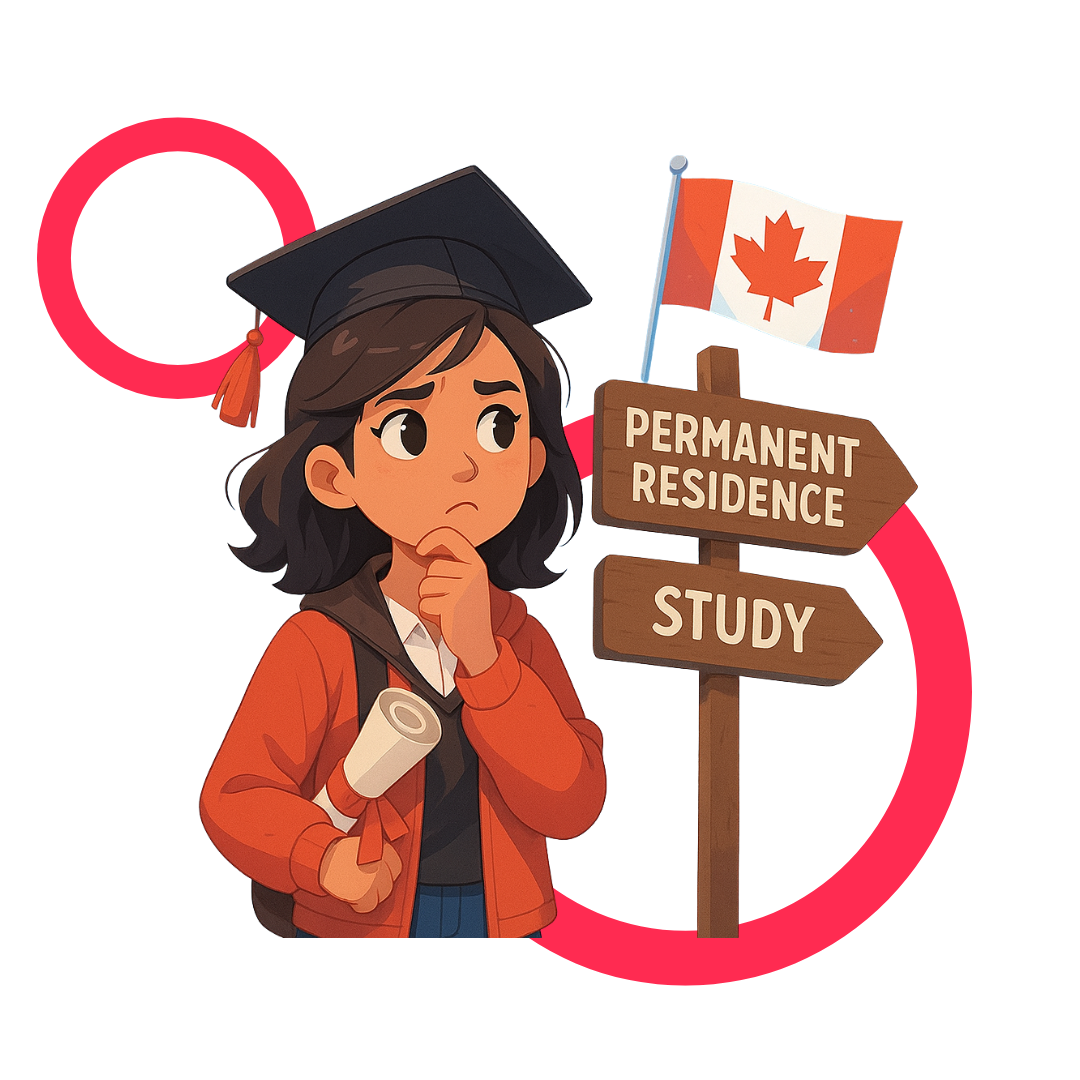
Should you study first or apply directly for permanent residence?
Both options are valid — but they require different strategies. And the decision you make in the next few months could determine your opportunities for 2026.
Studying in Canada: a valuable investment, but one that requires an immigration-focused approach
For many years, studying in Canada has been the most popular pathway to long-term settlement. That remains true, but 2025 has redefined how this path should be approached. Having a letter of acceptance or paying tuition is no longer enough. Today, studying in Canada must be understood as an immigration strategy, not just an academic one.
A new reality: more structure, less improvisation
Since the introduction of the Provincial Attestation Letter (PAL), the study permit process has become far more regulated. ach province now authorizes a limited number of international students, prioritizing programs with real labour market impact.
This means not all programs lead to the same opportunities after graduation. That’s why the right academic choice must be made with immigration planning in mind, not just career goals.
Why it’s still a valid path

Despite new limits and controls, studying in Canada continues to offer meaningful migration benefits:
The Post-Graduation Work Permit (PGWP):
Allows graduates from eligible institutions to work legally after finishing their studies, gaining valuable Canadian work experience.
A path to permanent residence:
That work experience can lead to eligibility under the Canadian Experience Class (CEC) or through Provincial Nominee Programs (PNPs).
Family inclusion:
Many students can bring their spouses and children, who may also qualify for open work or study permits.
Studying in Canada remains an excellent entry route — as long as it’s chosen with purpose and long-term planning.
What about applying directly for permanent residence?

For individuals with professional experience and strong language skills, direct permanent residence remains a viable option.
Federal and Provincial Nominee Programs (PNPs) are a great way to move forward if you qualify.
🔹 When direct application makes sense
This option may be ideal if you already have:
Proven work experience.
English or French proficiency.
Post-secondary or university education.
In these cases, applying directly to permanent residence may save both time and financial resources. However, if your profile is not yet competitive or your experience isn’t recognized, you may still have the time to work on that and pursue a permanent residence or the study route can be a strategic investment to strengthen your profile from within Canada.
Study or apply directly: both paths are valid — just different

There’s no one-size-fits-all answer. The right choice depends on your personal situation, financial capacity, age, and family goals. Studying is ideal for those who don’t yet qualify but want to build their eligibility through education and Canadian work experience. Applying directly works better for those already meeting the criteria and ready to transition to permanent residence. The question isn’t which one is better — but rather, which one brings you closer to your goal under your current conditions.
Closing 2025 with vision and preparing for 2026
The end of the year is the perfect time to evaluate your options strategically. Recent changes to study permits, limited immigration quotas, and updates to federal score systems all point to one thing:
2026 will reward those who plan ahead.
If you’re already in Canada, it’s time to assess your next step — whether that’s extending your permits, seeking a provincial nomination, or securing stable employment.
If you’re outside Canada, you should decide whether your best option is to apply directly or start through a carefully selected academic program.
In either case, preparation is everything. Canada’s system rewards foresight, not improvisation — and those who plan now will have more opportunities in the months ahead.
💡 Studying doesn’t guarantee permanent residence — but it can open the door
One of the most common misconceptions is believing that studying in Canada automatically leads to permanent residence. The reality is that success depends on how the study plan connects to a broader migration strategy.
The key questions should always be:
Does this program qualify for a PGWP?
Is this province aligned with my long-term residency goals?
Do I gave the financial means for it?
Before enrolling, ask yourself:
“Does this program truly bring me closer to permanent residence?” That simple reflection can make the difference between a well-planned journey and an expensive detour.
Plan your 2026 with purpose, not pressure
Studying in Canada or applying directly to permanent residence are both valid routes — but they have different timelines, costs, and implications. The goal isn’t to choose what’s popular, but what’s realistic for your profile and sustainable for your future.
2026 will be a year of opportunities for those who plan wisely not for those looking for shortcuts, but for those who understand that a complete, coherent, and well-prepared application carries far more weight than a rushed one.
At Global Opportunities, we help you analyze your profile, identify your best options, and build a personalized plan that aligns with your goals and the latest IRCC policies.
📩 Book your consultation before the end of 2025, and let’s design your 2026 migration strategy together — with purpose and clarity.