
Canadian History in Plain English: From First Peoples to Today
Canadian history is the story of the First Nations, Inuit and Métis peoples who have lived on this land for thousands of years, of the French and British colonies that grew here, and of the country formed in 1867 that kept changing: new provinces, two world wars, a new flag, a Charter of Rights and a long path toward reconciliation. This guide tells that story in plain English, with a link to the source for every fact.
About our sources: This guide summarises what official sources (the Government of Canada, provincial and territorial governments and the other organisations we link to) said when we checked them in November 2026. We link every source so you can read it yourself. Rules, rates and requirements change, sometimes without notice, and the official page is the one that counts. This is general information, not legal, tax or immigration advice. Global Opportunities is not responsible for how this information is interpreted or for changes made after it was written.
Most facts here come from Discover Canada, the official study guide that Immigration, Refugees and Citizenship Canada (IRCC) uses for the citizenship test (Discover Canada), other Government of Canada pages and The Canadian Encyclopedia, published by the national charity Historica Canada.
Watch our recorded seminars and lives →
In this guide
Canadian history at a glance
Who were the first peoples of Canada?
The first Europeans and New France
British North America: conquest, the Quebec Act and the Loyalists
From the War of 1812 to responsible government
Confederation: how did Canada become a country?
When did each province and territory join Canada?
Canada in the two world wars
Postwar Canada: the flag, two languages and multiculturalism
Bringing the Constitution home: patriation and the Charter
Modern Canada and reconciliation
Why history matters for the citizenship test
Videos about Canadian history
Frequently asked questions
Related guides
How Global Opportunities can help
Sources
Canadian history at a glance
Canada's history can be read in a few big steps: Indigenous nations across the land for thousands of years, French and British colonies from the 1600s, Confederation on July 1, 1867, growth from sea to sea, two world wars, a new flag in 1965, a patriated Constitution and Charter in 1982, and today's work on reconciliation.
Key dates, as given by the sources linked in each section below:
About 1,000 years ago: Norse sailors build an encampment at L'Anse aux Meadows, Newfoundland.
1497 and 1534: John Cabot sails for England; Jacques Cartier's first voyage for France.
1608: Samuel de Champlain founds Québec City.
1759: British victory at the Plains of Abraham.
1867: Confederation, on July 1.
1870 to 1949: new provinces and territories join.
1914 to 1918 and 1939 to 1945: the two world wars.
1965: the maple leaf flag is raised for the first time.
1982: the Constitution is patriated, with the Charter of Rights and Freedoms.
1999: Nunavut is created.
2015: the Truth and Reconciliation Commission publishes its final report.
Who were the first peoples of Canada?
The first peoples of what is now Canada are the First Nations, Inuit and Métis. Canada's Constitution recognizes these three groups as Indigenous peoples with existing Aboriginal and treaty rights. Each has its own languages, cultures and histories, and they remain a vital part of Canada today.
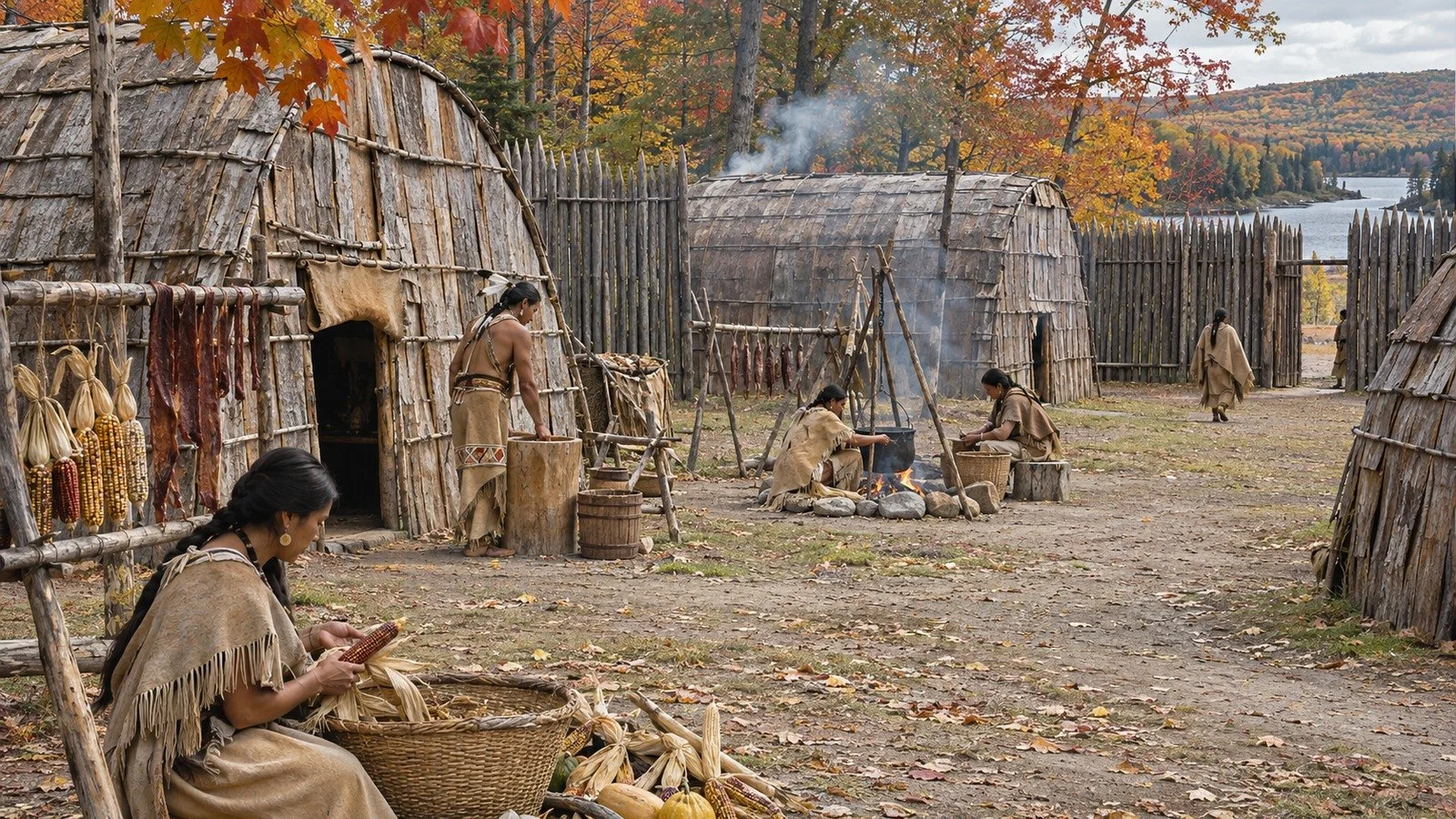
Section 35 of the Constitution Act, 1982 recognizes and affirms the existing Aboriginal and treaty rights of the "Indian, Inuit and Métis peoples of Canada" (Justice Laws, Constitution Act, 1982). The legal text uses older words; today the Government of Canada uses "Indigenous peoples", as in the name of the department Crown-Indigenous Relations and Northern Affairs Canada (CIRNAC).
First Nations. According to The Canadian Encyclopedia, there are 630 First Nations communities in Canada, speaking more than 50 distinct languages (The Canadian Encyclopedia, First Nations).
Inuit. The Canadian Encyclopedia explains that "Inuit" means "the people" in Inuktitut and that the Inuit homeland, Inuit Nunangat, is the land, water and ice of the Arctic region (The Canadian Encyclopedia, Inuit).
Métis. The Canadian Encyclopedia notes that the Métis National Council describes the Métis homeland as the three Prairie provinces and parts of Ontario, British Columbia, the Northwest Territories and the northern United States (The Canadian Encyclopedia, Métis).
According to Statistics Canada, 1,807,250 people identified as Indigenous in the 2021 Census (Statistics Canada, Indigenous peoples).
IRCC's study guide explains that, before Europeans arrived, Indigenous peoples lived in every region. Some lived mainly by hunting and gathering, others also by farming: the Huron-Wendat and the Haudenosaunee (Iroquois) of the Great Lakes farmed and hunted, the Cree and Dene of the Northwest were hunter-gatherers, Inuit lived from Arctic wildlife, and West Coast peoples preserved fish by drying and smoking it. The guide adds that European diseases killed many people, but that Indigenous peoples and Europeans also built strong economic, religious and military ties that laid the foundations of Canada (Discover Canada, Canada's history).
Please note: population figures as published by Statistics Canada for the 2021 Census, as of November 2026. Indigenous nations tell their own histories in their own ways, and this short summary cannot replace them.
The first Europeans and New France
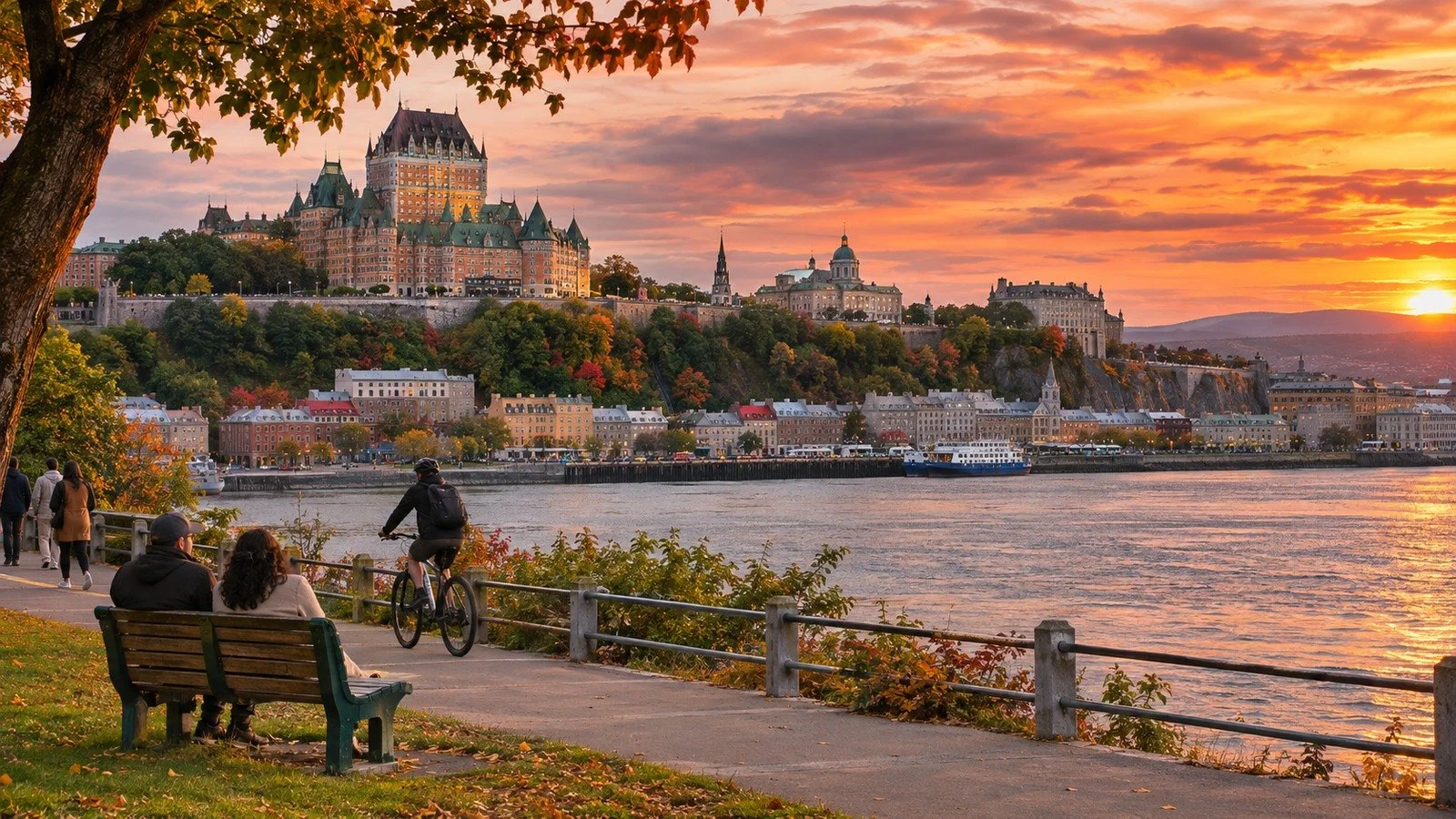
The first Europeans known to reach Canada were Norse sailors, about 1,000 years ago. Lasting exploration began with John Cabot in 1497 and Jacques Cartier from 1534. Samuel de Champlain founded Québec City in 1608, and New France grew around the fur trade, built together with Indigenous peoples.
L'Anse aux Meadows. Parks Canada describes this site in Newfoundland as the first known evidence of European presence in the Americas: a Norse encampment built more than 1,000 years ago, declared a UNESCO World Heritage Site in 1978 (Parks Canada, L'Anse aux Meadows).
John Cabot. According to Discover Canada, Cabot, an Italian immigrant to England, was the first to map Canada's Atlantic shore, in 1497 (Discover Canada, Canada's history).
Jacques Cartier and the name "Canada". The same guide says Cartier made three voyages between 1534 and 1542 for King Francis I of France, and heard two guides use the Iroquoian word kanata, meaning "village". By the 1550s, the name Canada was appearing on maps.
New France
Discover Canada explains that Pierre de Monts and Samuel de Champlain founded a settlement in 1604, first on St. Croix Island and then at Port-Royal, in Acadia (today's Nova Scotia), and that Champlain built a fortress at Québec City in 1608. Champlain allied the colony with the Algonquin, Montagnais and Huron; the Haudenosaunee Confederacy fought the French settlements until peace in 1701. French settlers and Indigenous peoples worked together in a vast fur trade driven by European demand for beaver pelts (Discover Canada, Canada's history; see also The Canadian Encyclopedia, New France and Fur trade).
British North America: conquest, the Quebec Act and the Loyalists
In the 1700s, France and Great Britain fought for North America. After the British victory at Québec City in 1759, New France became a British colony. The Quebec Act of 1774 protected Catholic religious freedom and French civil law, and Loyalists moved north after the American Revolution.
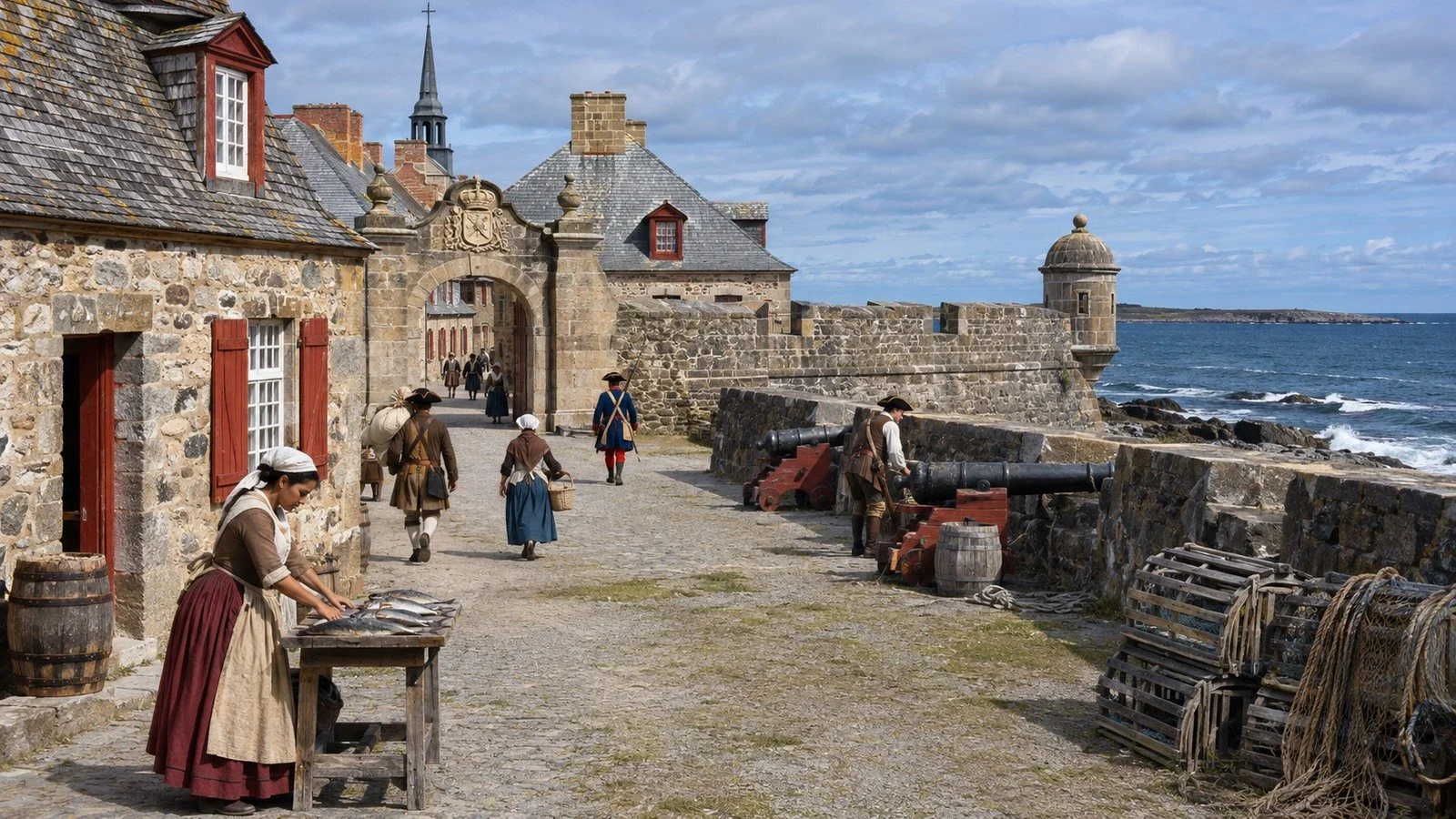
According to Discover Canada (Canada's history):
1759: the British defeated the French at the Battle of the Plains of Abraham, ending France's empire in North America. Britain renamed the colony the "Province of Quebec" (see also The Canadian Encyclopedia, Conquest).
1774: the Quebec Act allowed religious freedom for Catholics, let them hold public office, and restored French civil law while keeping British criminal law. IRCC calls it one of the constitutional foundations of Canada.
After 1776: more than 40,000 Loyalists, people loyal to the Crown, left the new United States for Nova Scotia and Quebec. Joseph Brant led thousands of Mohawk Loyalists into Canada, and about 3,000 Black Loyalists also came north.
1791: the Constitutional Act divided Quebec into Upper Canada (later Ontario) and Lower Canada (later Quebec), each with an elected assembly. The name Canada became official at this time.
1793 to 1833: Upper Canada became the first province in the British Empire to move toward abolishing slavery, and Britain abolished slavery throughout the Empire in 1833. Thousands of people escaped slavery in the United States and reached Canada through the Underground Railroad.
From the War of 1812 to responsible government
Between 1812 and 1814, British soldiers, Canadian volunteers and First Nations defended Canada against invasions from the United States. After rebellions in 1837 and 1838, the colonies moved toward responsible government: a government that must keep the support of the elected assembly, the system Canada still uses.
Discover Canada explains that the United States invaded Canada in June 1812. Canadian volunteers and First Nations, including Shawnee warriors led by Chief Tecumseh, fought alongside British soldiers; Major-General Sir Isaac Brock was killed at Queenston Heights, and Charles de Salaberry's mostly French-Canadian force turned back a much larger American force at Châteauguay in 1813. By 1814 the invasion had failed (Discover Canada, Canada's history; see also The Canadian Encyclopedia, War of 1812).
According to the same guide, reformers who felt democracy was moving too slowly led rebellions in 1837 and 1838 near Montreal and in Toronto, and were defeated. Lord Durham then recommended uniting the two Canadas and giving them responsible government. Upper and Lower Canada became the Province of Canada in 1840. Nova Scotia was the first colony to achieve full responsible government, in 1847 and 1848, and the Province of Canada followed in 1848 and 1849, with Louis-Hippolyte La Fontaine as its first leader. Our guide How Canada's government works explains how responsible government works in Parliament today.
Confederation: how did Canada become a country?
Canada became a country on July 1, 1867, when the British North America Act (now the Constitution Act, 1867) joined Nova Scotia, New Brunswick and the Province of Canada, which was split into Ontario and Quebec. The new Dominion of Canada had two levels of government: federal and provincial.
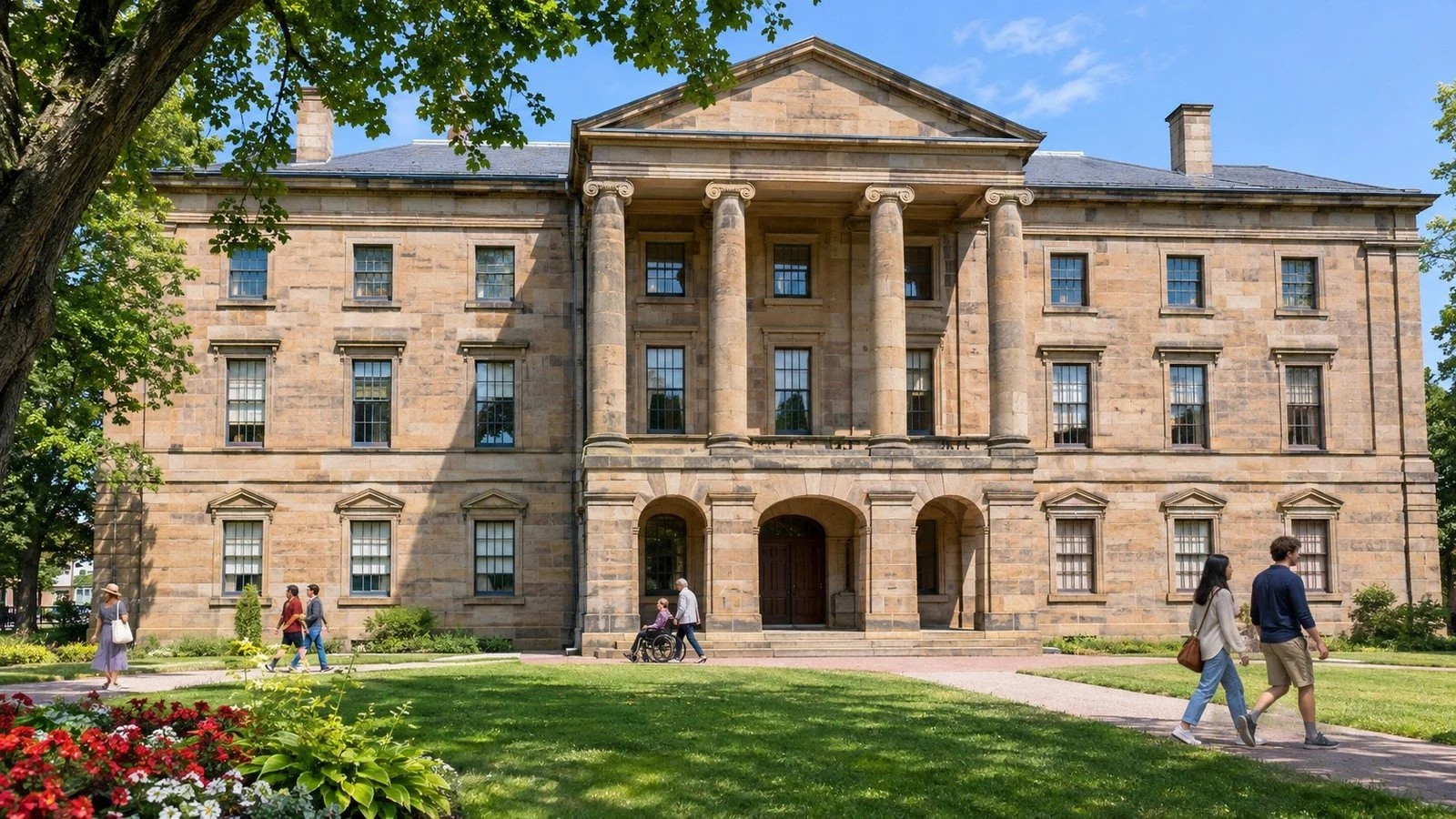
Discover Canada explains that from 1864 to 1867, representatives of Nova Scotia, New Brunswick and the Province of Canada, known as the Fathers of Confederation, worked with British support to create a new country with federal and provincial governments. Each province would elect its own legislature and control areas such as education and health. The Dominion of Canada was born on July 1, 1867. Until 1982, July 1 was called Dominion Day; today it is Canada Day (Discover Canada, Canada's history; The Canadian Encyclopedia, Canada Day).
First prime minister. According to IRCC's guide, Sir John A. Macdonald, born in Scotland, became Canada's first prime minister in 1867, and Sir George-Étienne Cartier was the key architect of Confederation from Quebec.
"From sea to sea." IRCC's chapter on Canadian symbols explains that, after the First World War, Canada adopted the national motto A Mari Usque Ad Mare, Latin for "from sea to sea".
For the conferences and debates that led to 1867, read The Canadian Encyclopedia's Confederation article.
When did each province and territory join Canada?
Canada began with four provinces in 1867 and grew to ten provinces and three territories. Manitoba joined in 1870, British Columbia in 1871, Prince Edward Island in 1873, Alberta and Saskatchewan in 1905, and Newfoundland and Labrador in 1949. Nunavut, the newest territory, was created in 1999.
Discover Canada lists the expansion this way (Canada's history):
1867: Ontario, Quebec, Nova Scotia and New Brunswick
1870: Manitoba and the Northwest Territories
1871: British Columbia
1873: Prince Edward Island
1880: the Arctic Islands are transferred to the Northwest Territories
1898: Yukon Territory
1905: Alberta and Saskatchewan
1949: Newfoundland and Labrador
1999: Nunavut
The Canadian Encyclopedia adds that Nunavut separated from the Northwest Territories on April 1, 1999 (Nunavut), and its territorial evolution article shows how the map changed.
Louis Riel, treaties and the railway
Louis Riel. According to Discover Canada, when Canada took over the northwest from the Hudson's Bay Company in 1869, the Métis of the Red River were not consulted. Louis Riel led a resistance, and Canada created the province of Manitoba in 1870. A second conflict in 1885, in present-day Saskatchewan, led to Riel's execution for high treason. The guide says many people see Riel as a defender of Métis rights and the father of Manitoba (The Canadian Encyclopedia, Louis Riel).
Treaties. The Canadian Encyclopedia explains that the Crown and First Nations made 11 Numbered Treaties from 1871 to 1921 (Numbered Treaties), and that the Indian Act, first introduced in 1876, aimed at assimilating First Nations people.
The railway. Discover Canada says British Columbia joined in 1871 after Ottawa promised a railway to the West Coast; the last spike of the Canadian Pacific Railway was driven on November 7, 1885. Chinese workers helped build it, and Chinese immigrants later faced the Head Tax, a race-based entry fee for which the Government of Canada apologized in 2006 (The Canadian Encyclopedia, Chinese Head Tax). The railway brought settlers from many countries to the West.
Canada in the two world wars
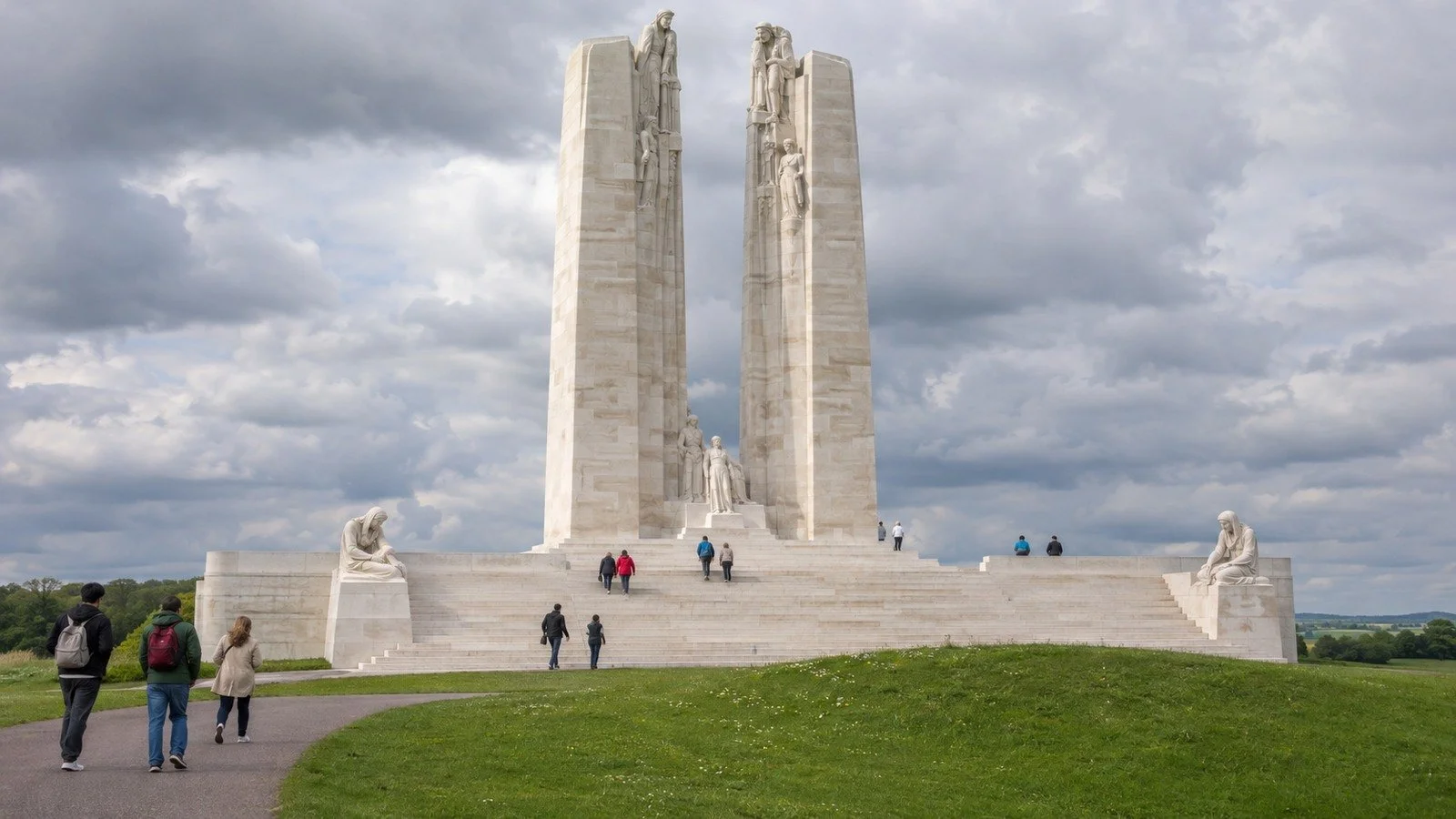
More than 600,000 Canadians served in the First World War and more than one million Canadians and Newfoundlanders in the Second. Vimy Ridge in 1917 and Juno Beach on D-Day in 1944 became symbols of national pride, and Canadians remember those who served every November 11, Remembrance Day.
The First World War
According to Discover Canada, more than 600,000 Canadians served from 1914 to 1918, out of a population of eight million. The Canadian Corps captured Vimy Ridge in April 1917, and about 60,000 Canadians were killed in the war (Canada's history). The guide also records that the federal government interned more than 8,000 people, mainly Ukrainian men, as "enemy aliens". Veterans Affairs Canada has an overview of the First World War and of the Vimy Memorial.
The same guide explains that Manitoba was the first province to give women the vote, in 1916, that most women citizens aged 21 and over could vote federally from 1918, and that Agnes Macphail became the first woman MP in 1921. Many people were excluded for longer: IRCC notes that Japanese Canadians gained the vote in 1948 and First Nations people in 1960 (Discover Canada, Modern Canada).
Between the wars
The Canadian Encyclopedia describes the Statute of Westminster, a British law passed on December 11, 1931, as Canada's "all-but-final" achievement of independence from Britain (Statute of Westminster).
The Second World War
According to Discover Canada, more than one million Canadians and Newfoundlanders served from 1939 to 1945, out of a population of 11.5 million, and 44,000 were killed. On D-Day, June 6, 1944, 15,000 Canadian troops captured Juno Beach in Normandy, and the Canadian Army helped liberate the Netherlands. The guide also records that the federal government forcibly relocated Canadians of Japanese origin and sold their property, and that it apologized and compensated the victims in 1988. See Veterans Affairs Canada on the Second World War.
Please note: numbers of soldiers, casualties and population as published in IRCC's study guide Discover Canada, as of November 2026. Other sources sometimes give slightly different numbers: check Veterans Affairs Canada if you need exact figures.
Postwar Canada: the flag, two languages and multiculturalism
After 1945, Canada grew richer and more open. It joined the United Nations and helped found NATO, adopted the maple leaf flag in 1965, passed the Official Languages Act in 1969, adopted a multiculturalism policy in 1971 and celebrated its 100th birthday in 1967.
The maple leaf flag. According to Canadian Heritage, Canada used the Union Jack and, unofficially, the Canadian Red Ensign before it had its own flag. In 1964 a parliamentary committee chose George Stanley's design of a single red maple leaf; Queen Elizabeth II made it official on January 28, 1965, and it was raised for the first time on Parliament Hill on February 15, 1965, two years before Canada's 100th birthday in 1967 (Canadian Heritage, history of the flag).
Two official languages. Discover Canada explains that Quebec went through rapid change in the 1960s, known as the Quiet Revolution, and that a royal commission led to the Official Languages Act of 1969, which guarantees French and English services in the federal government. Proposals for Quebec sovereignty were defeated in referendums in 1980 and 1995 (see also The Canadian Encyclopedia, Quiet Revolution).
Multiculturalism. According to The Canadian Encyclopedia, the federal multiculturalism policy was adopted in 1971, introduced by Prime Minister Pierre Trudeau as "a policy of multiculturalism within a bilingual framework" (Multiculturalism); Parliament later passed the Canadian Multiculturalism Act.
Bringing the Constitution home: patriation and the Charter
In 1982, Canada "patriated" its Constitution: it brought the power to amend its highest law home from the British Parliament. The Constitution Act, 1982 added an amending formula and the Canadian Charter of Rights and Freedoms. Queen Elizabeth II proclaimed it on Parliament Hill on April 17, 1982.
The Canadian Encyclopedia explains that, in 1982, Canada transferred the British North America Act (renamed the Constitution Act, 1867) from the authority of the British Parliament to Canada's federal and provincial legislatures, and added a new amending formula and a Charter of Rights and Freedoms. Queen Elizabeth II proclaimed the new Constitution Act on Parliament Hill on April 17, 1982. Quebec's premier, René Lévesque, was the only premier who did not sign (The Canadian Encyclopedia, Patriation of the Constitution).
The Canadian Encyclopedia calls the Charter the most visible part of the Constitution: it guarantees individual rights, and certain limits on them, in the highest law of the land (Canadian Charter of Rights and Freedoms). Canadian Heritage's guide to the Charter explains each part:
fundamental freedoms (section 2), such as religion, expression and peaceful assembly;
democratic rights (sections 3 to 5) and mobility rights (section 6);
legal rights (sections 7 to 14) and equality rights (section 15);
official languages (sections 16 to 22) and minority language education rights (section 23).
The Department of Justice publishes the full text.
Please note: a simplified summary of the Charter as described by Canadian Heritage and The Canadian Encyclopedia, as of November 2026. Charter rights have limits, some apply only to citizens, and courts decide how they apply in each case.
Modern Canada and reconciliation
Reconciliation is the ongoing work of building respectful relationships with First Nations, Inuit and Métis peoples after a long history of harm, especially the residential school system. Key steps include the 2008 apology, the Truth and Reconciliation Commission's 94 Calls to Action, the UN Declaration Act and the National Day for Truth and Reconciliation.
Residential schools. The Canadian Encyclopedia explains that residential schools were government-sponsored religious schools established to assimilate Indigenous children. An estimated 150,000 First Nations, Inuit and Métis children attended them and an estimated 4,000 children died, with incomplete records; the last federally funded school closed in 1996. On June 11, 2008, Prime Minister Stephen Harper apologized on behalf of the Government of Canada (The Canadian Encyclopedia, Residential Schools in Canada).
The Truth and Reconciliation Commission. It was launched in 2008, gathered close to 7,000 statements, and released its final report in December 2015 with 94 Calls to Action (The Canadian Encyclopedia, Truth and Reconciliation Commission).
The UN Declaration Act. According to the Department of Justice, the United Nations Declaration on the Rights of Indigenous Peoples Act became law on June 21, 2021, and an action plan followed in June 2023 (Department of Justice, implementing the UN Declaration).
September 30. Canadian Heritage explains that the National Day for Truth and Reconciliation became a federal statutory holiday through Bill C-5, which received Royal Assent on June 3, 2021. It is observed every September 30, the same day as Orange Shirt Day, which began in Williams Lake, British Columbia, in 2013 (Canadian Heritage, National Day for Truth and Reconciliation).
Reconciliation is not only for governments. Simple first steps for a newcomer can be to learn about the Indigenous nations where you live, read the Calls to Action, take part in events on September 30 and visit Indigenous-led museums and cultural centres.
Please note: facts as published by Canadian Heritage, the Department of Justice and The Canadian Encyclopedia, as of November 2026. This topic can be painful: the Canadian Heritage page above lists support lines for Survivors and families.
Why history matters for the citizenship test
If you apply for Canadian citizenship and are between 18 and 54, you will likely take a knowledge test about Canada. IRCC says all questions are based on the free study guide Discover Canada, which has long chapters on history, so knowing this story helps you prepare.
IRCC explains that applicants aged 18 to 54 on the day they sign take a knowledge test (how the test works), and its study page says all questions are based on Discover Canada.
Read the official chapters on Canada's history and Modern Canada; IRCC also offers them as audio.
Practise with IRCC's study questions.
Learn the government chapter too, with our guide How Canada's government works.
Check the full requirements in our Canadian citizenship guide.
Note the older language: Discover Canada uses terms such as "Aboriginal"; this guide uses "Indigenous peoples", the term the Government of Canada uses today.
Please note: test rules as published by IRCC, as of November 2026. This guide does not replace the official study guide, and passing the test is only one requirement: IRCC decides each application.
Videos about Canadian history
Short videos are a friendly way to start. Watch our own overview, "Canada: From the Beginning", then explore the Heritage Minutes and timeline videos from Historica Canada, the national charity that publishes The Canadian Encyclopedia. All videos open on their own sites.
Our video: Canada: From the Beginning | The Story of an Extraordinary Country, on our YouTube channel.
External video, Historica Canada: the Heritage Minutes, 60-second films first released in 1991, such as Vikings, Peacemaker and Responsible Government.
External video, Historica Canada timelines: Residential Schools in Canada: A Timeline and Voting Rights in Canada: A Select Timeline.
To see history in person, Discover Canada notes that national historic sites exist in every province and territory. Parks Canada runs L'Anse aux Meadows, and The Canadian Encyclopedia notes that the Parliament Buildings in Ottawa, opened in 1866, are a national historic site.
Frequently asked questions
When did Canada become a country?
Canada became a country on July 1, 1867, when the British North America Act, now the Constitution Act, 1867, came into force. According to IRCC's Discover Canada, it joined Nova Scotia, New Brunswick, Ontario and Quebec as the Dominion of Canada. July 1 was called Dominion Day until 1982 and is now Canada Day. Full independence came step by step, through the Statute of Westminster in 1931 and patriation in 1982. See our section on Confederation.
Who were the first people in Canada?
Indigenous peoples, who have lived here for thousands of years. Canada's Constitution recognizes three groups: First Nations, Inuit and Métis. According to The Canadian Encyclopedia, there are 630 First Nations communities speaking more than 50 languages, Inuit live mainly in Inuit Nunangat in the Arctic, and the Métis homeland is mainly in the Prairie provinces and nearby regions. Each people has its own history, languages and cultures. See our section on the first peoples.
Who was the first prime minister of Canada?
Sir John A. Macdonald. IRCC's Discover Canada explains that he was born in Scotland, came to Upper Canada as a child, worked as a lawyer in Kingston, was a Father of Confederation and became prime minister in 1867. See our section on Confederation.
When did each province join Canada?
According to Discover Canada, Ontario, Quebec, Nova Scotia and New Brunswick formed Canada in 1867. Manitoba and the Northwest Territories joined in 1870, British Columbia in 1871 and Prince Edward Island in 1873. Yukon became a territory in 1898, Alberta and Saskatchewan became provinces in 1905, and Newfoundland and Labrador joined in 1949. Nunavut was created on April 1, 1999. See our section on the provinces joining Canada.
When did Canada get its flag?
According to Canadian Heritage, Canada used the British Union Jack and the Canadian Red Ensign before it had its own flag. A parliamentary committee chose George Stanley's single red maple leaf design in 1964, Queen Elizabeth II made the flag official on January 28, 1965, and it was raised for the first time on Parliament Hill on February 15, 1965. See our section on postwar Canada.
What does "patriation of the Constitution" mean?
It means bringing the Constitution home. According to The Canadian Encyclopedia, until 1982 Canada's highest law could only be changed by the British Parliament. In 1982, Canada transferred that power to its own federal and provincial legislatures, added an amending formula and adopted the Canadian Charter of Rights and Freedoms, proclaimed by Queen Elizabeth II on April 17, 1982. Quebec did not sign. See our section on patriation and the Charter.
What were residential schools in Canada?
Government-sponsored religious schools established to assimilate Indigenous children. According to The Canadian Encyclopedia, an estimated 150,000 First Nations, Inuit and Métis children attended them, an estimated 4,000 died, and the last federally funded school closed in 1996. The Government of Canada apologized in 2008, the Truth and Reconciliation Commission issued 94 Calls to Action in 2015, and Canada marks the National Day for Truth and Reconciliation every September 30. See our section on reconciliation.
Is Canadian history on the citizenship test?
Yes. IRCC says applicants aged 18 to 54 take a knowledge test and that all questions are based on its free study guide, Discover Canada, which has long chapters on Canada's history and modern Canada, plus chapters on government, symbols and regions. Study the whole guide and IRCC's practice questions; this summary helps, but it does not replace the official guide. See our section on the citizenship test.
Related guides
How Canada's government works: Parliament, provinces and visiting Parliament Hill
Newcomer guide: work permits, Toronto life and jobs in Canada
How Global Opportunities can help
Learning Canada's history is a good first step toward feeling at home here. If you are also planning your move or your next immigration step, we can help you understand your options.
Our regulated consultant: Lic. Mildrete Monserrath Gutierrez Martinez, Regulated Canadian Immigration Consultant (RCIC), CICC licence R514880. Verify her licence on the CICC Public Register: https://college-ic.ca/protecting-the-public/find-an-immigration-consultant. Global Opportunities does not offer services for Quebec's immigration programs. Global Opportunities is a private firm and is not part of the Government of Canada or any provincial government.
Recorded seminars and lives: watch our recorded seminars in English or the Spanish recordings, and visit our YouTube channel.
More articles in English: read our Moving to Canada articles on topics such as health care, cost of living, the ECA and professional licences, and building community in Canada.
Personalized consultation: for a review of your own case, contact us or write to info@globalopp.ca.
Prefer email? Tell us what you need help with (my plans to move to Canada) and we will reply: email info@globalopp.ca.
Contact Global Opportunities →
Sources
IRCC, Discover Canada: the study guide, Canada's history, Modern Canada, Canadian symbols, study questions
IRCC, citizenship test: how it works, study for the test
Canadian Heritage: history of the National Flag of Canada, National Day for Truth and Reconciliation, guide to the Charter
Department of Justice: Canadian Charter of Rights and Freedoms, UN Declaration Act, Constitution Act, 1982, Canadian Multiculturalism Act
Crown-Indigenous Relations and Northern Affairs Canada · Statistics Canada, Indigenous peoples · Parks Canada, L'Anse aux Meadows
Veterans Affairs Canada: First World War, Second World War, Vimy Memorial
The Canadian Encyclopedia (Historica Canada): Confederation, New France, Fur trade, Conquest, War of 1812, Louis Riel, Numbered Treaties, Indian Act, Chinese Head Tax, Territorial evolution, Nunavut, Statute of Westminster, Quiet Revolution, Multiculturalism, Patriation, Charter, Residential Schools, TRC, First Nations, Inuit, Métis, Canada Day, Parliament Buildings
Historica Canada videos: Heritage Minutes, Residential Schools timeline, Voting Rights timeline
Global Opportunities videos: Canada: From the Beginning
The information in this guide comes from the official and reputable sources linked in each section and listed above, as they read when we checked them in November 2026, and it may have changed since. It is general and for reference only. It is not immigration, legal or professional advice, and it is a short summary of a long and complex history that different communities tell in different ways. Global Opportunities is not responsible for how anyone interprets this content, for decisions made based on it, or for changes made to the sources after it was written: what you read depends on when you read it. Always confirm citizenship test rules and requirements with official Government of Canada sources. Global Opportunities is a private firm, is not part of the Government of Canada or of any regulator, and does not offer jobs. For your own case, book a consultation.
Last reviewed: November 2026