
How Canada's Government Works: Parliament, Provinces and How to Visit Parliament Hill
Canada is a federal state, a parliamentary democracy and a constitutional monarchy. The King is the head of state, represented by the Governor General; the Prime Minister leads the government; and Parliament, in Ottawa, makes federal laws. Provinces, territories and municipalities have their own powers. This guide explains who does what, who can vote, and how to visit Parliament Hill.
About our sources: This guide summarises what official sources (the Government of Canada, provincial and territorial governments and the other organisations we link to) said when we checked them in November 2026. We link every source so you can read it yourself. Rules, rates and requirements change, sometimes without notice, and the official page is the one that counts. This is general information, not legal, tax or immigration advice. Global Opportunities is not responsible for how this information is interpreted or for changes made after it was written.
Knowing how government works tells you whom to call about a pothole, a health card or a citizenship application, and it is a large part of the citizenship test.
Watch our recorded seminars and lives →
In this guide
Canada's government at a glance
What is a constitutional monarchy? The King and the Governor General
Parliament: the House of Commons and the Senate
The Prime Minister and the Cabinet
How does a bill become law in Canada?
The courts and the Supreme Court
Federal, provincial, territorial and municipal: who does what?
Elections: who can vote in Canada?
Where is Parliament? Parliament Hill, the Centre Block and the West Block
How to get to Parliament Hill
How to book a free tour of Parliament
Provincial and territorial legislatures
Government on the citizenship test
Frequently asked questions
Related guides
How Global Opportunities can help
Sources
Canada's government at a glance
According to IRCC's citizenship study guide, three key facts describe Canada's system: it is a federal state, a parliamentary democracy and a constitutional monarchy. Power is shared between the federal government and the provinces, citizens elect their representatives, and the King is the head of state.
IRCC's study guide Discover Canada explains these three ideas (Discover Canada, How Canadians govern themselves):
A federal state. There are federal, provincial, territorial and municipal governments. The Constitution Act, 1867 divides powers between the federal government and the provinces.
A parliamentary democracy. People elect members to the House of Commons in Ottawa and to the provincial and territorial legislatures. Those representatives pass laws, approve spending and hold the government to account.
A constitutional monarchy. The head of state is a hereditary sovereign, the King, who reigns according to the Constitution.
What is a constitutional monarchy? The King and the Governor General
In a constitutional monarchy, the King is the head of state but does not "rule": elected governments make the decisions. His Majesty King Charles III is King of Canada. In Canada he is represented by the Governor General at the federal level and by a lieutenant governor in each province.
The King
The Governor General's website states that Canada is a constitutional monarchy and a parliamentary democracy, and that His Majesty King Charles III is King of Canada and head of state (Governor General, role and responsibilities). Canadian Heritage explains that, as a constitutional monarch, the King does not "rule" the country, but remains a fundamental part of Canada's system of government. It adds that new Canadians, members of Parliament and of the legislatures, and military and police officers swear allegiance to the King (Canadian Heritage, the Monarch).
The Governor General
According to Canadian Heritage, the Governor General represents the King at the federal level, is appointed by the King on the advice of the Prime Minister, and usually holds office for 5 years (Canadian Heritage, the Governor General).
The Governor General's website lists the role's main duties: constitutional duties, commander-in-chief, representing Canada, honours and awards, and bringing Canadians together (Governor General, role and responsibilities). When we checked in November 2026, the Governor General's website named Her Excellency the Right Honourable Louise Arbour as Governor General.
Lieutenant governors and territorial commissioners
Canadian Heritage explains that each of the 10 provinces has a lieutenant governor, appointed by the Governor General on the recommendation of the Prime Minister, usually for 5 years. Lieutenant governors represent the King in their province; their duties include swearing in the provincial premier and cabinet, opening each session of the legislature and giving Royal Assent to provincial bills (Canadian Heritage, lieutenant governors). In the three territories, commissioners carry out many similar duties, but Canadian Heritage notes that they are not official representatives of the King.
Please note: offices and officeholders as listed by the Governor General, Canadian Heritage and the Prime Minister's Office, as of November 2026. People in these roles change: check the linked pages for the current names.
Parliament: the House of Commons and the Senate
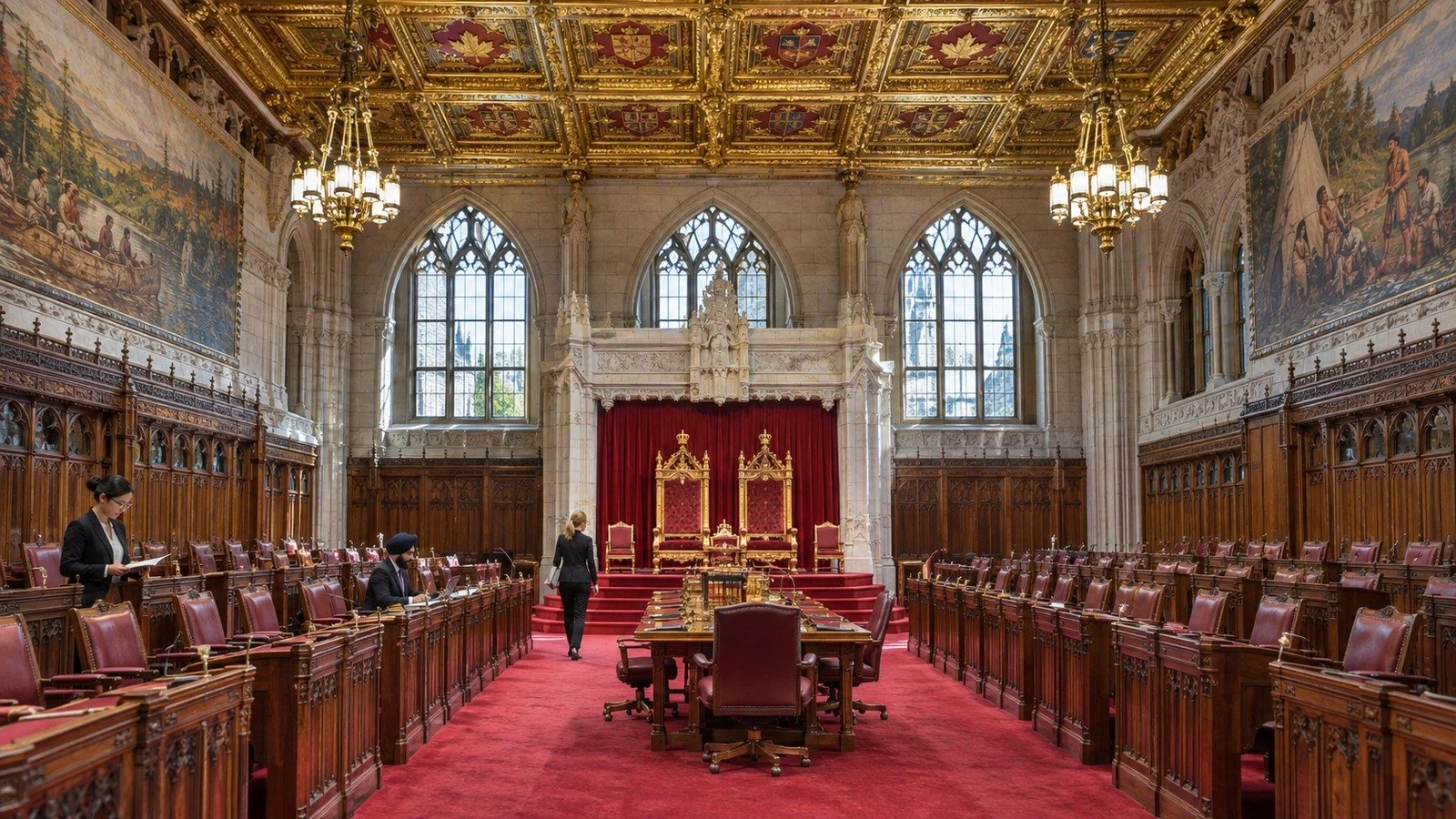
Canada's Parliament has three parts: the King, the Senate and the House of Commons. Members of Parliament (MPs) are elected to the House of Commons, which has 343 seats. The Senate's 105 senators are appointed and serve until age 75. A bill must pass both chambers and receive Royal Assent to become law.
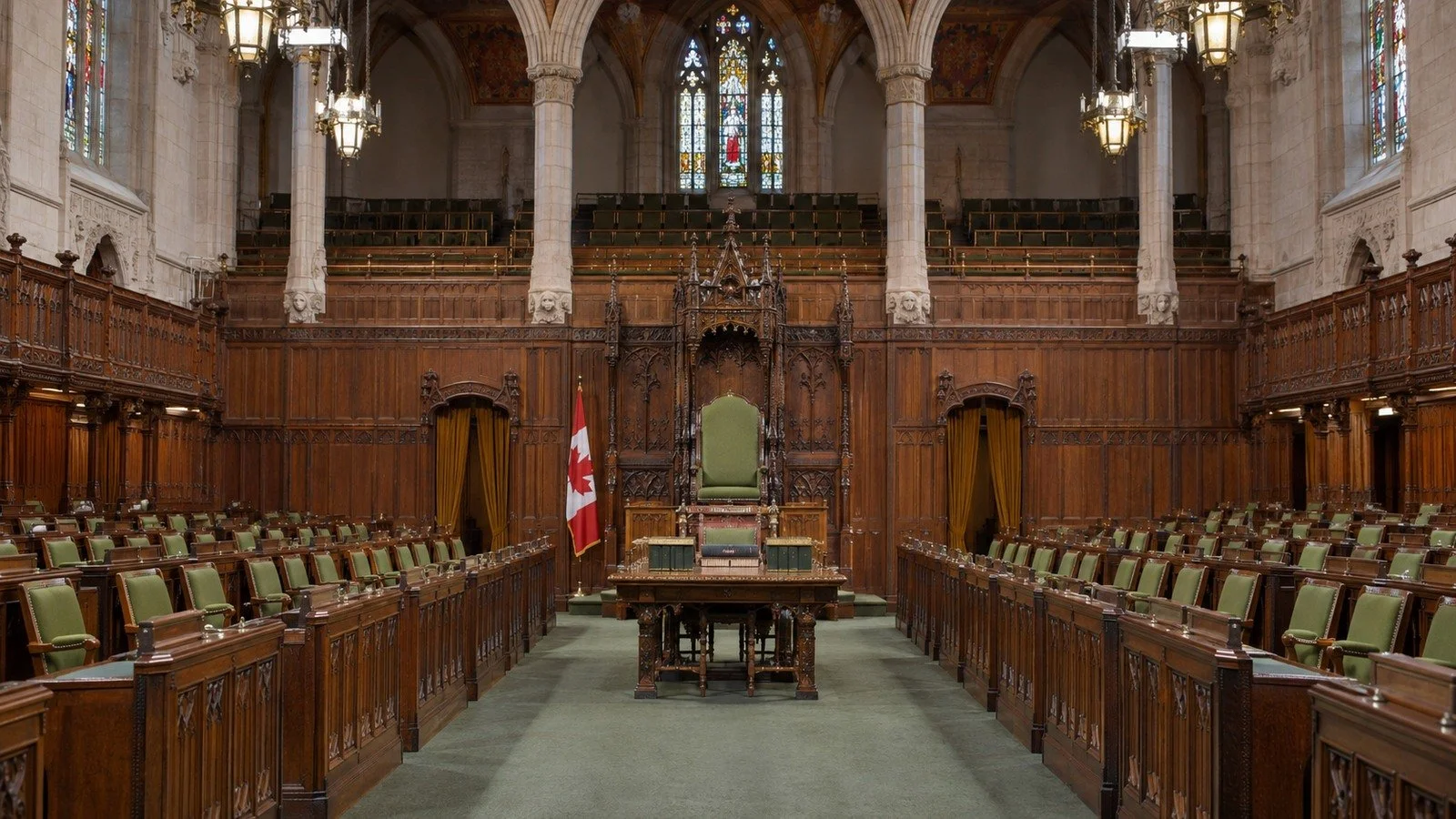
Discover Canada explains that Parliament has three parts: the Sovereign, the Senate and the House of Commons (How Canadians govern themselves).
The House of Commons
Who sits there. The House of Commons is the representative chamber, made up of members of Parliament (MPs) elected by the people, according to Discover Canada.
How many seats. The Canadian Encyclopedia reports that, in 2023, the number of federal electoral districts was expanded to 343, so the House has 343 members (The Canadian Encyclopedia, House of Commons).
Who leads it. The House is presided over by the Speaker. When we checked, the House of Commons website said the Honourable Francis Scarpaleggia was elected Speaker on May 26, 2025.
The Senate
The Senate describes itself as the Upper House in Canada's bicameral (two-chamber) Parliament, with 105 senators who study legislation, suggest improvements and fix mistakes; a bill must pass the Senate before it can become law (Senate of Canada, about the Senate).
According to Discover Canada, senators are appointed by the Governor General on the advice of the Prime Minister and serve until age 75. The Canadian Encyclopedia explains that Senate seats are divided equally among four regional divisions (the Maritimes, Quebec, Ontario and the West), with additional seats for Newfoundland and Labrador and the three territories (The Canadian Encyclopedia, Senate).
Please note: numbers of seats and senators as published by The Canadian Encyclopedia and the Senate of Canada, as of November 2026. Electoral districts are redrawn from time to time: check Elections Canada for the current map.
The Prime Minister and the Cabinet
The Prime Minister is the head of government. After an election, the Governor General usually invites the leader of the party with the most seats in the House of Commons to form the government. The Prime Minister chooses the Cabinet ministers, who run federal departments and must keep the confidence of the House.
Discover Canada explains how a government is formed (Discover Canada, Federal elections):
After an election, the leader of the party with the most seats is usually invited by the Governor General to form the government, and becomes Prime Minister.
If the governing party holds at least half of the seats, it is a majority government; if it holds fewer than half, it is a minority government.
The Prime Minister chooses the ministers of the Crown, most of them from the House of Commons. Together they form the Cabinet, which prepares the budget and proposes most new laws.
The government stays in power as long as it has the confidence of a majority of MPs. If it loses a vote on a major issue, such as the budget, the Prime Minister usually asks the Governor General to call an election.
The opposition party with the most seats is the Official Opposition.
The Canadian Encyclopedia notes that the Prime Minister's powers are not defined in any written law: they follow constitutional conventions (The Canadian Encyclopedia, Prime Minister). When we checked in November 2026, the Prime Minister of Canada's website named Mark Carney as Prime Minister. Our guide Canadian history in plain English explains how this system, responsible government, began.
How does a bill become law in Canada?
A bill (a proposed law) goes through first reading, second reading, committee study, report stage and third reading in one chamber, then a similar process in the other chamber. It becomes law only after both the House of Commons and the Senate pass it and it receives Royal Assent.
Discover Canada lists the steps (How Canadians govern themselves):
First reading: the bill is considered read for the first time and is printed.
Second reading: members debate the principle of the bill.
Committee stage: committee members study the bill clause by clause.
Report stage: members can make other amendments.
Third reading: members debate and vote on the bill.
Senate: the bill follows a similar process in the other chamber.
Royal Assent: after both chambers pass it, the Governor General gives Royal Assent on behalf of the Sovereign.
You can follow bills with LEGISinfo and watch debates, which the House of Commons and the Senate link from their websites.
The courts and the Supreme Court
The courts are the judicial branch. The Supreme Court of Canada, in Ottawa, is the highest court in the country: it has the final say on legal questions under both federal and provincial laws. It has nine judges, including the Chief Justice of Canada.
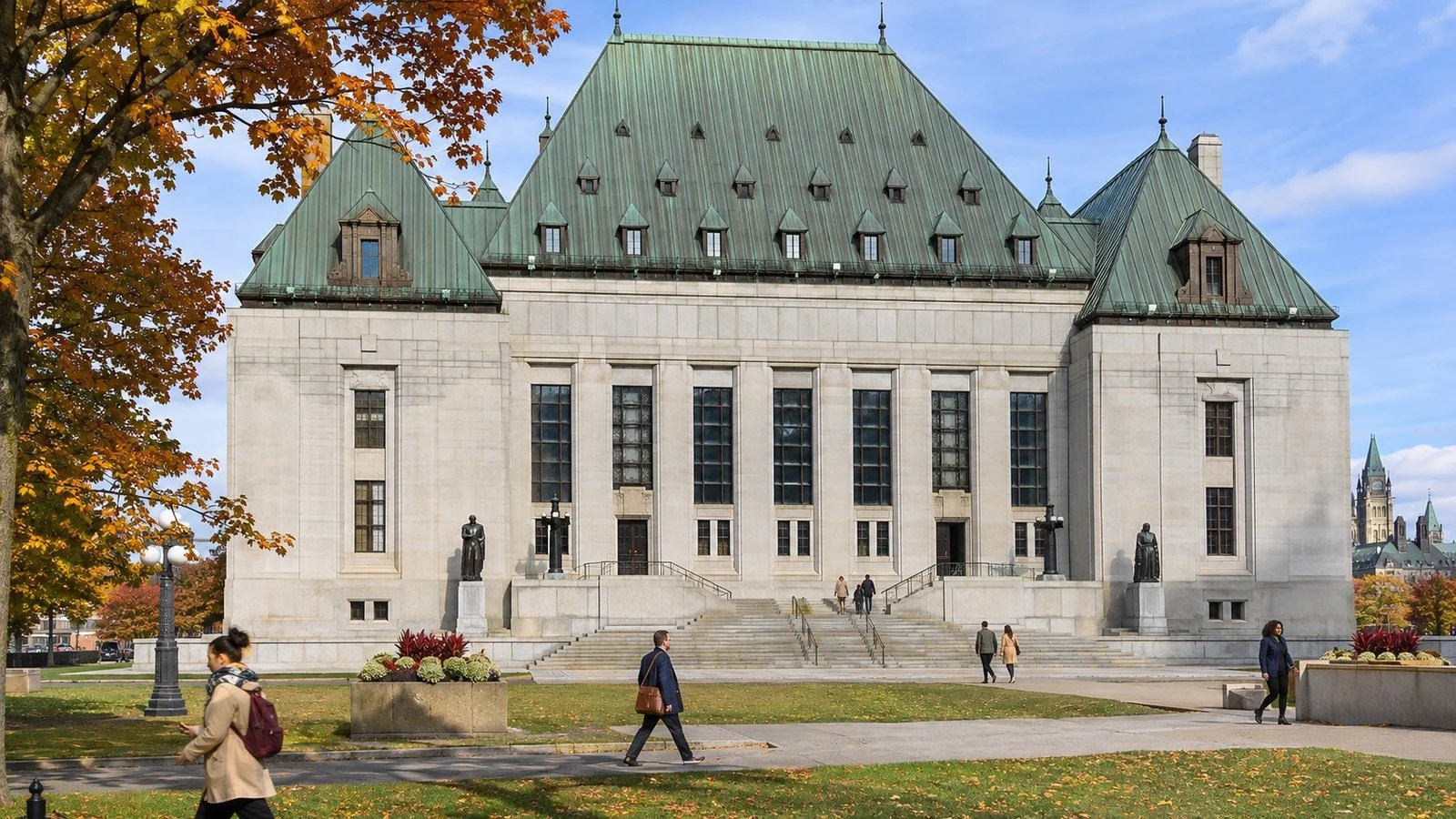
According to The Canadian Encyclopedia, the Supreme Court of Canada was founded in 1875 and has had the final judicial say in Canada since 1949. It has nine judges, at least three of whom must be from Quebec, and judges are nominated by the Prime Minister and appointed by the Governor in Council (The Canadian Encyclopedia, Supreme Court of Canada). The Court's own website is scc-csc.ca.
Federal, provincial, territorial and municipal: who does what?
The federal government handles national matters such as defence, foreign policy, citizenship, criminal law and currency. Provinces handle education, health care delivery, natural resources and highways. Immigration and agriculture are shared. Territories exercise powers delegated by Parliament, and municipalities run local services such as garbage removal, transit and snow removal.
Federal powers
According to Discover Canada, the federal government is responsible for matters of national and international concern, including defence, foreign policy, interprovincial trade and communications, currency, navigation, criminal law and citizenship (How Canadians govern themselves). The Government of Canada's distribution of legislative powers page adds areas such as banking, the postal service and marriage and divorce.
Provincial powers
The same sources say the provinces are responsible for education, hospitals and health care delivery, municipalities, natural resources, property and civil rights, the administration of justice and highways. Each province has its own elected legislature.
Shared powers
According to the distribution of powers page, immigration and agriculture are shared between the federal government and the provinces. It also explains that some areas, such as the environment and health, are not named in the Constitution, and that the courts have found they fall under several federal and provincial powers.
Health care: a closer look
Health Canada explains that the provinces and territories deliver health care services and regulate health professionals, while the federal government sets national standards under the Canada Health Act, helps fund health care through the Canada Health Transfer, and provides some services directly to specific groups (Health Canada, Canada's health care system).
Territories
According to the Government of Canada's page on provinces and territories, Yukon, the Northwest Territories and Nunavut cover about 40% of Canada's land mass but have about 3% of its population, and while provinces exercise powers recognized by the Constitution, the territories exercise powers delegated by the federal Parliament.
Municipalities
The Government of Canada notes that municipal government is not a constitutional order of government: municipalities are created by the provinces, which delegate some powers to them (distribution of legislative powers). Discover Canada explains that municipal councils, led by a mayor or reeve, pass by-laws and are usually responsible for local planning, streets and roads, garbage removal, snow removal, firefighting, emergency services, recreation facilities, public transit and some local health and social services (Federal elections; see also The Canadian Encyclopedia, Municipal government).
Who to contact: a practical list
Based on the division of powers described above:
Citizenship and immigration applications: the federal government (IRCC), with immigration shared with the provinces; see our guide How to immigrate to Canada.
Health card and public schools: your province or territory.
Garbage collection, local transit, snow removal and parking: your municipality.
Please note: division of powers as described by the Government of Canada, Health Canada, IRCC's Discover Canada and The Canadian Encyclopedia, as of November 2026. The real picture is more complex, many programs involve more than one level of government, and courts can change how powers are interpreted: check the official page for each service you need.
Elections: who can vote in Canada?
To vote in a federal election, you must be a Canadian citizen and at least 18 years old, according to Elections Canada. Permanent residents and temporary residents cannot vote in federal elections. Voting is by secret ballot, and you must prove your identity and address at the polls.
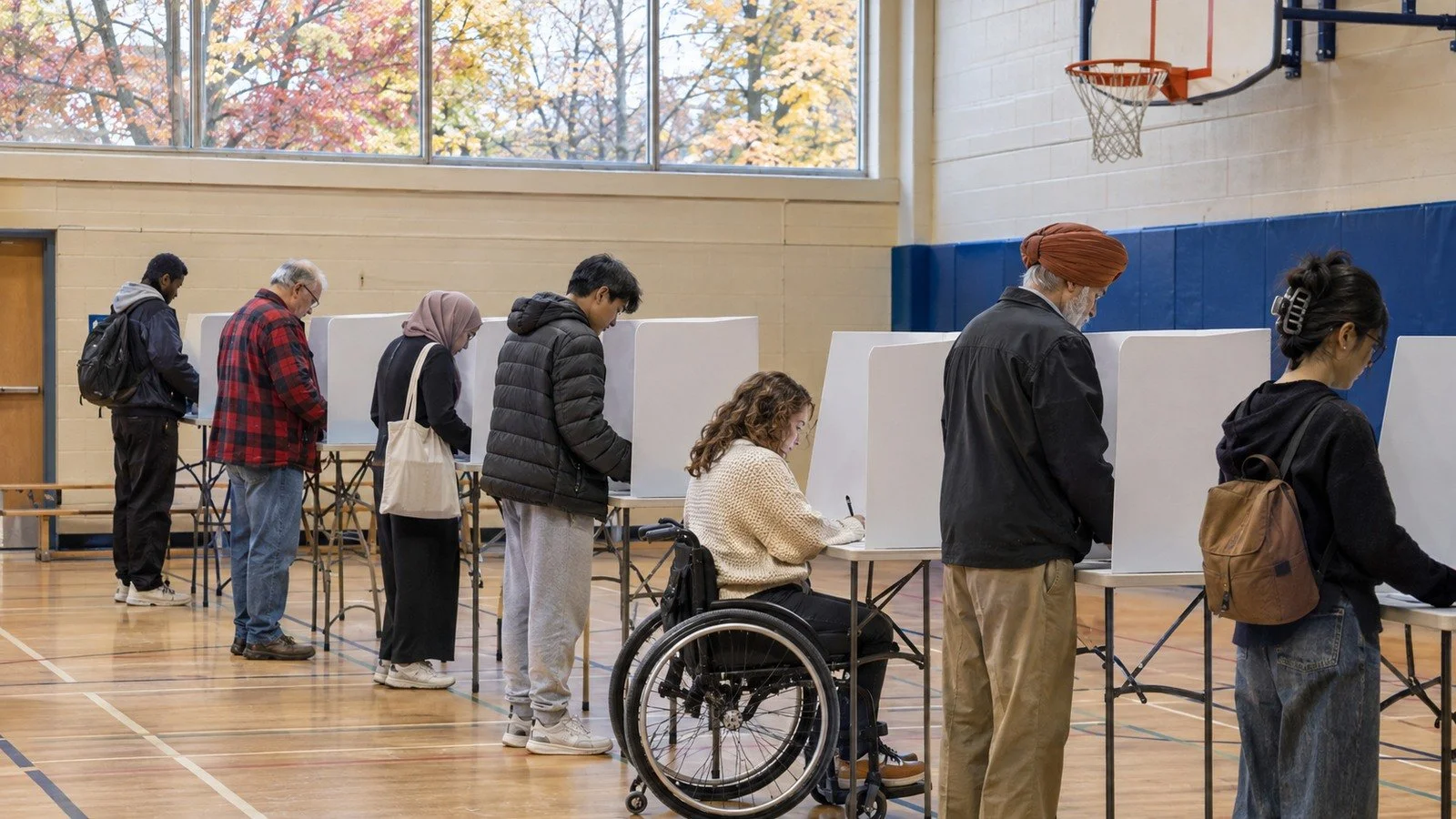
Who can vote
Elections Canada says that to register and vote in a federal election, you must be at least 18 years old and have Canadian citizenship (Elections Canada, voter registration). Because citizenship is required, permanent residents and people on study or work permits cannot vote in federal elections. Elections Canada also explains that if you are registered at the right address, you receive a voter information card telling you when, where and how to vote.
How elections work
Discover Canada explains that, under federal law, elections are held on the third Monday in October every four years after the last general election, although the Prime Minister may ask the Governor General to call an earlier one. Voters in each electoral district, or riding, elect one MP; the candidate with the most votes wins (Discover Canada, Federal elections).
ID to vote
According to Elections Canada, you must prove your identity and address. You can show one government photo ID with your current address, such as a driver's licence; or two pieces of ID with your name, at least one with your address; or declare your identity in writing and have someone vouch for you (Elections Canada, ID to vote).
Please note: voting rules as published by Elections Canada and IRCC, as of November 2026. Rules for provincial, territorial and municipal elections differ, and some municipalities have their own rules: check the official elections agency for each election.
Where is Parliament? Parliament Hill, the Centre Block and the West Block
Parliament meets in Ottawa, Ontario, on Parliament Hill, overlooking the Ottawa River. The historic Centre Block, with the Peace Tower, is closed for a major renovation. During the work, the House of Commons sits in the West Block and the Senate in the Senate of Canada Building, a restored former train station.
Parliament Hill
The Canadian Encyclopedia explains that Parliament Hill sits on a limestone outcrop overlooking the Ottawa River, that it was proposed after Queen Victoria chose Ottawa as the capital in 1857, that construction began in 1859, and that the Parliament Buildings (the Centre Block and the East and West blocks) officially opened on June 6, 1866 (The Canadian Encyclopedia, Parliament Buildings).
The Centre Block renovation
Public Services and Procurement Canada (PSPC), which looks after the buildings, says that the Centre Block is closed for a major renovation, the largest and most complex heritage rehabilitation project of its kind in Canada (PSPC, projects in the Parliamentary Precinct). Its latest progress page explains that:
an underground Parliament Welcome Centre is being expanded to span the length of the Centre Block and connect it to the East and West blocks;
the building is being placed on more than 500 base isolators to protect it from earthquakes;
the main Library of Parliament remains closed during the project.
For the budget and target completion date, PSPC publishes a quarterly progress report on the Centre Block project.
Where the House and the Senate sit now
The House of Commons sits in the West Block, which PSPC says was renovated to create an interim home for the House (PSPC, projects in the Parliamentary Precinct). The House offers a virtual tour of its West Block Chamber.
The Senate sits in the Senate of Canada Building at 2 Rideau Street, Ottawa's former central train station, restored as the Senate's temporary home, according to PSPC and the Senate's visitor page.
Please note: building information as published by PSPC, the House of Commons, the Senate and The Canadian Encyclopedia, as of November 2026. Access to buildings changes during construction: check the official visitor pages before you go.
How to get to Parliament Hill
Parliament Hill is in downtown Ottawa. You can reach Ottawa by plane through Ottawa International Airport, by VIA Rail train from Toronto or Montreal, or by car. In the city, OC Transpo's O-Train Line 1 has stations near the Hill, including Parliament and Rideau.
According to Ottawa Tourism's getting here page, as of November 2026:
By train: VIA Rail has daily departures to Ottawa from major cities in southern Ontario and southern Quebec. The page gives approximate travel times of about 4.5 hours from Toronto and 2 hours from Montreal. Ottawa's main station is a few minutes east of downtown (VIA Rail).
By plane: the Ottawa International Airport is about a 20-minute drive from downtown, and OC Transpo serves it with bus route 105 and the O-Train.
Getting around Ottawa
O-Train and buses: OC Transpo runs buses and the O-Train in Ottawa; its station list includes Parliament and Rideau (OC Transpo).
To the Senate of Canada Building: the Senate suggests taking O-Train Line 1 to Rideau Station, walking through the Rideau Centre to Rideau Street and Colonel By Drive, and crossing to the building (Senate, visit the Senate).
Please note: travel times and transit information as published by Ottawa Tourism, OC Transpo and the Senate, as of November 2026. Schedules and routes change: check OC Transpo and VIA Rail before you travel.
How to book a free tour of Parliament
The Library of Parliament offers free guided tours of the Senate of Canada Building and other parts of Parliament Hill, in English and French. Book through the official visitor site, visit.parl.ca, which the House of Commons and the Senate both link to. Expect security screening when you arrive.
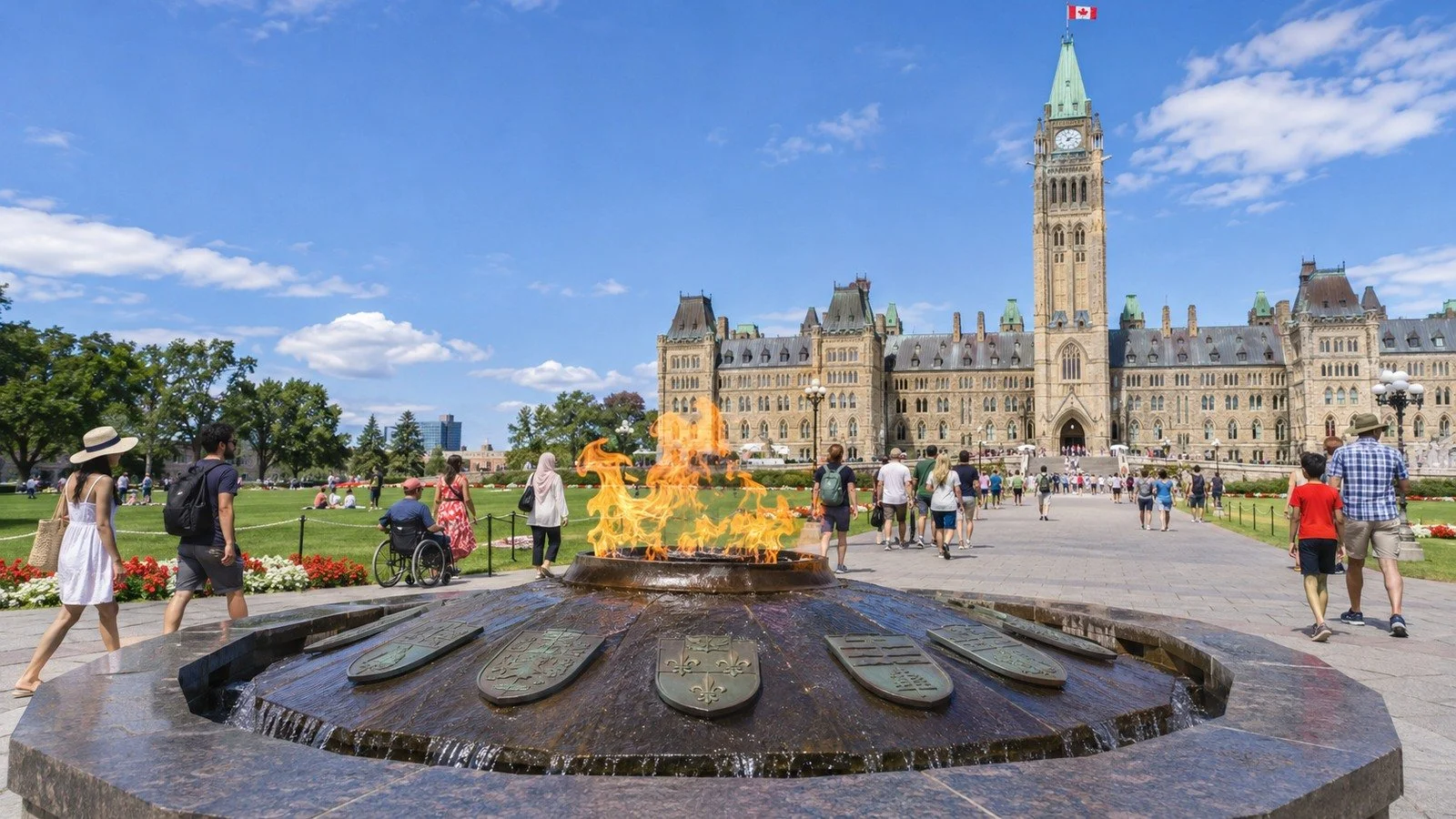
The Senate's visitor page explains, as of November 2026:
Free guided tours. The Library of Parliament offers free guided tours of the Senate of Canada Building and other parts of Parliament Hill, with guides in English and French. The page has a "Book your tour" link to the Library of Parliament's visitor site.
Security. All visitors go through security screening, and some parts of the building may be closed to the public.
Watching the Senate. When the Senate is sitting, visitors can watch from the public galleries after a second screening, usually on Tuesday, Wednesday and Thursday afternoons; the Senate says this may change and points to its calendar.
The House of Commons' website links to the official visitor site, visit.parl.ca, for planning a visit and for attending live debates in the House (House of Commons).
Please note: visitor information as published by the Senate of Canada and the House of Commons, as of November 2026. Tour times, open buildings and booking rules change, especially during the Centre Block renovation: confirm on visit.parl.ca before you go.
Provincial and territorial legislatures
Each province and territory has its own elected legislature, where provincial or territorial laws are passed. The head of each provincial government is the premier. Depending on the province, members are called MLAs, MPPs, MNAs or MHAs. Some legislatures, such as Ontario's, offer public tours.
Discover Canada explains that each provincial and territorial government has an elected legislature, and that members are called members of the Legislative Assembly (MLAs), of the National Assembly (MNAs, in Quebec), of the Provincial Parliament (MPPs, in Ontario) or of the House of Assembly (MHAs, in Newfoundland and Labrador). In each province, the premier has a role similar to the Prime Minister's, and the lieutenant governor a role similar to the Governor General's (How Canadians govern themselves; see also The Canadian Encyclopedia, Premier).
Official legislature websites:
Legislative Assembly of Ontario (Queen's Park, Toronto). Its website says guided tours of the Legislative Building are offered every 30 minutes.
Yukon Legislative Assembly (Whitehorse): The Canadian Encyclopedia's territorial government article explains how Yukon's government works.
Government on the citizenship test
If you apply for citizenship and are between 18 and 54, you will likely take a knowledge test. IRCC says all questions come from Discover Canada, which has chapters on how Canadians govern themselves and on federal elections. Its elections chapter also has a checklist of your own representatives.
IRCC explains that applicants aged 18 to 54 on the day they sign take a knowledge test (how the test works), and that all questions are based on its study guide, Discover Canada (study for the test).
Read the two government chapters: How Canadians govern themselves and Federal elections; the elections chapter ends with a checklist of your own representatives.
Update older facts: Discover Canada was written before King Charles III's reign and gives an older number of electoral districts, so check current official pages.
Practise with IRCC's study questions, and read our guides Canadian history in plain English and the Canadian citizenship guide.
Please note: test rules as published by IRCC, as of November 2026. This guide does not replace the official study guide, and passing the test is only one requirement for citizenship: IRCC decides each application.
Frequently asked questions
Who is the head of state in Canada?
His Majesty King Charles III is King of Canada and head of state, according to the Governor General's website. Canada is a constitutional monarchy, so the King does not "rule": elected governments make decisions. The head of government is the Prime Minister. See our section on the constitutional monarchy.
What does the Governor General of Canada do?
The Governor General represents the King in Canada. According to the Governor General's website, the role includes constitutional duties such as Royal Assent, serving as commander-in-chief, representing Canada and presenting honours. Canadian Heritage says the Governor General is appointed by the King on the advice of the Prime Minister, usually for 5 years. See our section on the King and the Governor General.
How many MPs and senators does Canada have?
According to The Canadian Encyclopedia, the House of Commons has 343 seats since the number of electoral districts was expanded in 2023, and each seat is held by an elected member of Parliament. The Senate of Canada says it has 105 senators. Senators are appointed by the Governor General on the advice of the Prime Minister and serve until age 75, according to IRCC's Discover Canada. See our section on Parliament.
How is the Prime Minister of Canada chosen?
Canadians do not vote for the Prime Minister directly. They elect MPs in their ridings. According to IRCC's Discover Canada, after an election the Governor General usually invites the leader of the party with the most seats in the House of Commons to form the government, and that leader becomes Prime Minister. The Prime Minister stays in office as long as the government keeps the confidence of the House. See our section on the Prime Minister and Cabinet.
What is the difference between federal and provincial government in Canada?
The federal government, in Ottawa, handles national matters such as defence, foreign policy, citizenship, criminal law and currency. Provinces handle areas such as education, health care delivery, natural resources and highways, according to IRCC's Discover Canada and the Government of Canada's distribution of powers page. Immigration and agriculture are shared. See our section on who does what.
Can permanent residents vote in Canada?
Not in federal elections. Elections Canada says that to vote in a federal election you must be at least 18 years old and a Canadian citizen. Permanent residents, international students and temporary workers cannot vote federally. Rules for provincial, territorial and municipal elections are set separately, so check the official elections agency for each one. See our section on elections.
Are Parliament tours free, and how do I book one?
Yes. The Senate of Canada says the Library of Parliament offers free guided tours of the Senate of Canada Building and other parts of Parliament Hill, in English and French. You book through the official visitor site, visit.parl.ca, which both the Senate and House of Commons websites link to. All visitors go through security screening. See our section on booking a tour.
How do I get to Parliament Hill by public transit?
Parliament Hill is in downtown Ottawa. OC Transpo's O-Train Line 1 has stations named Parliament and Rideau. The Senate suggests getting off at Rideau Station to reach the Senate of Canada Building. From the airport, Ottawa Tourism says OC Transpo route 105 and the O-Train connect to downtown. See our section on getting to Parliament Hill.
Related guides
Canadian history in plain English: from First Peoples to today
Newcomer guide: work permits, Toronto life and jobs in Canada
How Global Opportunities can help
Understanding how Canada's government works is part of settling in, and of becoming a citizen one day. If you are also planning your move or your next immigration step, we can help you understand your options.
Our regulated consultant: Lic. Mildrete Monserrath Gutierrez Martinez, Regulated Canadian Immigration Consultant (RCIC), CICC licence R514880. Verify her licence on the CICC Public Register: https://college-ic.ca/protecting-the-public/find-an-immigration-consultant. Global Opportunities does not offer services for Quebec's immigration programs. Global Opportunities is a private firm and is not part of the Government of Canada or any provincial government.
Recorded seminars and lives: watch our recorded seminars in English or the Spanish recordings, and visit our YouTube channel.
More articles in English: read our Moving to Canada articles on topics such as health care, cost of living, the ECA and professional licences, and building community in Canada.
Personalized consultation: for a review of your own case, contact us or write to info@globalopp.ca.
Prefer email? Tell us what you need help with (my plans to move to Canada) and we will reply: email info@globalopp.ca.
Contact Global Opportunities →
Sources
IRCC, Discover Canada: How Canadians govern themselves, Federal elections, Canada's justice system, study questions
IRCC, citizenship test: how it works, study for the test
Canadian Heritage: the Monarch, the Governor General, lieutenant governors
House of Commons: home page, virtual tour of the Chamber
Senate of Canada: about the Senate, visit the Senate
Canadian Intergovernmental Affairs: distribution of legislative powers, provinces and territories
Elections Canada: voter registration, ID to vote
Public Services and Procurement Canada: projects in the Parliamentary Precinct, Centre Block project, Centre Block latest progress, Parliamentary Precinct
Ottawa Tourism: getting here, getting around · OC Transpo · VIA Rail · Ottawa International Airport
The Canadian Encyclopedia (Historica Canada): House of Commons, Senate, Prime Minister, Premier, Supreme Court of Canada, Territorial government, Municipal government, Parliament Buildings
Provincial and territorial legislatures: British Columbia, Alberta, Saskatchewan, Manitoba, Ontario, Quebec, New Brunswick, Nova Scotia, Prince Edward Island, Newfoundland and Labrador, Northwest Territories, Nunavut
The information in this guide comes from the official and reputable sources linked in each section and listed above, as they read when we checked them in November 2026, and it may have changed since. It is general and for reference only. It is not immigration, legal or professional advice. Officeholders, seat numbers, voting rules, transit routes and visitor information change, and the Centre Block renovation affects which buildings are open. Global Opportunities is not responsible for how anyone interprets this content, for decisions made based on it, or for changes made to the sources after it was written: what you read depends on when you read it. Always confirm with the official Government of Canada, Parliament, Elections Canada and provincial sources. Global Opportunities is a private firm, is not part of the Government of Canada, of Parliament or of any regulator, and does not offer jobs. For your own case, book a consultation.
Last reviewed: November 2026