
Things to Do in Canada: Landmarks, Nature and Festivals by Province
Things to do in Canada range from big-city landmarks such as the CN Tower to some of the world's highest tides, polar bears, icebergs and the northern lights. This guide goes province by province and territory by territory through the main landmarks, national parks and festivals, and explains how the Parks Canada Discovery Pass works, so you can plan your first trips after you arrive.
About our sources: This guide summarises what official sources (the Government of Canada, provincial and territorial governments and the other organisations we link to) said when we checked them in November 2026. We link every source so you can read it yourself. Rules, rates and requirements change, sometimes without notice, and the official page is the one that counts. This is general information, not legal, tax or immigration advice. Global Opportunities is not responsible for how this information is interpreted or for changes made after it was written.
Most newcomers spend their first months close to home, but sooner or later the question comes up: where should we go on the next long weekend? This guide lists the places and events that official tourism agencies, Parks Canada and the organisers describe, with a link to each one. We do not give prices: always check the official page for current prices, dates and opening hours.
Watch our recorded seminars and lives →
In this guide
Where to start: how to plan trips in Canada
National parks and the Parks Canada Discovery Pass
Things to do in Ontario
Things to do in Quebec
Things to do in British Columbia
Things to do in Alberta
Things to do in Saskatchewan
Things to do in Manitoba
Things to do in New Brunswick
Things to do in Nova Scotia
Things to do in Prince Edward Island
Things to do in Newfoundland and Labrador
Things to do in Yukon, the Northwest Territories and Nunavut
Canada's festivals through the seasons
Practical tips for exploring Canada as a newcomer
Frequently asked questions
Related guides
How Global Opportunities can help
Sources
Where to start: how to plan trips in Canada
The best starting points are the official tourism websites. Destination Canada, the federal tourism agency, runs a national site with ideas by region, and every province and territory has its own official tourism site with attractions, events and seasonal tips. Parks Canada lists every national park and historic site.
Destination Canada describes the country as spreading "from the Pacific to the Atlantic and the furthest reaches of the Arctic Circle" on its Things to do page.
Each province and territory also has an official tourism site, such as Destination Ontario, Bonjour Québec, Destination BC, Travel Alberta, Tourism Saskatchewan, Travel Manitoba, Tourism Nova Scotia, Tourism PEI, Newfoundland and Labrador Tourism, Travel Yukon, Spectacular NWT and Travel Nunavut.
This list of tourism sites is for reference only. Global Opportunities has no relationship with any tourism agency, attraction, tour operator or festival named in this guide, and we do not recommend one over another.
National parks and the Parks Canada Discovery Pass
Parks Canada runs Canada's national parks, national historic sites and national marine conservation areas. According to Parks Canada, an annual Discovery Pass covers admission to more than 80 destinations for 12 months, youth aged 17 and under get free admission, and new permanent residents and new citizens can also get free admission.
What the Discovery Pass is
Parks Canada's passes, permits and fees page says the Discovery Pass "covers admission to more than 80 destinations for 12 months". You can buy it online or at the participating parks and sites listed on that page. Parks Canada also sells single-location passes, which are valid at one park or site only.
Free admission for youth and for newcomers
The same Parks Canada page lists several types of free admission, including:
Youth 17 and under: free admission.
Newcomers to Canada and new Canadian citizens: Parks Canada offers "free admission for new Canadian permanent residents and new Canadian citizens".
Support persons travelling with a visitor who has a disability.
Veterans and members of the Canadian Armed Forces and their families.
The same page says the Canada Strong Pass, which offered free admission and discounted camping during set periods, ended on September 7, 2026, and that regular fees apply from September 8, 2026.
Please note: Admission rules as published by Parks Canada, as of November 2026. Free admission categories, the list of participating places and the conditions can change, and other service fees (camping, guided programs, parking) may still apply. Check the Parks Canada page before you travel.
Canada's World Heritage sites
According to Parks Canada's World Heritage sites page, 22 Canadian places are inscribed on UNESCO's World Heritage List. We mention several of them in the province sections below.
Respect the rules in the parks
Parks are protected areas with their own rules. For example, the official pages for Banff, Waterton Lakes and Nahanni say that using recreational drones in those parks is prohibited. Many park pages also post bear, cougar or wolf warnings. Keep your distance from wildlife, never feed animals, and read the park's bulletins before you go.
Things to do in Ontario
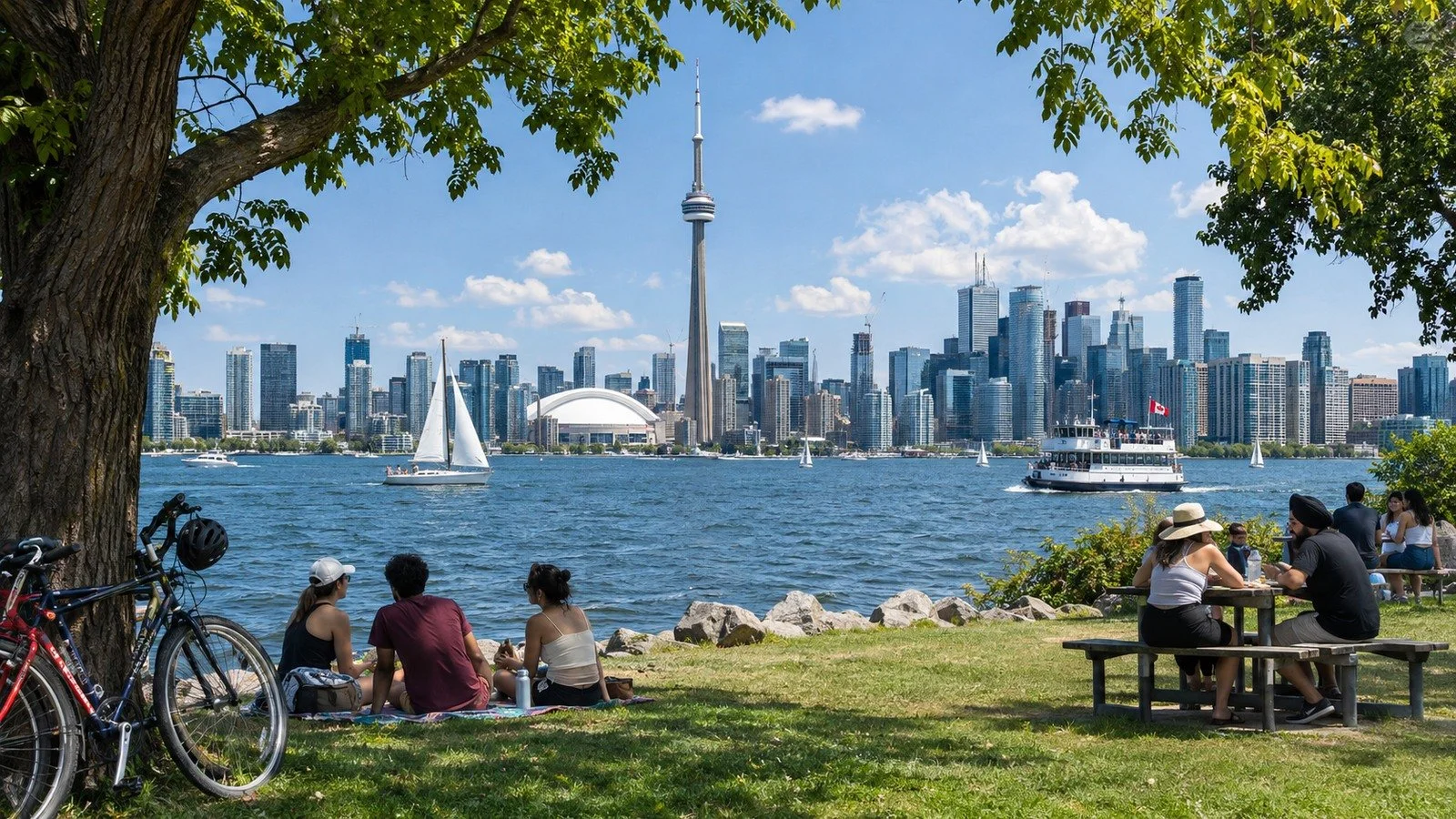
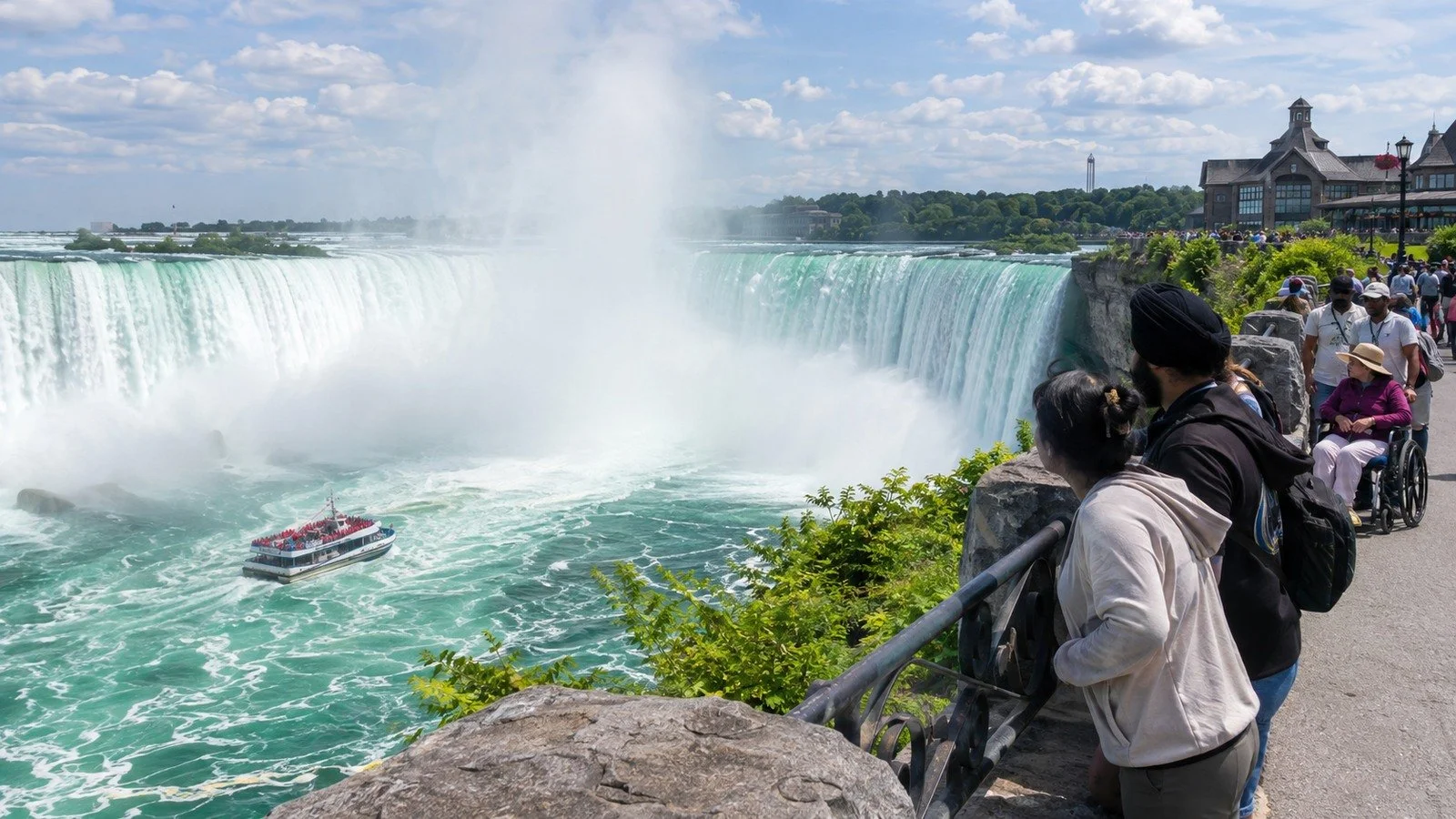
Ontario's best-known landmarks are the CN Tower in Toronto, Niagara Falls and Parliament Hill in Ottawa. In winter, the Rideau Canal Skateway in Ottawa becomes a skating rink, and the province's national parks include Bruce Peninsula and Point Pelee.
Toronto and the CN Tower
Destination Ontario's Toronto page describes the CN Tower as "the iconic needle" of Toronto's skyline and mentions the 360 restaurant at 447 metres and the open-air EdgeWalk. The CN Tower's official site describes EdgeWalk as a hands-free walk around the outside of the main pod, 116 storeys above the ground, and says its top level is the highest viewing platform in the Western Hemisphere.
Niagara Falls
Niagara Parks, the provincial agency that runs the parkland along the Niagara River, lists attractions such as Journey Behind the Falls, the Niagara City Cruises boat tours, the Whirlpool Aero Car, the White Water Walk and the Butterfly Conservatory. The Government of Ontario's About Ontario page also highlights Niagara Falls. Destination Ontario also has a Niagara Falls page.
Ottawa: Parliament Hill and the Rideau Canal
Destination Ontario's Ottawa page says Ottawa was established as Canada's capital in 1857, that a tour of Parliament Hill is on the "must-see list", and that free tours of the buildings are available year-round.
Rideau Canal Skateway: the National Capital Commission's Skateway page says the Skateway runs for 7.8 km through the city, that the season usually runs from January to early March depending on the weather, and that it is free when open.
Rideau Canal: Parks Canada's Rideau Canal page calls it North America's best-preserved "slackwater" canal and a UNESCO World Heritage Site, with historic locks that boaters use in summer.
Ontario's national parks and festivals
Bruce Peninsula National Park: Parks Canada describes towering cliffs of the Niagara Escarpment above the blue waters of Georgian Bay, in the traditional territory of the Saugeen Ojibway Nation.
Point Pelee National Park: Parks Canada says Point Pelee is at the southernmost point of the Canadian mainland and is Canada's second smallest national park.
Festivals: the Government of Ontario's About Ontario page names Caribbean Carnival, Oktoberfest, Festival Franco-Ontarien, the Summer Solstice Indigenous Festival and the Indigenous Arts Festival.
Read our guide to living in Ontario for transit, rent and daily life in Toronto and Ottawa.
Things to do in Quebec
Quebec's highlights include the Historic District of Old Québec, a UNESCO World Heritage Site, the Carnaval de Québec winter festival and Montréal, with Mount Royal and a busy festival calendar. Visiting Quebec as a tourist is open to everyone. Note that Global Opportunities does not offer services for Quebec's immigration programs.
Old Québec: Parks Canada's Fortifications of Québec page describes the fortifications as part of the Historic District of Old Québec, "a UNESCO World Heritage jewel".
Carnaval de Québec: the Carnaval's official site announces its next edition from February 5 to 14, 2027 and describes itself, in French, as the largest winter festival in the world.
Montréal: Bonjour Québec's Montréal page highlights Mount Royal, which "reigns over the downtown core", and a full calendar of festivals.
Saint-Jean-Baptiste Day: according to Canadian Heritage, Francophones across the country celebrate their language and traditions on June 24. See our guide to Canadian holidays.
Things to do in British Columbia
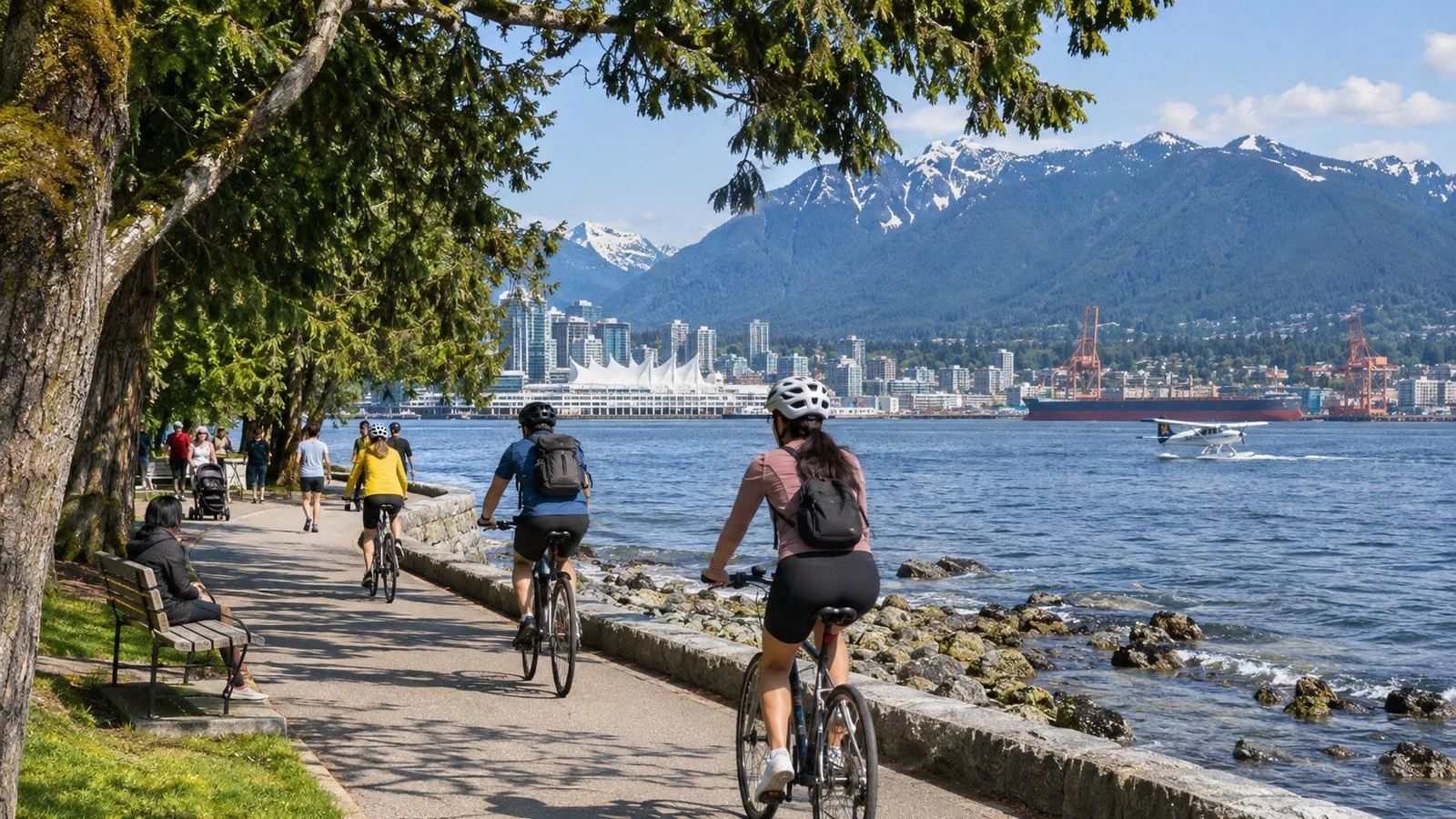
British Columbia combines city life in Vancouver and Victoria with mountains, rainforest and the Pacific coast. Destination BC highlights Stanley Park in Vancouver and Victoria's Inner Harbour, and Parks Canada runs Pacific Rim National Park Reserve on Vancouver Island and Yoho National Park in the Rockies.
Vancouver: Destination BC's Vancouver page describes "a city set between ocean and mountains" and features the Stanley Park Seawall.
Victoria: Destination BC's Victoria page describes BC's capital as an oceanside hub on Vancouver Island, in the territory of the Lekwungen-speaking Songhees and Xwsepsum Nations. Near Victoria, the Butchart Gardens open year-round, with seasonal hours listed on their site.
Pacific Rim National Park Reserve: Parks Canada describes long sandy beaches and temperate rainforests on the west coast of Vancouver Island, in the traditional territories of the Nuu-chah-nulth First Nations, with storm watching and the West Coast Trail.
Yoho National Park: Parks Canada says Yoho sits on the western slopes of the Great Divide, with glaciers and waterfalls. In November 2026 its page announced that waterbodies were closed to watercraft and angling until March 31, 2027.
Read our guide to living in British Columbia for more on daily life there.
Things to do in Alberta
Alberta is home to Banff, Canada's first national park, and Jasper, the largest national park in the Canadian Rockies. Other highlights are the dinosaur country around Drumheller, Head-Smashed-In Buffalo Jump and, every July, the Calgary Stampede.
Banff, Lake Louise and Jasper
Banff National Park: Parks Canada calls Banff "Canada's first national park and the flagship of the nation's park system", part of the Canadian Rocky Mountain Parks UNESCO World Heritage Site.
Jasper National Park: Parks Canada says Jasper is "the largest national park in the Canadian Rockies" and the world's second largest dark sky preserve, known for its wildlife and trails.
Dinosaurs and Plains history
Royal Tyrrell Museum: near Drumheller, the Royal Tyrrell Museum of Palaeontology says its galleries cover "the 3.9-billion-year history of life on Earth".
Dinosaur Provincial Park: Alberta Parks places it 48 km northeast of Brooks, about two hours' drive from Drumheller.
Head-Smashed-In Buffalo Jump: the interpretive centre near Fort Macleod is a UNESCO World Heritage Site that "preserves and interprets over 6,000 years of Plains Buffalo culture".
The Calgary Stampede and Edmonton's festivals
The Calgary Stampede, which calls itself "The Greatest Outdoor Show on Earth", lists its next edition for July 9 to 18, 2027, with the rodeo, the parade and the Stampede Powwow. In Edmonton, the Edmonton Folk Music Festival takes place every August on Gallagher Hill. Its site lists August 5 to 8, 2027.
Read our guide to living in Alberta and, on our YouTube channel, the short video What is Alberta known for?.
Things to do in Saskatchewan
Saskatchewan offers wide prairie skies, fossils and Indigenous heritage. Grasslands National Park protects prairie landscapes with dinosaur fossils, Prince Albert National Park covers the transition to the boreal forest, and Wanuskewin near Saskatoon and the RCMP Heritage Centre in Regina tell stories of the land and its people.
Grasslands National Park: Parks Canada invites visitors to experience the southern Saskatchewan prairie "by day or night", with dinosaur fossils, tipi rings and bison drive lanes among the evidence of those who came before.
Prince Albert National Park: in central Saskatchewan, Prince Albert National Park sits where prairie grasslands meet the lakes and wetlands of the boreal forest.
Wanuskewin: Wanuskewin, near Saskatoon, offers Indigenous experiences, tours, trails and galleries, and its site has a section on its bison.
RCMP Heritage Centre: in Regina, the RCMP Heritage Centre says the Government of Canada will designate it as a national museum.
Read our guide to living in Saskatchewan for daily life in Regina and Saskatoon.
Things to do in Manitoba
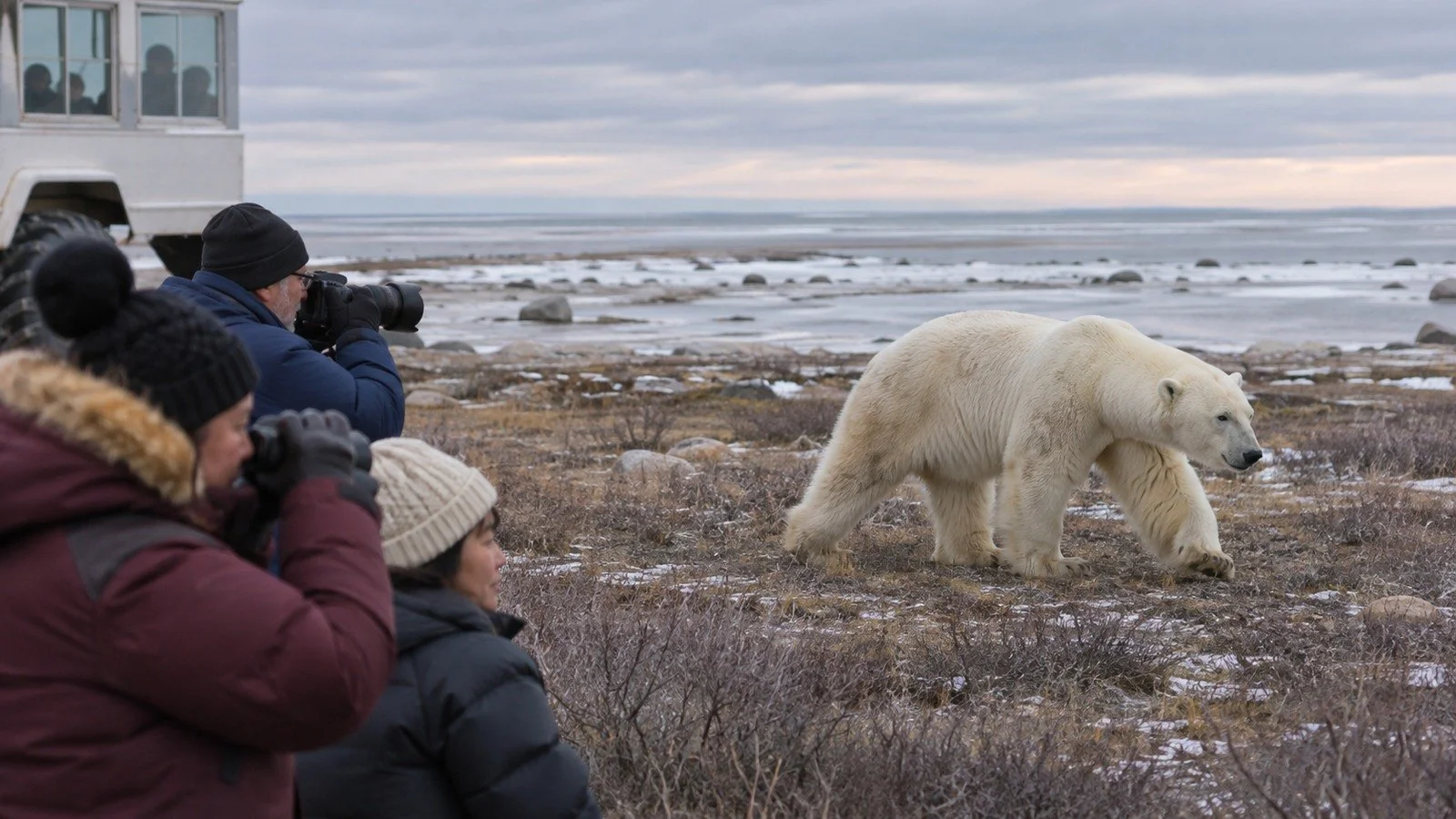
Manitoba is best known internationally for Churchill, which Travel Manitoba calls the Polar Bear Capital of the World. In summer, thousands of beluga whales gather in the Churchill River estuary. Winnipeg has The Forks, the Canadian Museum for Human Rights and, every February, the Festival du Voyageur.
Churchill: polar bears and beluga whales
Polar bears: Travel Manitoba's polar bear page says that "from mid-October to mid-November an average of 600 bears roam the Hudson Bay shore waiting for the sea ice to form".
Wapusk National Park: Parks Canada says Wapusk protects one of the largest polar bear maternity denning areas in the world, and that a licensed tour operator is required for all activities in the park.
Beluga whales: Travel Manitoba's beluga page says thousands of belugas spend the summer in the Churchill River estuary.
Winnipeg and the rest of Manitoba
The Forks: The Forks National Historic Site is a Parks Canada site in central Winnipeg.
Canadian Museum for Human Rights: the museum is also in Winnipeg.
Festival du Voyageur: the Festival du Voyageur in Winnipeg describes itself, in French, as the largest Francophone event in Western Canada. Its 58th edition is scheduled for February 12 to 21, 2027.
Read our guide to living in Manitoba.
Things to do in New Brunswick
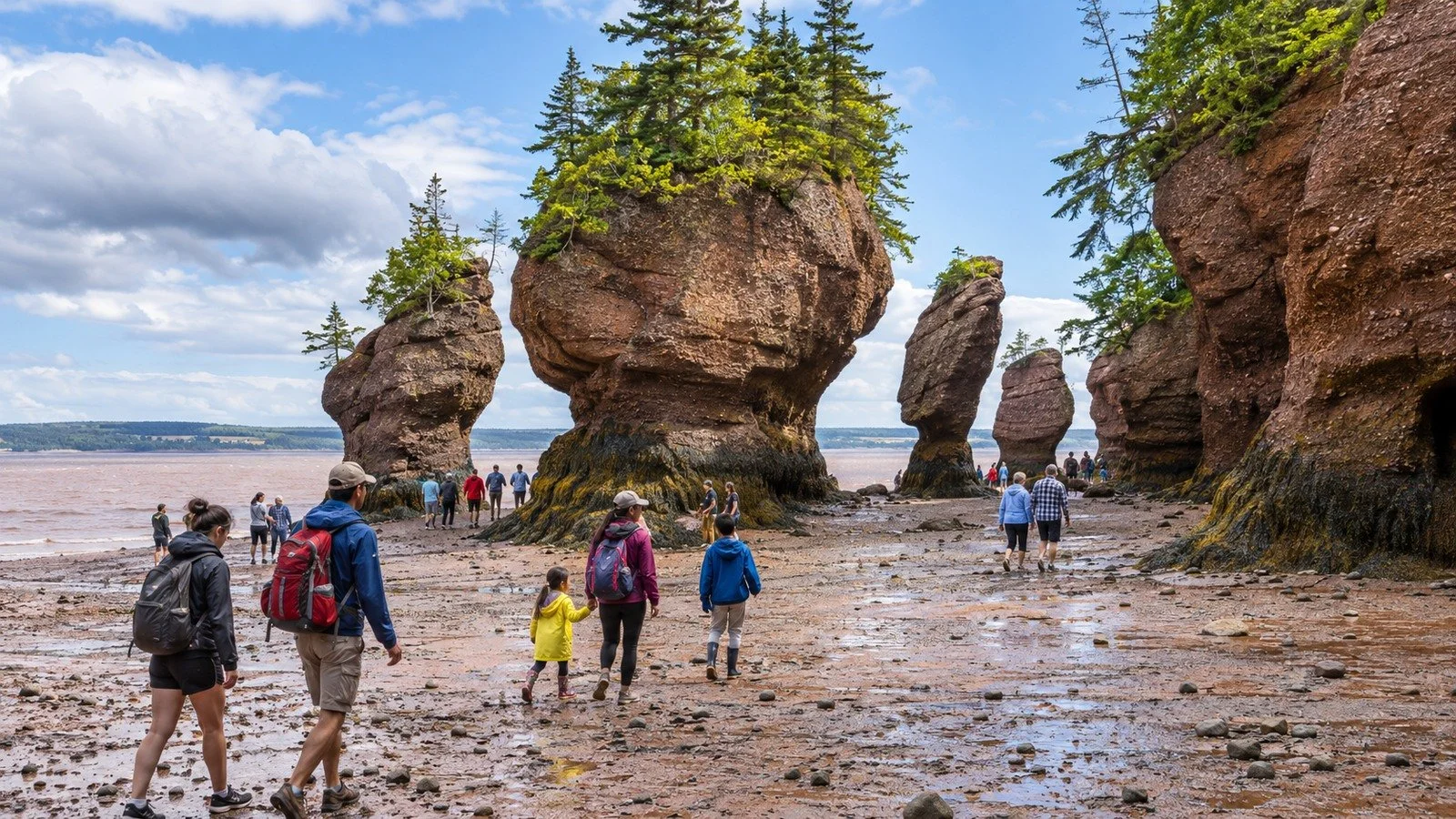
New Brunswick sits on the Bay of Fundy, where, according to Parks Canada, the world's highest tides reach 12 metres or more. The Hopewell Rocks, Fundy National Park and the beaches of Kouchibouguac are the main attractions, and Acadian culture is celebrated across the province.
Fundy National Park: Parks Canada's Fundy page says visitors can "experience the world's highest tides", paddle as the water rises "up to 12 m or more" and walk the ocean floor at low tide. The park is on the unceded territory of the Mi'gmaq people.
Hopewell Rocks: the Hopewell Rocks Provincial Park page describes more than twenty free-standing sea stacks along two kilometres of shoreline, sculpted by the Fundy tides. Check the tide tables on that page before you go.
Kouchibouguac National Park: Parks Canada describes warm beaches and estuaries under the skies of a Dark Sky Preserve.
National Acadian Day: Canadian Heritage says Acadians have celebrated National Acadian Day on August 15 since 1881, the year of the first national Acadian convention in Memramcook, New Brunswick.
Read our guide to living in New Brunswick.
Things to do in Nova Scotia
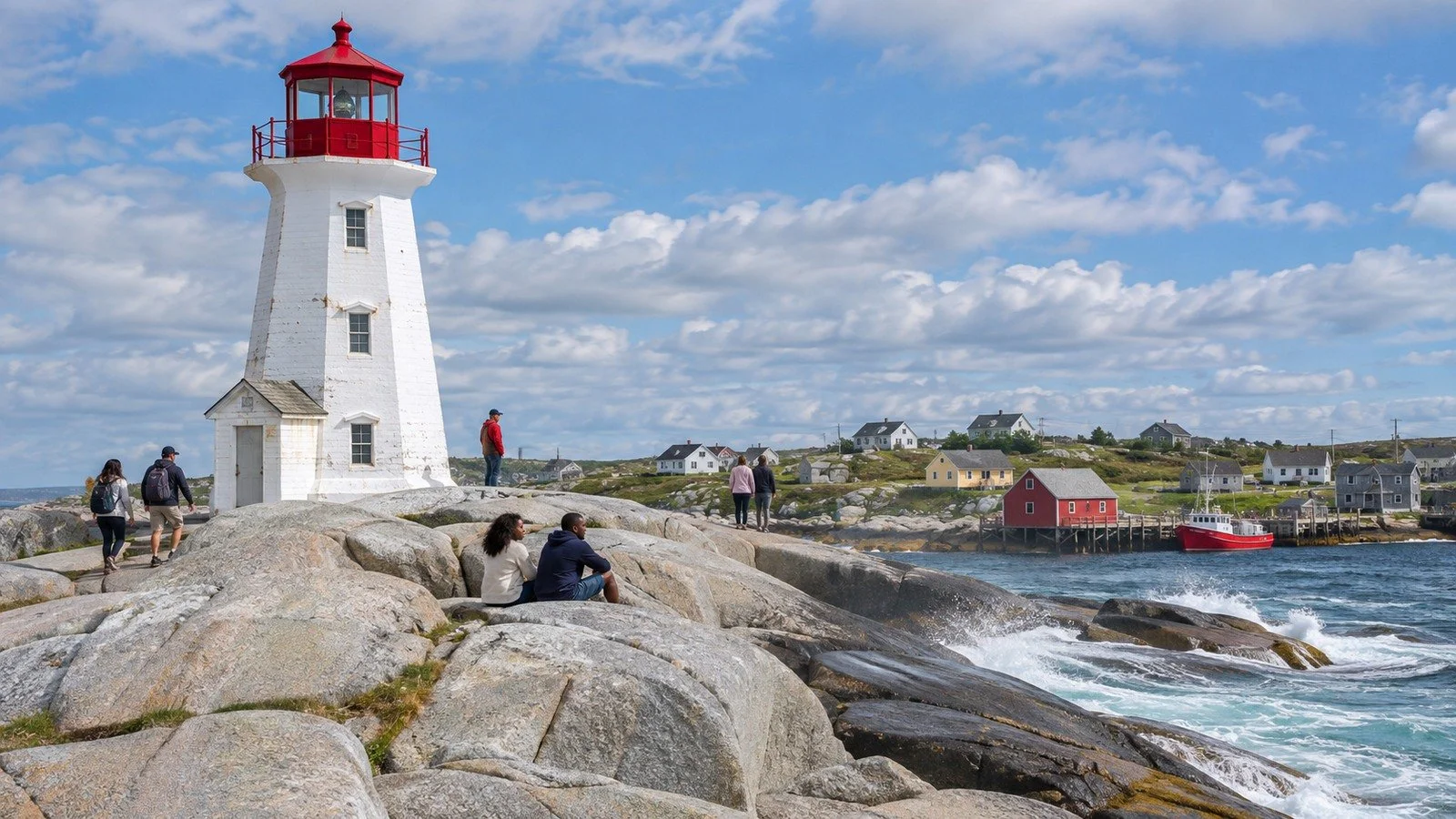
Nova Scotia's most famous drive is the Cabot Trail around Cape Breton Highlands National Park. Halifax has its historic waterfront and the Halifax Citadel, and the province has several UNESCO sites, including Old Town Lunenburg and the Landscape of Grand Pré. Every October, the Celtic Colours International Festival fills Cape Breton with music.
Cabot Trail and Cape Breton Highlands National Park: Parks Canada says that as you follow the world-famous Cabot Trail coastline you pass through forested river canyons and cliffs.
Halifax: Tourism Nova Scotia's Halifax Metro page highlights downtown Halifax, its historic waterfront and the ferry across Halifax Harbour. Parks Canada's Halifax Citadel is a hilltop fort in the heart of downtown.
UNESCO sites: Old Town Lunenburg, the Landscape of Grand Pré and the Joggins Fossil Cliffs are on Parks Canada's World Heritage list.
Celtic Colours: the Celtic Colours International Festival describes itself as a celebration of Cape Breton Island's living traditional culture, with hundreds of events over nine days each October.
Read our guide to living in Nova Scotia.
Things to do in Prince Edward Island
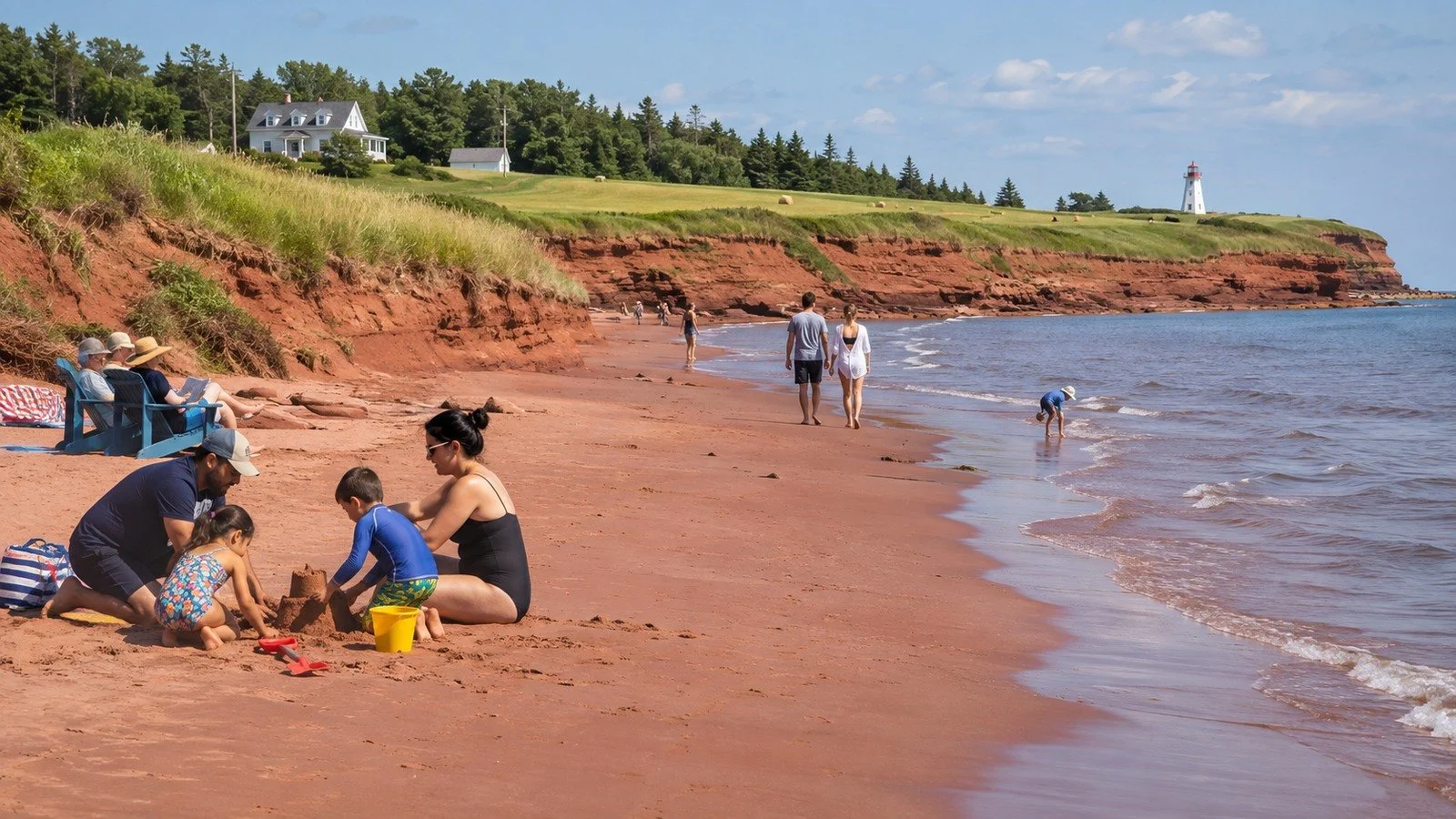
Many visitors explore Prince Edward Island by car. Its national park protects sandy beaches, red cliffs and dunes, and Green Gables Heritage Place is dedicated to Anne of Green Gables, the novel by local author Lucy Maud Montgomery.
Green Gables Heritage Place: Parks Canada's Green Gables page describes the home that inspired the 1908 novel by Lucy Maud Montgomery. Tourism PEI has an Anne of Green Gables page with related places to visit.
Prince Edward Island National Park: the park's page describes sandy beaches alongside red cliffs and wind-sculpted dunes, a seashore cycling path and woodland hikes.
Coastal drives: Tourism PEI lists the island's coastal drives and scenic lookouts.
Read our guide to living in Prince Edward Island.
Things to do in Newfoundland and Labrador
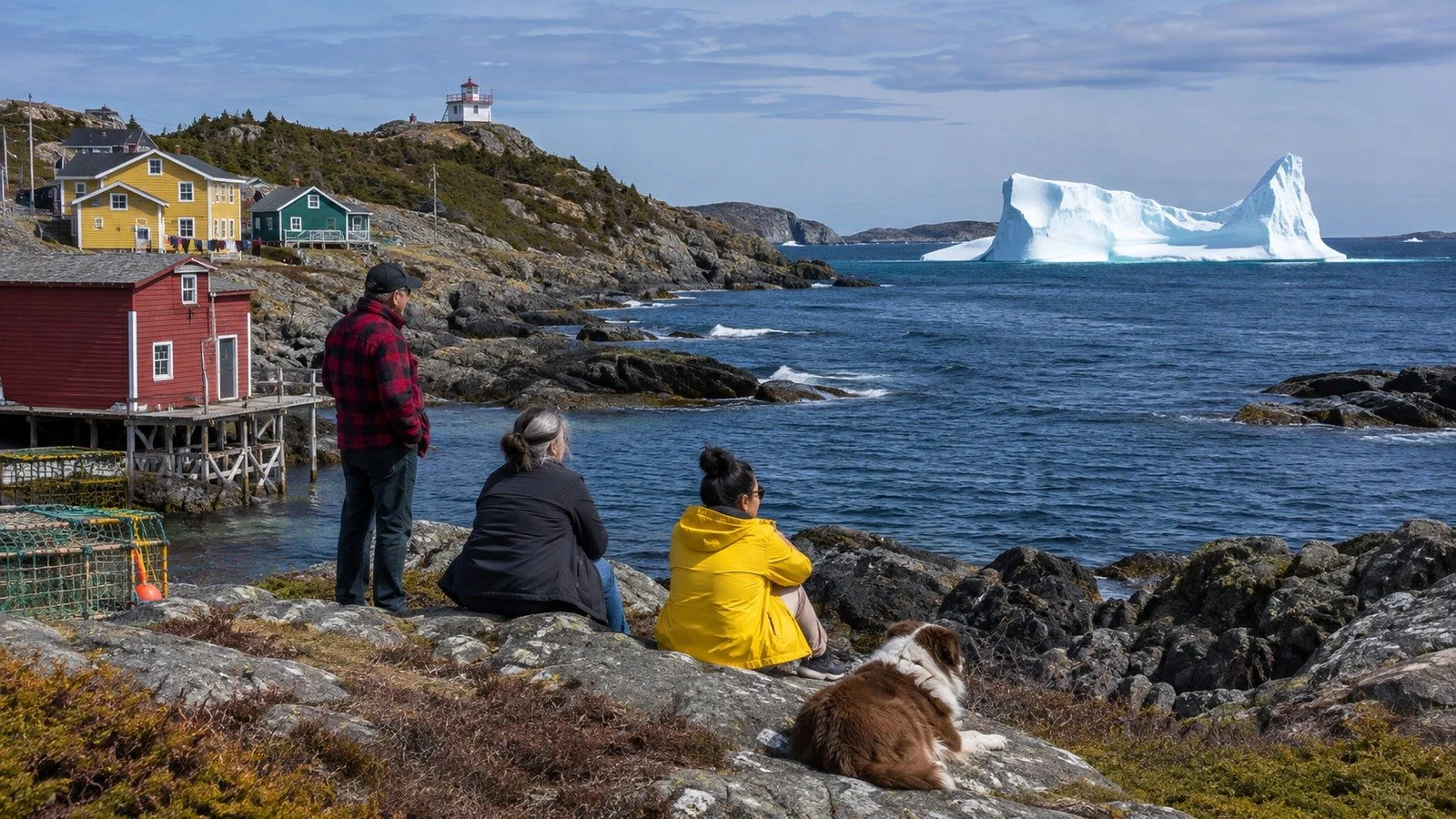
Newfoundland and Labrador is the place for icebergs, whales and dramatic coastlines. The provincial tourism agency says icebergs are visible in spring and summer and that the world's largest population of humpback whales returns each year between May and September. Gros Morne and L'Anse aux Meadows are UNESCO World Heritage Sites.
Icebergs: Newfoundland and Labrador Tourism's iceberg page says that during spring and summer these glacial icebergs are visible from many points along the northern and eastern coasts, along "Iceberg Alley", from the coast of Labrador to the southeast coast of the island.
Whales: its whale watching page says the world's largest population of humpback whales returns each year between May and September.
Gros Morne National Park: Parks Canada describes fjords, mountains and the Tablelands, "a rare outcrop of the Earth's mantle", in a UNESCO World Heritage Site.
L'Anse aux Meadows: Parks Canada says L'Anse aux Meadows is "the first known evidence of European presence in the Americas", a Norse encampment built over 1,000 years ago.
Signal Hill: in St. John's, Signal Hill is the city's most popular landmark, according to Parks Canada, with hiking trails, views and the Cabot Tower.
Read our guide to living in Newfoundland and Labrador.
Things to do in Yukon, the Northwest Territories and Nunavut
Canada's three territories offer some of the country's most remote and spectacular experiences: the northern lights, the Klondike Gold Rush history of Dawson City, huge mountain and glacier parks such as Kluane and Nahanni, and Arctic landscapes and Inuit culture in Nunavut. Distances are long and services are limited, so plan carefully.
Yukon
Kluane National Park and Reserve: Parks Canada describes high mountain peaks, massive valley glaciers, boreal forests and Southern Tutchone cultural heritage in southwest Yukon.
Dawson City and the Klondike: Parks Canada's Klondike National Historic Sites page describes frontier buildings, boardwalks, a vintage sternwheeler and the goldfields, in the heart of Tr'ondëk Hwëch'in Traditional Territory.
Discovery Day: Travel Yukon's Discovery Day page says the day is celebrated on the third Monday in August, with festivities centred in Dawson City.
Northern lights: Travel Yukon's northern lights page gives August to April as the best season, between 10 p.m. and 3 a.m.
Northwest Territories
Aurora: Spectacular NWT's aurora page says the aurora can be seen up to 240 nights a year, with two seasons: mid-August to the end of September, and mid-November to early April.
Nahanni National Park Reserve: Parks Canada says that at Náįlįcho (Virginia Falls) the South Nahanni River drops twice the height of Niagara Falls.
Wood Buffalo National Park: Wood Buffalo is one of Canada's World Heritage Sites, according to Parks Canada's list.
Nunavut
Auyuittuq National Park: on southeastern Baffin Island, Parks Canada says Auyuittuq means "the land that never melts" in Inuktitut. Visitors hike, ski or snowshoe through the Akshayuk Pass.
Nunavut Day: according to a Government of Nunavut announcement, Nunavummiut celebrate Nunavut Day every July 9.
Please note: Northern travel depends heavily on weather, wildfires and seasonal services. Information as published by Parks Canada and the territorial tourism agencies, as of November 2026. Check their pages, and the bulletins of each park, before you book.
Read our guide to Yukon, the Northwest Territories and Nunavut.
Canada's festivals through the seasons
Canada has festivals all year. Winter brings Winterlude, the Carnaval de Québec and the Festival du Voyageur. Spring brings the Canadian Tulip Festival. Summer is the season of the Calgary Stampede, Caribbean Carnival, Pride events and folk festivals, and in autumn Cape Breton hosts Celtic Colours.
Dates as published by the organisers in November 2026; confirm them before you book.
Winter
Winterlude, Ottawa–Gatineau: January 29 to February 15, 2027 (Canadian Heritage).
Carnaval de Québec, Quebec City: February 5 to 14, 2027 (Carnaval de Québec).
Festival du Voyageur, Winnipeg: February 12 to 21, 2027 (Festival du Voyageur).
Spring
Canadian Tulip Festival, Ottawa: May 7 to 16, 2027 (Canadian Tulip Festival).
Summer
Canada Day, July 1: celebrations across the country, including the national noon ceremony (Canadian Heritage, Canada Day).
Calgary Stampede: July 9 to 18, 2027 (Calgary Stampede).
Edmonton Folk Music Festival: August 5 to 8, 2027 (Edmonton Folk Music Festival).
Toronto Caribbean Carnival: 60 years in 2027 (official site).
Pride: Canadian Heritage lists June as the launch of Pride Season on its calendar of important and commemorative days, with events such as Pride Toronto.
Autumn
Celtic Colours, Cape Breton: nine days each October (Celtic Colours).
Practical tips for exploring Canada as a newcomer
Plan around the seasons and long weekends, book popular places early and read each park's bulletins before you go. Parks Canada offers free admission to youth and to new permanent residents and citizens. If friends or family will visit you from abroad, they should check the official entry requirements well in advance.
Use long weekends. Statutory holidays create long weekends that are perfect for short trips, but popular parks and campgrounds fill up fast. See our guide to Canadian holidays for the dates in your province.
Book early for peak season. Some places now require reservations. For example, Cape Breton Highlands National Park announced parking reservations for the Skyline Trail during the peak season (Parks Canada), and Nahanni requires a trip reservation for overnight visits (Parks Canada).
Visitors from abroad. If family or friends want to visit you, the Government of Canada's Visit Canada page explains how to check whether they need a visa or an electronic travel authorization (eTA). Our YouTube live eTA vs Visitor Visa: which one do you need to travel to Canada? explains the difference in general terms.
Learn the history behind the places. Our video Canada: From the Beginning, The Story of an Extraordinary Country is a short introduction to Canada's story.
Please note: Entry requirements for visitors are set by Immigration, Refugees and Citizenship Canada (IRCC) and can change. Whether a visitor needs a visa or an eTA depends on their passport and situation, and IRCC decides each application. Check the official page before booking a trip.
Frequently asked questions
What are the top things to do in Canada?
It depends on the season and where you live, but official tourism agencies and Parks Canada highlight places such as the CN Tower and Niagara Falls in Ontario, Old Québec, Banff and Jasper in the Rockies, the Bay of Fundy, the Cabot Trail, Churchill's polar bears, icebergs and whales in Newfoundland and Labrador, and the northern lights in the territories. See the province sections above.
What is the Parks Canada Discovery Pass?
According to Parks Canada, the Discovery Pass is an annual pass that covers admission to more than 80 destinations for 12 months, including national parks and national historic sites. Other fees, such as camping, can still apply. Check the current price on the official page.
Do newcomers get free admission to national parks in Canada?
Parks Canada's admission page lists free admission "for new Canadian permanent residents and new Canadian citizens", as well as for youth aged 17 and under. Read the conditions on the page before your visit; other service fees may still apply, and the rules can change.
When is the best time to see the northern lights in Canada?
The territorial tourism agencies give similar seasons. Spectacular NWT says the aurora can be seen up to 240 nights a year in the Northwest Territories, from mid-August to the end of September and from mid-November to early April (Spectacular NWT). Travel Yukon gives August to April as the best season, between 10 p.m. and 3 a.m. (Travel Yukon).
When can you see polar bears in Churchill?
According to Travel Manitoba, an average of 600 bears gather along the Hudson Bay shore from mid-October to mid-November, waiting for the sea ice to form. In nearby Wapusk National Park, Parks Canada says a licensed tour operator is required for all activities (Parks Canada).
Where are the highest tides in the world?
Parks Canada says visitors to Fundy National Park in New Brunswick can "experience the world's highest tides" along the Bay of Fundy, with water rising up to 12 metres or more. Nearby are the sea stacks of the Hopewell Rocks. Always check the tide tables first.
When can you see icebergs and whales in Newfoundland?
According to Newfoundland and Labrador Tourism, icebergs are visible in spring and summer from many points along the northern and eastern coasts. The same agency says the world's largest population of humpback whales returns each year between May and September (whale watching).
Do my family members need a visa to visit me in Canada?
It depends on their passport and situation. The Government of Canada's Visit Canada page explains how to check whether a visitor needs a visa or an electronic travel authorization (eTA). IRCC decides each application. For your family's specific case, book a consultation.
Related guides
How Global Opportunities can help
Choosing a province and a pathway depends on your education, work experience, languages and goals. We can help you understand your options.
Our regulated consultant: Lic. Mildrete Monserrath Gutierrez Martinez, Regulated Canadian Immigration Consultant (RCIC), CICC licence R514880. Verify her licence on the CICC Public Register: https://college-ic.ca/protecting-the-public/find-an-immigration-consultant. Global Opportunities does not offer services for Quebec's immigration programs. Global Opportunities is a private firm and is not part of the Government of Canada or any provincial government.
Recorded seminars and lives: watch our recorded seminars in English or the Spanish recordings, and visit our YouTube channel.
More articles in English: read our Moving to Canada articles on topics such as health care, cost of living, the ECA and professional licences, and building community in Canada.
Personalized consultation: for a review of your own case, contact us or write to info@globalopp.ca.
Prefer email? Tell us what you need help with (moving to Canada) and we will reply: email info@globalopp.ca.
Contact Global Opportunities →
Sources
Parks Canada, Passes, permits and fees · World Heritage sites in Canada
Parks Canada, Banff · Jasper · Waterton Lakes · Pacific Rim · Yoho · Grasslands · Prince Albert · Wapusk · Bruce Peninsula · Point Pelee · Fundy · Kouchibouguac · Cape Breton Highlands · Prince Edward Island · Gros Morne · Kluane · Nahanni · Wood Buffalo · Auyuittuq
Parks Canada, Rideau Canal · Fortifications of Québec · The Forks · Halifax Citadel · Green Gables Heritage Place · L'Anse aux Meadows · Signal Hill · Klondike
Government of Ontario, About Ontario · Destination Ontario: Toronto, Ottawa, Niagara Falls
CN Tower · Niagara Parks · National Capital Commission, Rideau Canal Skateway · Canadian Heritage, Winterlude · Canadian Tulip Festival · Toronto Caribbean Carnival · Pride Toronto
Royal Tyrrell Museum · Alberta Parks, Dinosaur Provincial Park · Head-Smashed-In Buffalo Jump · Calgary Stampede · Edmonton Folk Music Festival
Travel Manitoba: Polar bears, Beluga whales · Canadian Museum for Human Rights · Festival du Voyageur
New Brunswick Parks, Hopewell Rocks · Canadian Heritage, National Acadian Day
Tourism Nova Scotia, Halifax Metro · Celtic Colours International Festival
Newfoundland and Labrador Tourism: Iceberg viewing, Whale watching
Travel Yukon: Northern lights, Discovery Day · Spectacular NWT, Aurora · Government of Nunavut, Nunavut Day designated as a general holiday
Canadian Heritage, Canada Day · Saint-Jean-Baptiste Day · Important and commemorative days
Global Opportunities on YouTube, What is Alberta known for? · eTA vs Visitor Visa: which one do you need to travel to Canada? · Canada: From the Beginning
The information in this guide comes from the official sources linked in each section and listed above, as they read when we checked them in November 2026, and it may have changed since. Opening hours, festival dates, park conditions, admission rules and entry requirements change often. It is general and for reference only. It is not immigration, legal, tax or professional advice. Global Opportunities is not responsible for how anyone interprets this content, for decisions made based on it, or for changes made after it was written. For your own case, book a consultation. Global Opportunities is a private firm, is not part of the Government of Canada or of any provincial or territorial government, has no relationship with the attractions, festivals or tourism agencies named in this guide, and does not offer jobs.
Last reviewed: November 2026