
Canadian Holidays and Celebrations: Statutory Holidays by Province
Canadian holidays are set by two levels of government. A few days, such as New Year's Day, Good Friday, Canada Day, Labour Day and Christmas, are holidays almost everywhere, but each province and territory decides its own list of statutory holidays for most workers. This guide explains the national holidays, what changes by province, what a statutory holiday means for your pay, and the cultural celebrations you will see in your first year.
About our sources: This guide summarises what official sources (the Government of Canada, provincial and territorial governments and the other organisations we link to) said when we checked them in November 2026. We link every source so you can read it yourself. Rules, rates and requirements change, sometimes without notice, and the official page is the one that counts. This is general information, not legal, tax or immigration advice. Global Opportunities is not responsible for how this information is interpreted or for changes made after it was written.
In your first year in Canada, holidays can be confusing. Your friend in another province has a day off and you do not. A store is closed on a Monday. Your employer pays you more for working on a certain day, or gives you another day off instead. Behind all of this is one simple fact: in Canada, most employment rules, including holidays, are set by the provinces and territories, while a smaller group of workers follows federal rules.
We wrote this guide so you can understand the basic picture and then check the official page for your province or territory. Where we give dates, they come from the official calendars for 2026, and they change every year for holidays that fall on a Monday or depend on Easter.
Watch our recorded seminars and lives →
In this guide
What is a statutory holiday in Canada?
National holidays in Canada
Statutory holidays by province and territory
What statutory holidays mean for workers
Other days Canadians mark
Cultural celebrations newcomers see in Canada
Long weekends: planning tips for newcomers
Frequently asked questions
Related guides
How Global Opportunities can help
Sources
What is a statutory holiday in Canada?
A statutory holiday, often called a "stat holiday", is a day that a law names as a paid holiday for eligible workers. In Canada, provincial and territorial employment standards set the list for most workers, and the Canada Labour Code sets it for federally regulated workplaces such as banks, airlines and Canada Post.
The word "statutory" simply means the holiday comes from a statute, a law. Different laws use different names: Ontario's Employment Standards Act says "public holidays", Alberta and Manitoba say "general holidays", British Columbia says "statutory holidays". The idea is the same: on these days, most eligible employees get the day off with holiday pay, or receive extra pay or another day off if they work.
Who follows the federal rules
The Government of Canada's federally regulated industries page says the Canada Labour Code covers sectors such as air transportation, banks, most federal Crown corporations (for example Canada Post), telecommunications, radio and television broadcasting, railways and road transportation that cross provincial or international borders, and the federal public service. If you work in one of these sectors, the federal list of holidays applies to you, even if your province has a different list.
Everyone else follows their province or territory
Most jobs in Canada, such as retail, restaurants, construction, health care in private clinics, offices and factories, are provincially regulated. In that case, the employment standards law of the province or territory where you work decides which days are statutory holidays and how holiday pay works.
Please note: Whether a specific job is federally or provincially regulated, and whether a specific worker qualifies for holiday pay, depends on the employer and the situation. Collective agreements and employment contracts can give more holidays than the law. Check your province's employment standards office or the federal Labour Program for your own case.
National holidays in Canada
The Canada Revenue Agency lists 13 public holidays for 2026, some of them only in certain provinces. For federally regulated workers, the Canada Labour Code gives 10 general holidays: New Year's Day, Good Friday, Victoria Day, Canada Day, Labour Day, the National Day for Truth and Reconciliation, Thanksgiving, Remembrance Day, Christmas Day and Boxing Day.
The Government of Canada's page on federal annual vacations and general holidays lists the 10 general holidays for employees of federally regulated employers. The Canada Revenue Agency's public holidays page, which it uses for tax due dates, lists these dates for 2026:
New Year's Day: Thursday, January 1
Good Friday: Friday, April 3
Easter Monday: Monday, April 6
Victoria Day: Monday, May 18
Saint-Jean-Baptiste Day: Wednesday, June 24 (Quebec only)
Canada Day: Wednesday, July 1
Civic Holiday: Monday, August 3 (excluding Quebec)
Labour Day: Monday, September 7
National Day for Truth and Reconciliation: Wednesday, September 30
Thanksgiving Day: Monday, October 12
Remembrance Day: Wednesday, November 11
Christmas Day: Friday, December 25
Boxing Day: Saturday, December 26
Being on this CRA list does not make a day a paid holiday for every worker. For most people, the provincial list in the next section is the one that counts.
New Year's Day
January 1 is a statutory holiday in every province and territory list we checked, and in the federal list.
Good Friday and Easter Monday
Good Friday is on every provincial and territorial list we checked. Easter Monday is different: the federal Labour Code does not include it, and several provinces say clearly that it is not a statutory holiday. For example, British Columbia states that Easter Sunday, Easter Monday and Boxing Day are not statutory holidays there. In Quebec, the CNESST says the holiday is Good Friday or Easter Monday, at the employer's option.
Victoria Day
According to Canadian Heritage, Victoria Day celebrates the Sovereign's birthday in Canada, a tradition that dates back to Queen Victoria, whose birthday, May 24, was declared a holiday by the Legislature of the Province of Canada in 1845. Today it falls on the Monday before May 25. In Quebec, the same Monday is National Patriots' Day, according to the CNESST.
Canada Day
Canada Day, July 1, is a holiday across the country. Canadian Heritage organizes a national noon ceremony and celebrations, which it shares on its Canada Day page. Many communities also organize their own events. In Quebec, if July 1 falls on a Sunday, the CNESST says the holiday moves to July 2. In Newfoundland and Labrador, July 1 has an additional meaning: Veterans Affairs Canada explains that it is also Memorial Day, which remembers the Battle of Beaumont-Hamel in the First World War.
If you want to learn about the country you are celebrating, our short video Canada: From the Beginning, The Story of an Extraordinary Country is a good place to start.
The Civic Holiday in August
The first Monday in August is a holiday in many provinces, under different names, but it is not a statutory holiday everywhere. The official provincial lists show, for example, B.C. Day in British Columbia, Saskatchewan Day in Saskatchewan and New Brunswick Day in New Brunswick's Employment Standards Act. In Alberta, Heritage Day is an optional holiday (Government of Alberta), and in Ontario, the Employment Standards Act guide says employers are not required to give the first Monday in August as a holiday, although some do.
Labour Day
Labour Day, the first Monday in September, is on the federal list and on every provincial and territorial list we checked.
National Day for Truth and Reconciliation
September 30 is the National Day for Truth and Reconciliation, which Canadian Heritage's page links with Orange Shirt Day – Every Child Matters. That page explains that Orange Shirt Day began in Williams Lake, British Columbia, on September 30, 2013, to honour Residential School Survivors, their families and those who never returned home. According to the same page, it has become a national movement of remembrance, reflection and reconciliation, and the orange shirt symbolizes the loss of culture, freedom and self-esteem that many Indigenous children experienced.
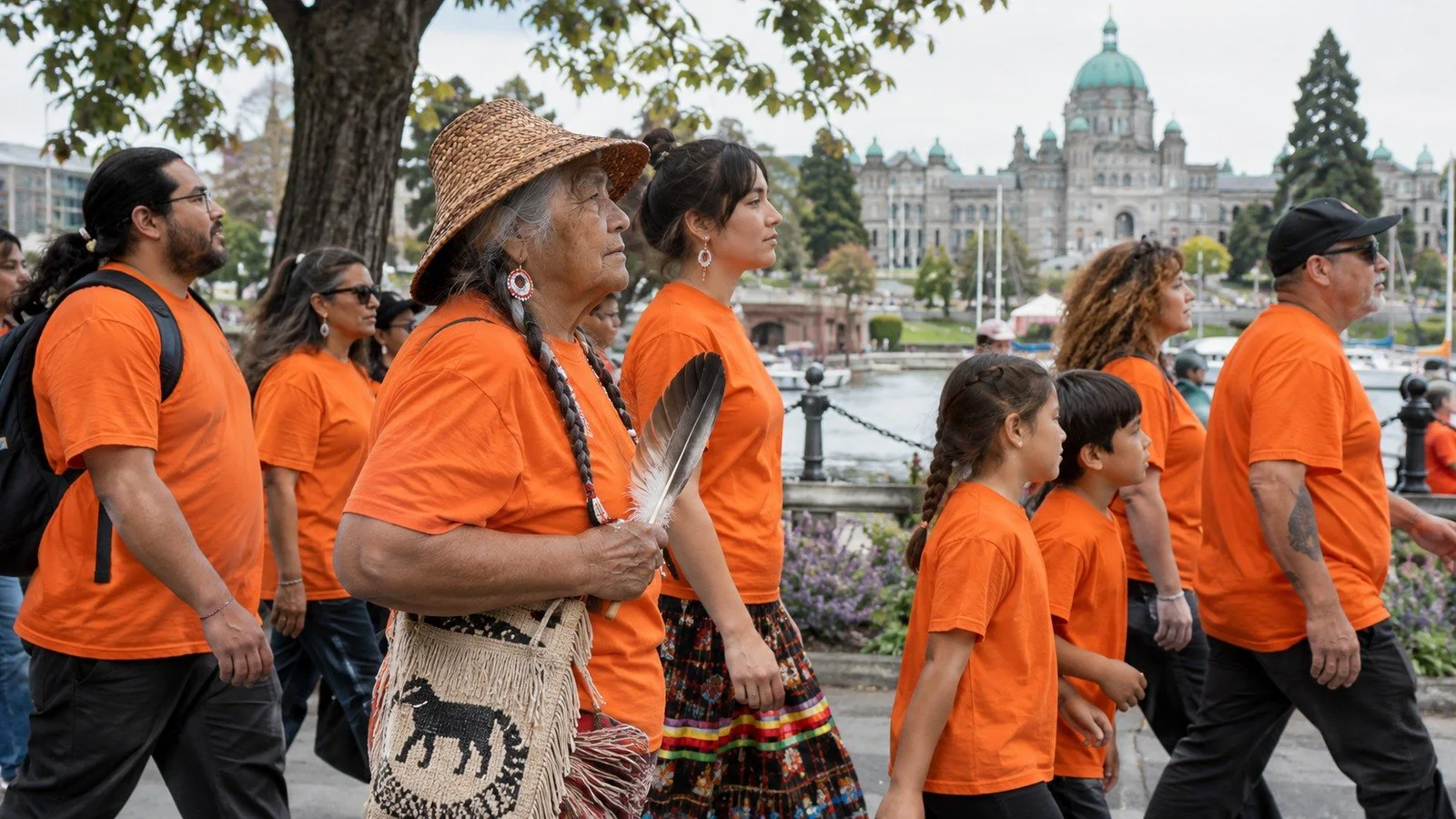
It is a general holiday for federally regulated workers, but not in every province. For example, it is on the lists of British Columbia, Manitoba (as Orange Shirt Day) and the Northwest Territories, while Saskatchewan says it is not a public holiday under its employment law, and Quebec's CNESST says it is not a statutory holiday in Quebec. In Alberta, it is an optional holiday (Government of Alberta).
Thanksgiving
Thanksgiving is the second Monday in October, according to the Government of Alberta and the CNESST. It is a statutory holiday in several provinces, but not in all: for example, it is not on the lists of Nova Scotia, New Brunswick, Prince Edward Island or Newfoundland and Labrador in the official sources linked in the next section.

Remembrance Day
On November 11, Canadians remember those who served and died in war. Veterans Affairs Canada's Remembrance Day and Veterans' Week page invites everyone to "wear a poppy, attend a ceremony, thank a Veteran". Remembrance Day is a statutory holiday in some provinces and territories but not in others, such as Ontario, Manitoba and Quebec, according to their official pages. In Nova Scotia, the Government of Nova Scotia says it is governed by a separate Remembrance Day Act.

Christmas Day and Boxing Day
Christmas Day, December 25, is a statutory holiday everywhere we checked. Boxing Day, December 26, is on the federal list and on Ontario's list. British Columbia, Manitoba and the Northwest Territories say it is not a statutory holiday there, it is not on Saskatchewan's list, and Alberta lists it as optional.
Please note: Dates as published by the Canada Revenue Agency and the Government of Canada for 2026. Holidays that fall on a Monday or depend on Easter change every year, and the rules for a holiday that falls on a weekend differ between jurisdictions. Check the official page for the year you need.
Statutory holidays by province and territory
Every province and territory has its own list. Most include New Year's Day, Good Friday, Canada Day, Labour Day and Christmas Day, and many add a February holiday such as Family Day, Louis Riel Day, Islander Day or Heritage Day, plus a summer holiday in August. Always check the official employment standards page where you work.

The lists below are copied from the official employment standards pages and laws, as we read them in November 2026.
Ontario
The Government of Ontario's Employment Standards Act guide says Ontario has nine public holidays: New Year's Day, Family Day, Good Friday, Victoria Day, Canada Day, Labour Day, Thanksgiving Day, Christmas Day and Boxing Day. It also says employers are not required to give Easter Sunday, Easter Monday, the first Monday in August or Remembrance Day as holidays.
Quebec
The CNESST lists eight statutory holidays: New Year's Day; Good Friday or Easter Monday, at the employer's option; National Patriots' Day (the Monday before May 25); June 24, the Quebec National Holiday (Fête nationale); Canada Day; Labour Day; Thanksgiving; and Christmas Day.
British Columbia
The Government of British Columbia lists 11 statutory holidays for 2026: New Year's Day, Family Day (February 16), Good Friday, Victoria Day, Canada Day, B.C. Day (August 3), Labour Day, the National Day for Truth and Reconciliation, Thanksgiving Day, Remembrance Day and Christmas Day.
Alberta
The Government of Alberta lists nine general holidays: New Year's Day, Alberta Family Day (third Monday in February), Good Friday, Victoria Day, Canada Day, Labour Day, Thanksgiving Day, Remembrance Day and Christmas Day. It adds that employers can choose to recognize other days, such as Easter Monday, Heritage Day (first Monday in August), the National Day for Truth and Reconciliation and Boxing Day, and that holiday pay rules then apply to those days too.
Saskatchewan
The Government of Saskatchewan lists ten public holidays for 2026: New Year's Day, Family Day (February 16), Good Friday, Victoria Day, Canada Day, Saskatchewan Day (August 3), Labour Day, Thanksgiving, Remembrance Day and Christmas Day.
Manitoba
The Government of Manitoba lists nine general holidays: New Year's Day, Louis Riel Day (third Monday in February), Good Friday, Victoria Day, Canada Day, Labour Day, Orange Shirt Day (National Day for Truth and Reconciliation), Thanksgiving Day and Christmas Day. The same page explains separate rules for Easter Sunday, Terry Fox Day, Remembrance Day and Boxing Day.
New Brunswick
New Brunswick's Employment Standards Act defines eight public holidays: New Year's Day, Family Day, Good Friday, Canada Day, New Brunswick Day, Labour Day, Remembrance Day and Christmas Day.
Nova Scotia
The Government of Nova Scotia lists six paid holidays: New Year's Day, Nova Scotia Heritage Day (February 16 in 2026), Good Friday, Canada Day, Labour Day and Christmas Day. It notes that Remembrance Day is governed by the Remembrance Day Act, and that Easter Monday, Victoria Day and Natal Day are commonly recognized but are not paid general holidays under the Labour Standards Code.
Prince Edward Island
The Government of Prince Edward Island's Employment Standards and You poster lists these paid holidays: New Year's Day, Islander Day, Good Friday, Canada Day, Labour Day, Remembrance Day and Christmas Day. The poster may not reflect the most recent changes, so check the Government of Prince Edward Island's current employment standards information before you rely on it.
Newfoundland and Labrador
Newfoundland and Labrador's Labour Standards Act defines public holidays as New Year's Day, Good Friday, Remembrance Day, Memorial Day, Labour Day, Christmas Day and other days proclaimed for this purpose. The Government of Newfoundland and Labrador says the Act identifies six paid public holidays. Memorial Day is July 1, the same day as Canada Day (Veterans Affairs Canada).
Yukon, the Northwest Territories and Nunavut
Yukon: Travel Yukon says Discovery Day is celebrated on the third Monday in August, remembering the discovery of gold on August 16, 1896, which led to the Yukon Gold Rush. Check the Government of Yukon's employment standards office for the full list of statutory holidays.
Northwest Territories: the Government of the Northwest Territories lists 11 statutory holidays: New Year's Day, Good Friday, Victoria Day, National Aboriginal Day (now known as National Indigenous Peoples Day, June 21), Canada Day, the first Monday in August, Labour Day, the National Day for Truth and Reconciliation, Thanksgiving Day, Remembrance Day and Christmas Day.
Nunavut: the Government of Nunavut announced that Nunavut Day, July 9, is a general holiday for employees in territorially regulated industries. It celebrates the coming into force of the Nunavut Land Claims Agreement Act. Check the Government of Nunavut's labour standards office for the full list.
Please note: Lists as published by each provincial and territorial government, as of November 2026. Laws change, and some holidays are observed on a different day when they fall on a weekend. Your employment contract or collective agreement may give you more holidays. The official page for the place where you work is the one that counts.
What statutory holidays mean for workers
On a statutory holiday, most eligible employees get the day off with holiday pay. If they work, the law usually requires extra pay, another paid day off, or both, depending on the province. To qualify, there are often conditions, such as how long you have worked for the employer or working your scheduled shifts around the holiday.
Each province calculates holiday pay differently, and some jobs are exempt. Here are three examples from the official pages:
Ontario: the Employment Standards Act guide says most employees who qualify can take the day off and receive public holiday pay. If an employee agrees in writing or electronically to work on the holiday, they get either public holiday pay plus premium pay for the hours worked, or their regular wages plus a substitute day off with public holiday pay. The same guide explains the "last and first rule": generally, an employee loses the entitlement if they fail, without reasonable cause, to work all of their last scheduled day before or first scheduled day after the holiday.
Quebec: the CNESST says the indemnity for each statutory holiday equals 1/20 of the wages earned during the four complete weeks of pay before the week of the holiday.
Federally regulated workplaces: the federal vacations and holidays page says that when New Year's Day, Canada Day, the National Day for Truth and Reconciliation, Remembrance Day, Christmas Day or Boxing Day falls on a Saturday or Sunday that is not a scheduled work day, the employee is entitled to a holiday with pay on the working day immediately before or after.
Holidays can also affect when stores open. Nova Scotia, for example, publishes holiday and retail closing day charts that explain which days retail businesses must close.
If you think you were not paid correctly for a holiday, contact the employment standards office of your province or territory. These services are free, and the official pages linked in this guide explain how to ask a question or file a complaint.
Please note: Rules as published by the Government of Ontario, the CNESST and the Government of Canada, as of November 2026. Who qualifies, how holiday pay is calculated and which jobs are exempt are different in each jurisdiction, and these examples are not a complete summary. Check the official page for the place where you work.
Other days Canadians mark
Besides statutory holidays, the Government of Canada recognizes many commemorative days and months. Some of the best known are National Flag of Canada Day, National Indigenous Peoples Day, Saint-Jean-Baptiste Day, Canadian Multiculturalism Day and National Acadian Day. Most are not days off work.
Canadian Heritage publishes a full calendar of important and commemorative days. Some highlights:
National Flag of Canada Day: February 15.
National Indigenous Peoples Day: June 21. It is a statutory holiday in the Northwest Territories (Government of the Northwest Territories).
Saint-Jean-Baptiste Day: June 24. Canadian Heritage says that on this day Francophones across the country celebrate their language and traditions, and that nearly 10 million people in Canada speak French.
Canadian Multiculturalism Day: June 27, which honours the many cultural communities that help build Canadian society.
National Acadian Day: August 15, celebrated by Acadians since 1881.
Memorial Day in Newfoundland and Labrador: July 1 (Veterans Affairs Canada).
Discovery Day in Yukon: the third Monday in August, with celebrations centred in Dawson City (Travel Yukon).
Cultural celebrations newcomers see in Canada
Many celebrations in Canada are not statutory holidays. In your first year you will likely see Halloween, Lunar New Year, Diwali and Pride events, and the Government of Canada marks heritage months such as Black History Month, Asian Heritage Month and Latin American Heritage Month. Most of these are community celebrations, not days off work.
Halloween
Halloween is October 31. Health Canada's Halloween safety page gives tips for before, during and after trick-or-treating. It recommends costumes that fit well and are brightly coloured or have reflective tape, and suggests using face paint instead of masks when possible.

Lunar New Year
In a statement on February 17, 2026, the Prime Minister noted that East and Southeast Asian communities across Canada mark the Lunar New Year, "a time of renewal" when family and friends gather.
Diwali
In an October 2025 statement, Canadian Heritage published a statement by the Minister of Canadian Identity and Culture noting that Hindu, Sikh, Jain and Buddhist communities in Canada celebrate Diwali, the Festival of Lights, with diyas (clay oil lamps), fireworks, rangolis and festive meals. Canadian Heritage's calendar also lists November as Hindu Heritage Month (important and commemorative days).
Pride
Canadian Heritage's calendar marks June as the launch of Pride Season. Many cities hold Pride festivals and parades, such as Pride Toronto.
Heritage months
The same Canadian Heritage calendar lists, among others: Black History Month in February, Asian Heritage Month in May, National Indigenous History Month in June, and Latin American Heritage Month and Canadian Islamic History Month in October.
Long weekends: planning tips for newcomers
Holidays that fall on a Monday create long weekends, and Canadians plan around them. Book trips, campsites and transport early, check which stores and services will be closed, and confirm with your employer whether you will work and how you will be paid.
Check opening hours. Banks, government offices and stores may close or change their hours on holidays. Check before you go.
Check transit schedules. Your city's transit website will show any holiday schedule.
Book early. Long weekends are busy for travel, campgrounds and national parks. Our guide to things to do in Canada has ideas by province.
Ask your employer. If you are scheduled to work on a holiday, ask how it will be paid or whether you will get another day off, and keep your pay stubs.
Join a celebration. Canada Day, community festivals and heritage month events are a good way to meet neighbours and feel at home.
Frequently asked questions
What are the statutory holidays in Canada?
It depends on where you work. Federally regulated employees have 10 general holidays under the Canada Labour Code, according to the Government of Canada: New Year's Day, Good Friday, Victoria Day, Canada Day, Labour Day, the National Day for Truth and Reconciliation, Thanksgiving, Remembrance Day, Christmas Day and Boxing Day. Most other workers follow their province or territory's list, which can be shorter or include different days. See "Statutory holidays by province and territory".
How many statutory holidays are there in Ontario?
The Government of Ontario's Employment Standards Act guide says Ontario has nine public holidays: New Year's Day, Family Day, Good Friday, Victoria Day, Canada Day, Labour Day, Thanksgiving Day, Christmas Day and Boxing Day. The Civic Holiday in August, Easter Monday and Remembrance Day are not required under the Act, but some employers give them.
Is Remembrance Day a statutory holiday?
It depends on the province or territory. It is a general holiday for federally regulated workers and is on the official lists of, for example, British Columbia, Alberta, Saskatchewan, New Brunswick and the Northwest Territories. It is not a public holiday under Ontario's Employment Standards Act, Manitoba's general holiday list or Quebec's statutory holidays. In Nova Scotia, it is governed by a separate Remembrance Day Act. See the province sections above.
Is the National Day for Truth and Reconciliation a statutory holiday?
September 30 is a general holiday for federally regulated workers. Among the provinces and territories, it is on the lists of British Columbia, Manitoba and the Northwest Territories, according to their official pages. Saskatchewan and Quebec say it is not a statutory holiday under their laws, and Alberta lists it as an optional holiday. Your employer may still recognize it through a policy or collective agreement.
What is Family Day in Canada?
Family Day is a February holiday, usually the third Monday of the month, in several provinces. It is on the official lists of Ontario, British Columbia, Alberta (as Alberta Family Day), Saskatchewan and New Brunswick. Other provinces have a holiday on the same day with another name: Louis Riel Day in Manitoba, Nova Scotia Heritage Day in Nova Scotia and Islander Day in Prince Edward Island. See the province sections above.
Is Boxing Day a statutory holiday?
Boxing Day is on the federal list and on Ontario's list of public holidays. British Columbia, Manitoba and the Northwest Territories say it is not a statutory holiday there, it is not on Saskatchewan's list, and in Alberta it is an optional holiday. Check the official page for your province or territory.
Do I get paid if I work on a statutory holiday?
Usually, yes, if you qualify. Most provinces require extra pay, another paid day off, or both, but the details differ. In Ontario, for example, the Employment Standards Act guide explains two options: public holiday pay plus premium pay, or regular wages plus a substitute day off. Check your province's employment standards page, and contact its office if you think you were not paid correctly.
Is Easter Monday a holiday in Canada?
For most workers, no. Easter Monday is not on the federal list, and Ontario, British Columbia, Nova Scotia and the Northwest Territories say it is not a statutory holiday there. In Quebec, the employer can choose Good Friday or Easter Monday. The Canada Revenue Agency lists Easter Monday as a public holiday for tax due dates, and some employers give the day off.
Is Halloween a holiday in Canada?
No. Halloween, October 31, is not a statutory holiday, and people go to work and school as usual. Health Canada's tips are written for trick-or-treating in costume in the evening. Health Canada publishes Halloween safety tips on costumes, visibility and treats.
What holidays are celebrated in Quebec?
According to the CNESST, Quebec has eight statutory holidays, including National Patriots' Day in May and the Quebec National Holiday (Fête nationale) on June 24. Remembrance Day and the National Day for Truth and Reconciliation are not statutory holidays in Quebec, except for workers under the Canada Labour Code. Global Opportunities does not offer services for Quebec's immigration programs.
Related guides
How Global Opportunities can help
Choosing a province and a pathway depends on your education, work experience, languages and goals. We can help you understand your options.
Our regulated consultant: Lic. Mildrete Monserrath Gutierrez Martinez, Regulated Canadian Immigration Consultant (RCIC), CICC licence R514880. Verify her licence on the CICC Public Register: https://college-ic.ca/protecting-the-public/find-an-immigration-consultant. Global Opportunities does not offer services for Quebec's immigration programs. Global Opportunities is a private firm and is not part of the Government of Canada or any provincial government.
Recorded seminars and lives: watch our recorded seminars in English or the Spanish recordings, and visit our YouTube channel.
More articles in English: read our Moving to Canada articles on topics such as health care, cost of living, the ECA and professional licences, and building community in Canada.
Personalized consultation: for a review of your own case, contact us or write to info@globalopp.ca.
Prefer email? Tell us what you need help with (moving to Canada) and we will reply: email info@globalopp.ca.
Contact Global Opportunities →
Sources
Government of Canada, Annual vacations and general holidays (federal labour standards) · Federally regulated industries and workplaces
Canadian Heritage, Important and commemorative days · Victoria Day · Canada Day · National Day for Truth and Reconciliation · Saint-Jean-Baptiste Day · Canadian Multiculturalism Day · National Acadian Day · Statement marking Diwali (October 2025)
Prime Minister of Canada, Statement on Lunar New Year (February 17, 2026)
Veterans Affairs Canada, Remembrance Day and Veterans' Week · Beaumont-Hamel Newfoundland Memorial · Battle of Beaumont-Hamel
Government of Ontario, Your guide to the Employment Standards Act: public holidays
Government of Saskatchewan, List of Saskatchewan public holidays
Government of Nova Scotia, Holiday and retail closing day charts
Government of Prince Edward Island, Employment Standards and You (poster)
House of Assembly of Newfoundland and Labrador, Labour Standards Act · Government of Newfoundland and Labrador, Issues addressed by the Labour Standards Act
Government of the Northwest Territories, Employment standards FAQ
Government of Nunavut, Nunavut Day designated as a general holiday
The information in this guide comes from the official sources linked in each section and listed above, as they read when we checked them in November 2026, and it may have changed since. Holiday lists, dates and holiday pay rules are set by each province, territory and the Government of Canada, and they can change. It is general and for reference only. It is not legal, employment, tax or immigration advice. Global Opportunities is not responsible for how anyone interprets this content, for decisions made based on it, or for changes made after it was written. For questions about your own pay, contact the employment standards office where you work; for your own immigration case, book a consultation. Global Opportunities is a private firm, is not part of the Government of Canada or of any provincial or territorial government, and does not offer jobs.
Last reviewed: November 2026