
Canadian Customs and Etiquette: What Newcomers Should Know
Canadian customs are the small, unwritten habits that make daily life run smoothly: taking your shoes off when you visit someone's home, giving people space, lining up and waiting your turn, saying "please", "thank you" and "sorry" often, arriving on time and sorting your waste. This guide explains the customs newcomers notice most, with a link to the settlement agency, government or official page that describes each one, so you know what to expect and can relax into your new life.
About our sources: This guide summarises what official sources (the Government of Canada, provincial and territorial governments and the other organisations we link to) said when we checked them in November 2026. We link every source so you can read it yourself. Rules, rates and requirements change, sometimes without notice, and the official page is the one that counts. This is general information, not legal, tax or immigration advice. Global Opportunities is not responsible for how this information is interpreted or for changes made after it was written.
Every country has habits nobody writes down. Settlement agencies such as the YMCA of Greater Toronto's Newcomer Information Centre and the Association for New Canadians in Newfoundland and Labrador publish advice on them, and this guide brings that advice together.
No custom is true of every Canadian. The YMCA Newcomer Information Centre reminds its readers that individual preferences and cultural norms vary, and that the best approach is to listen and observe the people around you (YMCA Newcomer Information Centre, four Canadian social etiquettes). Read what follows as "what many Canadians tend to do", not as laws.
Watch our recorded seminars and lives →
In this guide
Canadian customs at a glance
Visiting someone's home: shoes, invitations and small gifts
Calls, messages and quiet hours at home
Personal space and a reserved style
Questions many Canadians avoid
Please, thank you and "sorry"
Lining up, escalators and public transit
Being on time
Tipping in Canada
Small talk and the weather
Workplace culture in Canada
Recycling, green bins and keeping public spaces clean
Winter habits
Multiculturalism and respect
Where to get free help settling in
Frequently asked questions
Related guides
How Global Opportunities can help
Sources
Canadian customs at a glance
Many Canadians value politeness, personal space, privacy and fairness. In practice, that means greeting people with a smile, keeping about an arm's length of distance, waiting your turn in line, arriving on time, not asking personal questions about money or age, and keeping noise down at home. When in doubt, watch what others do, or simply ask.
Visiting someone's home: shoes, invitations and small gifts
In many Canadian homes, people take off their shoes at the door, especially in winter, when boots bring in snow, salt and mud. If you are not sure, the simplest and most polite thing is to ask your host. Visits are usually arranged in advance rather than made unannounced.
Taking your shoes off at the door
The Comox Valley International Student Program, run by Comox Valley Schools in British Columbia, prepares international students for life with Canadian host families. Its guide notes that shoes are removed at the door in most homes, and advises students to ask whether they should remove their shoes before entering a home (Comox Valley International Student Program, preparing for Canadian culture).
In practice, you will often see a mat or a shoe rack by the front door. Some hosts offer slippers; others are happy with socks. If you have a reason to keep your shoes on, a short, friendly explanation is usually enough.
Arranging visits in advance
The same Comox Valley guide advises arranging visits beforehand and not bringing guests who were not invited. A quick message such as "Are you free on Saturday afternoon?" is a simple way to plan a visit.
Meals and small gifts
The Comox Valley guide describes the evening meal as usually the main meal of the day, often eaten together around 5:30 to 6:30 p.m. in the host families it works with. It also suggests offering to help clean up and opening gifts in front of the giver.
Calls, messages and quiet hours at home
Many Canadians treat late evening as quiet, private time. Calling or texting late at night about something that is not urgent can feel intrusive, so a considerate habit is to keep non-urgent calls and messages to the daytime and early evening. At home, cities set quiet-hour rules in their noise bylaws.
Late calls and messages: a courtesy, not a rule
There is no law about when you can call a friend or a coworker. But many people in Canada keep their evenings for family and rest, and the YMCA Newcomer Information Centre notes that Canadians generally value a quiet and respectful environment, especially in residential areas (YMCA Newcomer Information Centre, six Canadian etiquettes). A few practical habits:
Work messages: if you need to write to a coworker late in the evening, a scheduled email or a note saying "no rush" is a kind touch, unless your job involves on-call or shift work.
Personal calls: for non-urgent matters, a text asking "Is now a good time to call?" is a kind first step.
Quiet hours and noise bylaws
Noise rules are set by each municipality. For example, the City of Toronto's noise page sets lower permitted sound levels between 11 p.m. and 7 a.m. for amplified sound, such as music, heard in a home or an outdoor living area (City of Toronto, noise). Other cities have their own bylaws, and many buildings set quiet hours in their rules.
If a neighbour's noise bothers you, the YMCA Newcomer Information Centre suggests approaching the conversation politely and keeping a positive relationship with your neighbours (YMCA Newcomer Information Centre).
Noise rules as published by the City of Toronto, as of November 2026. Each city sets its own bylaw and your building may have its own rules: check your municipality's website and your lease.
Personal space and a reserved style
Many Canadians are friendly but reserved with people they do not know well. They tend to keep about an arm's length of distance during conversations and avoid touching people they have just met. Warmth usually grows over time, through repeated small conversations.
How much distance?
The Government of Alberta's archived newcomer guide, Welcome to Alberta: Information for Newcomers, says that in social and business settings people stand 60 to 100 centimetres (about two to three feet) away from each other, and that standing closer may make people uncomfortable (Government of Alberta, Welcome to Alberta, archived). The Association for New Canadians adds that Canadians rarely touch each other during workplace conversations (Association for New Canadians, workplace culture).
Greetings and touch
According to the YMCA Newcomer Information Centre, a handshake is common in formal situations, and a smile and a friendly greeting are often enough in casual settings. Physical contact such as patting someone on the back is usually reserved for people you know well (YMCA Newcomer Information Centre, six Canadian etiquettes). The same centre adds that if someone declines a handshake for cultural or religious reasons, you should not take it personally (YMCA, four Canadian social etiquettes).
Eye contact
The Alberta guide says it is OK to make eye contact with the person you are talking to, even a teacher or supervisor.
Questions many Canadians avoid
With people they do not know well, many Canadians avoid personal questions about money, age, weight, marriage, children, religion and politics. Asking "How much do you earn?" or "How much did you pay for your house?" can make people uncomfortable, even if it is a normal question where you come from.
The Government of Alberta's archived newcomer guide lists these as examples of questions that are not polite unless you know someone well (Welcome to Alberta, archived):
How much money do you make?
How much did you pay for your house or car?
Why aren't you married?
Why don't you have children?
How old are you?
How much do you weigh?
The Comox Valley guide adds political affiliations and voting preferences (Comox Valley International Student Program), and the YMCA Newcomer Information Centre notes that topics like politics or religion are usually reserved for more established relationships (YMCA, six Canadian etiquettes).
What about salary at work?
To learn the typical pay for a job, the Government of Canada's Job Bank publishes wage information by occupation and region, so you do not need to ask a coworker.
Please, thank you and "sorry"
You will hear "please", "thank you" and "sorry" many times a day in Canada. Many Canadians use soft, indirect language to stay polite and avoid confrontation, and "sorry" is often a quick social courtesy, like "excuse me", rather than a full apology.
According to the YMCA Newcomer Information Centre, Canadians often use softened language to maintain politeness and avoid direct confrontation, and value politeness and considerate behaviour in all interactions (YMCA, six Canadian etiquettes). The Comox Valley guide puts it simply: use "please" and "thank you" frequently, and know that Canadians often communicate indirectly, using hints to convey a message politely (Comox Valley International Student Program).
In daily life, "Would you mind…?" is a polite way to ask for something, even at work, and a hint such as "That's an interesting idea" may mean "I am not sure about that", so a friendly follow-up question helps. The Comox Valley guide also mentions thanking the bus driver when you get off.
"Sorry" is so common that some provinces put it in the law
Because people say "sorry" so often, several provinces have passed apology laws. British Columbia's Apology Act defines an apology as an expression of sympathy or regret, a statement that one is sorry, or similar words or actions, and says that an apology does not, by itself, constitute an admission of fault or liability (Province of British Columbia, Apology Act). Other provinces have similar laws, such as Ontario's Apology Act, 2009.
Legal information as published in British Columbia's Apology Act, as of November 2026. This is a general description, not legal advice: after an accident or a dispute, speak to a lawyer or your insurer about your own situation.
Lining up, escalators and public transit
Lining up, also called queuing, is taken seriously in Canada. People wait their turn at bus stops, stores, banks and counters, and cutting into a line is considered rude. On escalators, many people stand on the right so others can walk up on the left.
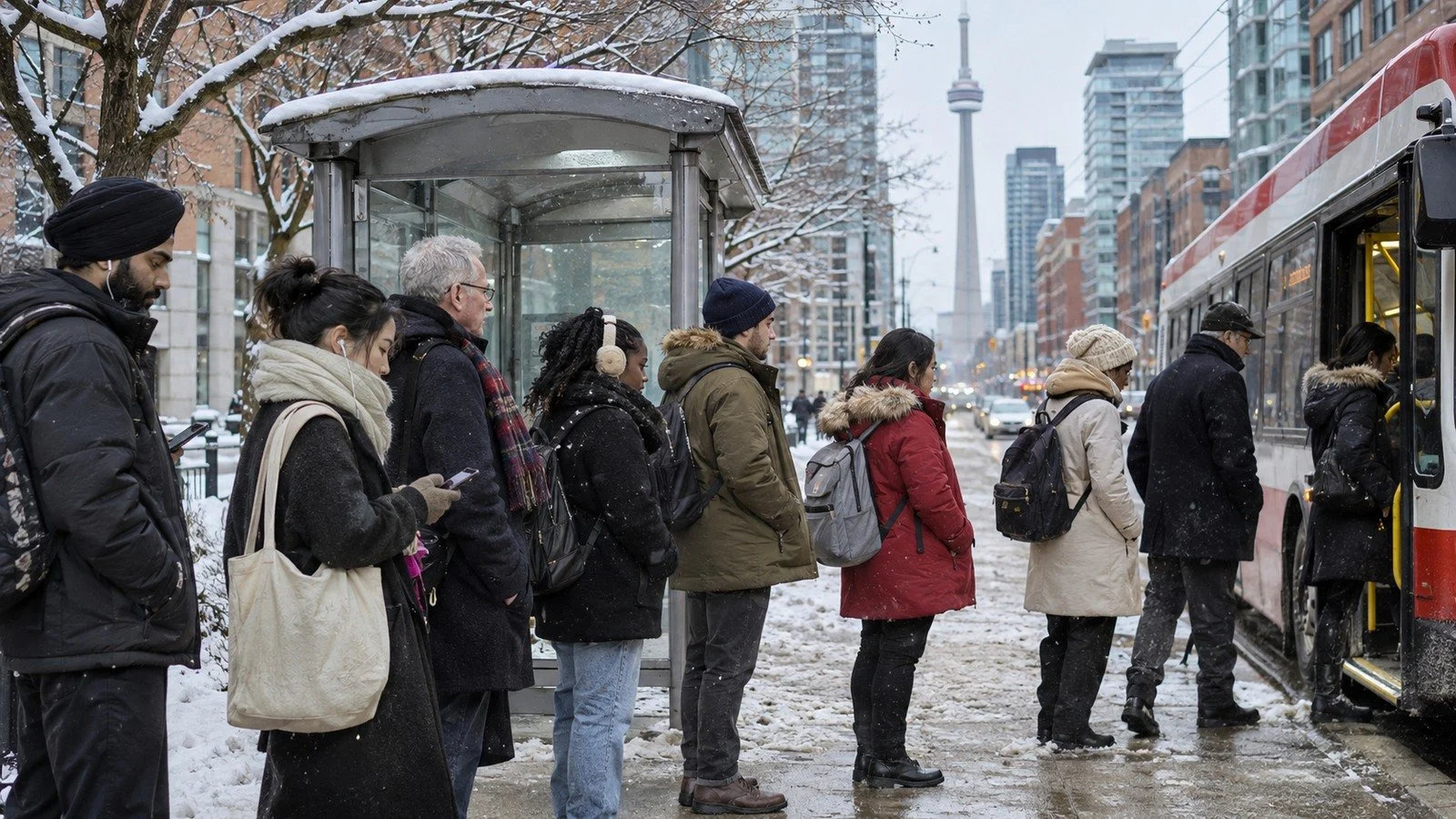
Waiting your turn
The Alberta guide says people line up at bus stops, banks, stores and restaurants and expect to be served on a first-come, first-served basis; if there is no lineup, they take turns rather than pushing ahead, and people may become angry if you step into the middle of a line (Welcome to Alberta, archived). The YMCA Newcomer Information Centre adds that holding doors open and letting people exit a bus, train, building or elevator before you enter are common courtesies (YMCA, four Canadian social etiquettes).
Stand on the right, pass on the left
According to the same YMCA page, "stand on the right, pass on the left" is a courteous practice on escalators and moving walkways, especially at rush hour, and people generally walk on the right side of the sidewalk.
Transit etiquette
The YMCA Newcomer Information Centre's transit etiquette guide lists habits such as paying or tapping before you board, letting passengers exit first, taking off your backpack on crowded vehicles, using headphones, keeping seats free for people rather than bags, offering priority seating to those who need it, and keeping your garbage until you find a bin (YMCA, public transit etiquette).
Being on time
Punctuality matters in Canada. People are expected to be on time for work, school, medical appointments, interviews and business meetings, and arriving five to ten minutes early is a good habit. For social events, there is a little more flexibility, but it is still polite to let people know if you are running late.
The Government of Alberta's archived guide explains that many people will not wait more than 10 or 15 minutes for someone who is late to a business meeting, and that in social settings people are usually expected to arrive on time or no later than half an hour after the time given in the invitation (Welcome to Alberta, archived).
The YMCA Newcomer Information Centre recommends arriving 5 to 10 minutes early to events and appointments, because arriving on time shows respect for others' time (YMCA, networking in Canada).
Tipping in Canada
Tipping is customary in Canada for table service in restaurants and for services such as taxis and hairdressers. Settlement and official guides describe tips of roughly 10 to 20% of the bill before tax for good restaurant service. Tipping is a custom, not a law, and you can tip less if the service was poor.

Restaurants
The Association for New Canadians explains that it is customary to tip your server, that the bill shows a subtotal before taxes, and that most people tip 10 to 20% of the subtotal; if you did not like the service, you can tip a smaller amount or nothing at all. It adds that tipping is not a custom when you buy takeout food or eat at fast-food restaurants (Association for New Canadians, restaurants). The Comox Valley guide suggests 15 to 20% of the meal cost (Comox Valley International Student Program).
Taxis, hairdressers and other services
Taxis: the Association for New Canadians suggests tipping taxi drivers about 10%, or at least rounding up the fare (Association for New Canadians, taxis). The Government of Alberta's archived guide also says a tip of 10% is expected but not required (Welcome to Alberta, archived).
Hairdressers and barbers: the Comox Valley guide suggests tipping them similarly to restaurant servers.
Who keeps the tips?
If you work in a restaurant or another service job, provincial employment standards protect your tips. For example, the Government of Ontario's guide to the Employment Standards Act says an employer generally cannot withhold, make deductions from, or make an employee return their tips or other gratuities, except as the Act permits (Government of Ontario, tips and other gratuities). Other provinces have their own rules.
Tipping customs as described by the Association for New Canadians, the Government of Alberta and the Comox Valley International Student Program, and tip rules as published by the Government of Ontario, as of November 2026. Customs vary by city and type of business, and employment rules differ by province: check your provincial employment standards page.
Small talk and the weather
Small talk is an important part of social life in Canada. Short, friendly conversations about the weather, local sports teams, weekend plans or upcoming holidays help people connect at work, in elevators and in line. Keep it light and positive, and save politics and religion for people you know well.
According to the YMCA Newcomer Information Centre, small talk is a significant part of Canadian social interactions, and comments about the weather, local sports teams or upcoming holidays are a good start (YMCA, six Canadian etiquettes).
Common openers include "Cold one today, isn't it?", "Any plans for the long weekend?" and, on Monday, "How was your weekend?". The answer to "How are you?" is usually short and positive, such as "Good, thanks, and you?": it is a greeting, not a request for a full update.
Workplace culture in Canada
Canadian workplaces tend to be informal in tone but serious about punctuality, respect and teamwork. Coworkers usually call each other, and their managers, by first names. Sharing your ideas in meetings is seen as positive, and offensive jokes, harassment and discrimination are not acceptable.

The Association for New Canadians' workplace culture page describes these common expectations (Association for New Canadians, workplace culture):
Punctuality: arrive on time for work, appointments and meetings, and tell your employer if you will be late or absent.
First names: colleagues usually use first names, even with managers, except in formal settings or with high-ranking officials. When in doubt, ask people how they prefer to be greeted.
Speaking up: in some cultures staying quiet is a sign of respect; in Canada, sharing your ideas and opinions when appropriate is seen as positive, while listening carefully is still important.
Respect: everyone, including managers, should treat others respectfully; offensive jokes are unacceptable, and employers must ensure their workplaces are free of harmful discrimination.
Your rights at work are protected by law. The Canadian Human Rights Commission handles discrimination and harassment in federally regulated workplaces,, and each province and territory has its own human rights body. For resumes, interviews and your first job, read our guide to working in Canada.
Recycling, green bins and keeping public spaces clean
Most Canadian cities ask households to sort waste into separate streams: recycling (often a blue bin), organics or compost (often a green bin) and garbage. The rules differ from city to city, so the best habit is to check your city's waste guide or app. Littering is frowned upon and can lead to fines.

Sorting your waste
The YMCA Newcomer Information Centre explains that most cities in Canada use a three-bin system, with separate bins for recycling, organic waste and garbage; that recyclable containers should be rinsed and boxes flattened; that rules differ from one city to another; and that some cities issue warnings or fines for repeated misuse of bins (YMCA, sorting your waste in Canada). For example, the City of Toronto's Green Bin page lists what goes in its organics bin, including all food waste and soiled paper towels and napkins, and estimates that about 40% of what ends up in Toronto's garbage could go in the Green Bin instead.
In Newfoundland and Labrador, the Association for New Canadians notes that you pay a deposit on many drink containers and get it back at a depot (Association for New Canadians, waste management).
The Government of Alberta's archived guide adds that Canadians expect people not to litter and that in many communities you can be fined for littering.
Waste rules as described by the YMCA Newcomer Information Centre, the City of Toronto and the Association for New Canadians, as of November 2026. Each municipality sets its own collection rules and schedule: check your city's website before you put out your bins.
Winter habits
Winter shapes daily life in much of Canada. Many households have a boot tray by the door, dress in layers, check the forecast before going out and switch to winter tires. In many cities, property owners and residents are responsible for clearing the sidewalk in front of their home after a snowfall.
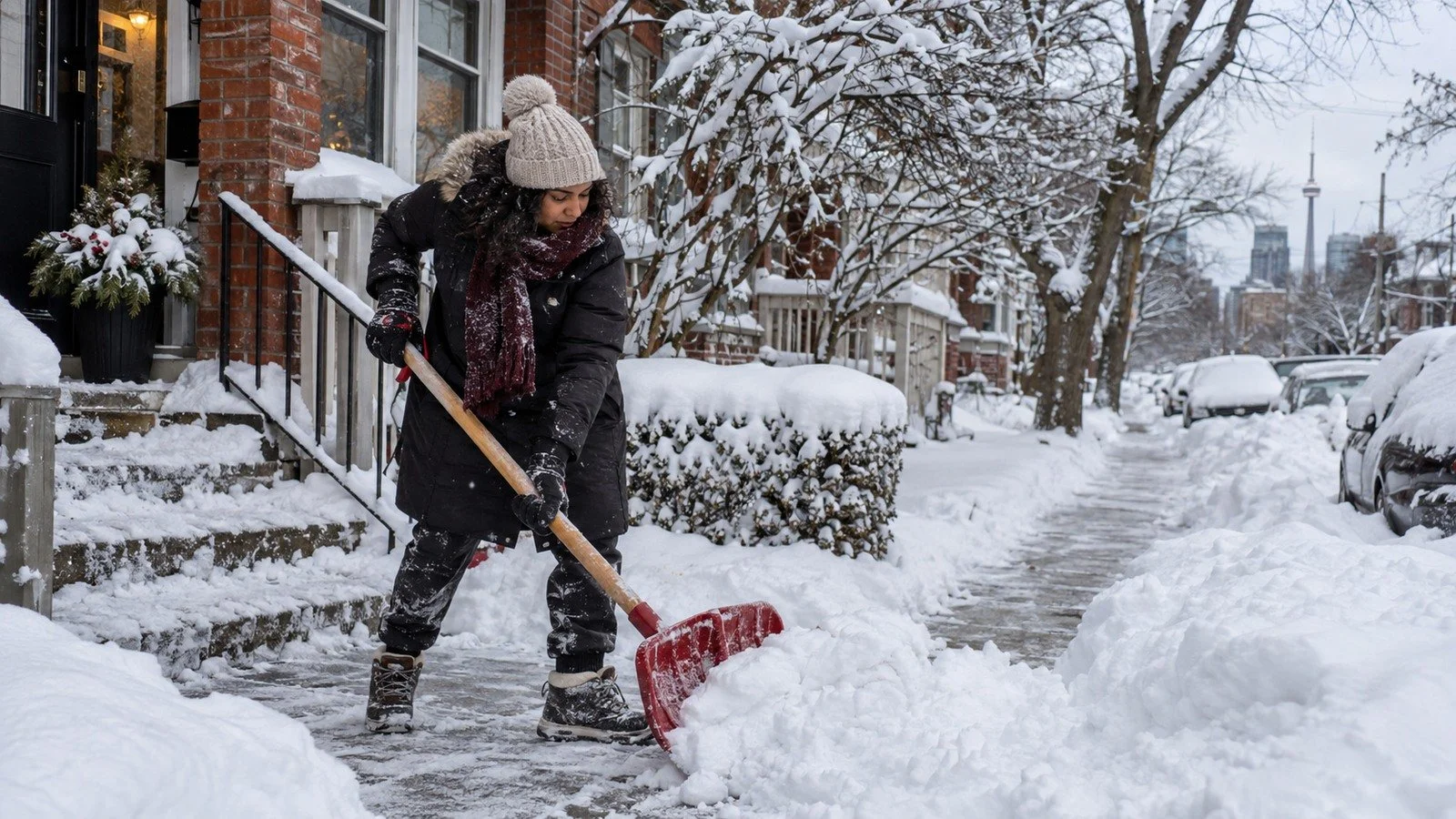
Dressing for the cold
The YMCA Newcomer Information Centre recommends checking the forecast before you go out, wearing layers, a scarf, a toque (winter hat) and gloves, and choosing waterproof, insulated winter jackets and slip-resistant boots. It also suggests walking more slowly on icy sidewalks and getting daylight to fight the "winter blues" (YMCA, your first winter in Canada).
Shovelling the sidewalk
Clearing snow is often a neighbourly duty and, in many cities, a rule. For example, the City of Calgary says property owners must clear sidewalks within 24 hours after a snowfall (City of Calgary, clearing sidewalks and shovelling snow). Other cities have different rules, and in many rentals the lease says whether the landlord or the tenant clears the snow.
On the road
Transport Canada's winter driving page has advice on icy roads, winter tires and preparing your vehicle, and the YMCA Newcomer Information Centre advises driving slower and leaving more space on snow and ice. Winter tire rules differ by province, so check your provincial transportation ministry.
Snow-clearing rules as published by the City of Calgary, and winter advice as published by Transport Canada and the YMCA Newcomer Information Centre, as of November 2026. Rules differ by municipality and province: check your city's bylaw and your lease.
Multiculturalism and respect
Canada officially recognizes multiculturalism. Canadians come from many origins, languages and religions, and the law encourages people to keep their heritage while respecting Canadian laws and the rights of others. Respect for diversity is one of the most important customs of all.
The Canadian Multiculturalism Act, passed in 1988, recognizes the diversity of Canadians as a fundamental characteristic of Canadian society and supports the preservation and enhancement of the multicultural heritage of Canadians (Justice Laws Website, Canadian Multiculturalism Act). The Association for New Canadians explains that, through this Act, the Government of Canada encourages Canadians to take pride in their language, religion and heritage and to keep their customs and traditions, as long as they do not break any Canadian laws (Association for New Canadians, multiculturalism in Canada).
In daily life, respect for diversity looks like this:
Curiosity, not judgment. The YMCA Newcomer Information Centre encourages people to approach cultural differences with curiosity rather than judgment and to avoid stereotypes (YMCA, cultural etiquette).
Respecting Indigenous peoples. At many events, meetings and schools you will hear a land acknowledgment: a short statement recognizing the Indigenous peoples of the land where the event takes place. The Canadian Encyclopedia explains the history and purpose of these statements (The Canadian Encyclopedia, land acknowledgment).
The national anthem. According to Canadian Heritage, it is customary to stand when "O Canada" is played, as a sign of respect, and the same etiquette applies to the anthems of other nations (Canadian Heritage, official symbols of Canada).
Equality. Discrimination and harassment are against the law. The Canadian Human Rights Commission explains federal human rights protections, and each province and territory has its own human rights code.
Preparing for the citizenship test? See our Canadian citizenship guide.
Where to get free help settling in
Settlement agencies across Canada offer free services for eligible newcomers, including orientation sessions about daily life, language classes, job search help and community connections. They are the best place to ask about local customs in your city.
Find services near you: IRCC's newcomer services finder lists free settlement services funded by the Government of Canada, with information on who is eligible.
Meet people: IRCC's connecting with your community page suggests settlement providers, community and recreation centres, libraries, sports leagues, clubs and places of worship as good places to meet people and feel at home.
Local guides: Settlement.Org (Ontario) and the Association for New Canadians' guide (Newfoundland and Labrador) answer everyday questions.
For a full checklist of your first weeks, read our newcomer guide to Canada.
Eligibility for settlement services as described by IRCC, as of November 2026. Eligibility rules change: check IRCC's page before you book a service.
Frequently asked questions
Do you take your shoes off in Canadian homes?
In many homes, yes. The Comox Valley International Student Program says shoes are removed at the door in most homes and advises asking your host whether to remove yours (Comox Valley International Student Program). The habit makes sense in winter, when boots carry snow, slush and salt. If you are unsure, ask "Should I take my shoes off?" In stores, offices and restaurants, people keep their shoes on.
Is it rude to call someone late at night in Canada?
There is no rule, but many Canadians keep their evenings for family and rest, so a non-urgent call or text late at night can feel intrusive. Keep non-urgent calls to the daytime or early evening, or text first to ask if it is a good time. The YMCA Newcomer Information Centre notes that Canadians generally value a quiet, respectful environment at home (YMCA). In an emergency, call 911.
Is it rude to ask how much someone earns in Canada?
Usually, unless you know the person well. The Government of Alberta's archived newcomer guide lists "How much money do you make?" among the personal questions that are not polite to ask, along with questions about age, weight, marriage and children (Welcome to Alberta, archived). To learn typical pay for a job, use the Job Bank wage search.
How much should you tip in Canada?
For table service in restaurants, the Association for New Canadians says most people tip 10 to 20% of the subtotal before tax, that you can tip less if the service was poor, and that tipping is not customary for takeout or fast food (Association for New Canadians, restaurants). For taxis, about 10% or rounding up the fare is common. Tipping is a custom, not a law.
Why do Canadians say sorry so much?
Many Canadians use "sorry" as a quick courtesy, like "excuse me". The YMCA Newcomer Information Centre explains that Canadians often use softened language to stay polite and avoid confrontation (YMCA). British Columbia's Apology Act even says an apology does not, by itself, constitute an admission of fault or liability.
Are Canadians reserved?
Many are friendly but reserved with people they do not know well. The Government of Alberta's archived guide describes people standing 60 to 100 centimetres apart in social and business settings (Welcome to Alberta, archived). Reserved does not mean unfriendly: friendships often grow through shared activities such as sports, volunteering and classes.
How important is punctuality in Canada?
Very important for work, school, interviews and appointments. The Government of Alberta's archived guide says many people will not wait more than 10 or 15 minutes for someone late to a business meeting, and the YMCA Newcomer Information Centre recommends arriving 5 to 10 minutes early (YMCA, networking in Canada). If you will be late, send a message as early as you can.
What are good small talk topics in Canada?
The weather, local sports teams, weekend plans and upcoming holidays, according to the YMCA Newcomer Information Centre, which adds that politics and religion are usually kept for closer relationships (YMCA). When someone asks "How are you?", a short "Good, thanks, and you?" is expected.
Related guides
How Global Opportunities can help
Choosing a province and a pathway depends on your education, work experience, languages and goals. We can help you understand your options.
Our regulated consultant: Lic. Mildrete Monserrath Gutierrez Martinez, Regulated Canadian Immigration Consultant (RCIC), CICC licence R514880. Verify her licence on the CICC Public Register: https://college-ic.ca/protecting-the-public/find-an-immigration-consultant. Global Opportunities does not offer services for Quebec's immigration programs. Global Opportunities is a private firm and is not part of the Government of Canada or any provincial government.
Recorded seminars and lives: watch our recorded seminars in English or the Spanish recordings, and visit our YouTube channel.
More articles in English: read our Moving to Canada articles on topics such as health care, cost of living, the ECA and professional licences, and building community in Canada.
Personalized consultation: for a review of your own case, contact us or write to info@globalopp.ca.
Prefer email? Tell us what you need help with (moving to Canada) and we will reply: email info@globalopp.ca.
Contact Global Opportunities →
Sources
YMCA Newcomer Information Centre: 6 Canadian etiquettes · Four social etiquettes · Cultural etiquette · Transit etiquette · Sorting your waste · Networking · Your first winter
Association for New Canadians: Newcomer guide · Workplace culture · Restaurants · Taxis · Multiculturalism in Canada · Waste management
Government of Alberta, Welcome to Alberta: Information for Newcomers (archived edition)
Comox Valley International Student Program, preparing for Canadian culture
Government of Ontario, Your guide to the Employment Standards Act: tips and other gratuities
Province of British Columbia, Apology Act · Government of Ontario, Apology Act, 2009
IRCC, find free newcomer services near you · Connecting with your community
The information in this guide comes from the settlement agencies, official sources and other organizations linked in each section and listed above, as they read when we checked them in November 2026, and it may have changed since. Customs describe what many people tend to do, not rules that apply to everyone, and they vary by region, community and household. This guide is general and for reference only. It is not immigration, legal, tax or professional advice. Global Opportunities is not responsible for how anyone interprets this content, for decisions made based on it, or for changes made to the sources after it was written: what you read depends on when you read it. Municipal bylaws, employment rules and settlement-service eligibility change, so always confirm them with your city, your province and the Government of Canada. Global Opportunities is a private firm, is not part of the Government of Canada or of any regulator, and does not offer jobs. For your own case, book a consultation.
Last reviewed: November 2026