
100 Facts About Canada You Need to Know
Canada is the second largest country on earth, with three oceans, ten provinces and three territories, two official languages and more than 41 million people. Here are 100 facts about Canada, from geography and history to wildlife, money, symbols, sports and food, each linked to the Government of Canada, Statistics Canada, Parks Canada or another official or reputable source so you can check it yourself.
About our sources: This guide summarises what official sources (the Government of Canada, provincial and territorial governments and the other organisations we link to) said when we checked them in November 2026. We link every source so you can read it yourself. Rules, rates and requirements change, sometimes without notice, and the official page is the one that counts. This is general information, not legal, tax or immigration advice. Global Opportunities is not responsible for how this information is interpreted or for changes made after it was written.
Whether you are planning a move, studying for the citizenship test or just curious, these facts are a quick way to get to know Canada. Many of them come from Discover Canada, the official study guide that Immigration, Refugees and Citizenship Canada (IRCC) publishes for the citizenship test, and from Canadian Heritage, the federal department responsible for the country's official symbols. Population figures come from Statistics Canada. Where a source is an older publication, we say so, and we left out any fact we could not confirm on an official or reputable page.
Watch our recorded seminars and lives →
In this guide
Canada at a glance
Geography: facts about Canada's land and water
People: facts about Canadians
Government: how Canada is run
History: facts from Canada's past
Nature and wildlife
Economy and money
Culture and national symbols
Sports
Food and drink
Record-breaking facts and Canadian inventions
Watch: Canada's story in a short video
Frequently asked questions
Related guides
How Global Opportunities can help
Sources
Canada at a glance
Canada is a country in North America, between the Pacific, Atlantic and Arctic oceans, with the United States to the south. Its capital is Ottawa, its largest city is Toronto, and its official languages are English and French. It is a constitutional monarchy and a parliamentary democracy, and it became a country at Confederation in 1867.
These basics come from IRCC's Discover Canada: Canada's regions and the Governor General of Canada. The 100 facts below are numbered and grouped by topic.
Geography: facts about Canada's land and water
Canada covers about 10 million square kilometres and is bordered by three oceans. It has ten provinces, three territories, the world's largest freshwater lake and the second-longest river system in North America.
1. Canada is the second largest country on earth, at about 10 million square kilometres, according to IRCC's Discover Canada: Canada's regions.
2. Three oceans line Canada's frontiers: the Pacific in the west, the Atlantic in the east and the Arctic in the north (Discover Canada).
3. Canada has ten provinces and three territories, and each one has its own capital city (Discover Canada).
4. The Canada–United States border stretches for 8,891 kilometres, from the Atlantic to the Pacific and from the Pacific to the Arctic Ocean, according to the International Boundary Commission.
5. The International Boundary Commission maintains more than 8,000 monuments and reference points along that border (International Boundary Commission, boundary facts).
6. Newfoundland and Labrador is the most easterly point in North America and has its own time zone (Discover Canada).
7. Mount Logan, in Yukon, is the highest mountain in Canada. It is named after Sir William Logan, the geologist who founded the Geological Survey of Canada (Discover Canada).
8. The Mackenzie River, in the Northwest Territories, is 4,200 kilometres long, the second-longest river system in North America after the Mississippi (Discover Canada).
9. Ontario alone has more than 250,000 lakes, which hold about one-fifth of the world's fresh water, according to the Government of Ontario.
10. The Northwest Territories, Nunavut and Yukon together make up about one-third of Canada's land mass (Discover Canada).
People: facts about Canadians
According to Statistics Canada, Canada had an estimated 41,798,407 people on July 1, 2026, with a median age of 40.9 years. The 2021 Census counted 1.8 million Indigenous people and recorded more than 450 ethnic and cultural origins.
11. Canada's population was estimated at 41,798,407 on July 1, 2026, according to Statistics Canada's quarterly population estimates. The figure is preliminary.
12. The median age in Canada was 40.9 years on July 1, 2026 (Statistics Canada, population estimates by age and gender).
13. One in five people in Canada (20.0%) was 65 or older on July 1, 2026 (Statistics Canada).
14. English and French are Canada's two official languages, and English and French speakers have lived together for more than 300 years (Discover Canada: Canadian symbols).
15. The 2021 Census counted 1.8 million Indigenous people (First Nations, Métis and Inuit), or 5.0% of Canada's population (Statistics Canada, The Daily, September 21, 2022).
16. More than 70 distinct Indigenous languages are spoken in Canada, according to Statistics Canada's 2021 Census language release.
17. The 2021 Census included more than 450 ethnic and cultural origins, 200 places of birth, 100 religions and 450 languages (Statistics Canada, The Daily, October 26, 2022).
18. More than half the people in Canada live in cities and towns near the Great Lakes and the St. Lawrence River, in southern Quebec and Ontario (Discover Canada).
19. Toronto is Canada's largest city, and Montreal, the second largest, is the second largest mainly French-speaking city in the world after Paris (Discover Canada).
20. Nunavut means "our land" in Inuktitut, and Inuktitut is one of the territory's official languages (Discover Canada).
Population figures as published by Statistics Canada, as of November 2026. Quarterly estimates are revised over time, and census counts describe 2021: check the linked releases for the latest figures and definitions.
Government: how Canada is run
Canada is a constitutional monarchy and a parliamentary democracy. King Charles III is King of Canada and Head of State, the Governor General represents him in Canada, and Parliament includes an elected House of Commons with 343 seats and an appointed Senate.
21. Canada's system of government is a constitutional monarchy and a parliamentary democracy, and His Majesty King Charles III is King of Canada and Head of State, according to the Governor General of Canada.
22. The Governor General is the King's representative in Canada and carries out the duties of head of state on the Sovereign's behalf (Governor General of Canada).
23. There are 343 seats in the House of Commons, one for each electoral district, according to Elections Canada.
24. The Senate of Canada has 105 senators, who review legislation and suggest improvements (Senate of Canada).
25. Ottawa, on the Ottawa River, was chosen as the capital in 1857 by Queen Victoria (Discover Canada).
26. Canada became a country at Confederation in 1867 (Governor General of Canada).
27. The Canadian Charter of Rights and Freedoms, part of the Constitution, was signed in 1982, and its anniversary is marked every April 17 (Department of Justice Canada).
28. Nunavut, Canada's newest territory, was established in 1999 from the eastern part of the Northwest Territories (Discover Canada).
29. Nunavut's Legislative Assembly chooses its premier and ministers by consensus (Discover Canada).
30. In 1916, Manitoba became the first province to give women the right to vote, and in 1921 Agnes Macphail became the first woman elected to the House of Commons (Discover Canada: Canada's history).
History: facts from Canada's past
Indigenous peoples lived in every region of what is now Canada long before Europeans arrived. Vikings reached Newfoundland about 1,000 years ago, French and British colonies followed, and Canada was created at Confederation in 1867, with provinces and territories joining over time.
31. When Europeans explored Canada, they found all regions occupied by Indigenous peoples (Discover Canada: Canada's history).
32. Vikings from Iceland who colonized Greenland about 1,000 years ago also reached Labrador and Newfoundland, and the remains of their settlement are at L'Anse aux Meadows (Discover Canada).
33. L'Anse aux Meadows was designated a UNESCO World Heritage Site in 1978, according to Parks Canada.
34. The name "Canada" comes from the Iroquoian word kanata, meaning "village", which Jacques Cartier heard from two guides (Discover Canada).
35. Between 1534 and 1542, Jacques Cartier made three voyages across the Atlantic, claiming the land for King Francis I of France (Discover Canada).
36. In 1608, Samuel de Champlain built a fortress at what is now Québec City (Discover Canada).
37. In 1670, King Charles II of England granted the Hudson's Bay Company exclusive trading rights over the lands draining into Hudson Bay (Discover Canada).
38. Thousands of enslaved people escaped from the United States and settled in Canada via the Underground Railroad (Discover Canada).
39. Alberta and Saskatchewan joined Canada in 1905, and Newfoundland and Labrador, the last province to join, did so in 1949 (Discover Canada).
40. The Canadian Corps captured Vimy Ridge in April 1917, during the First World War (Discover Canada).
Nature and wildlife
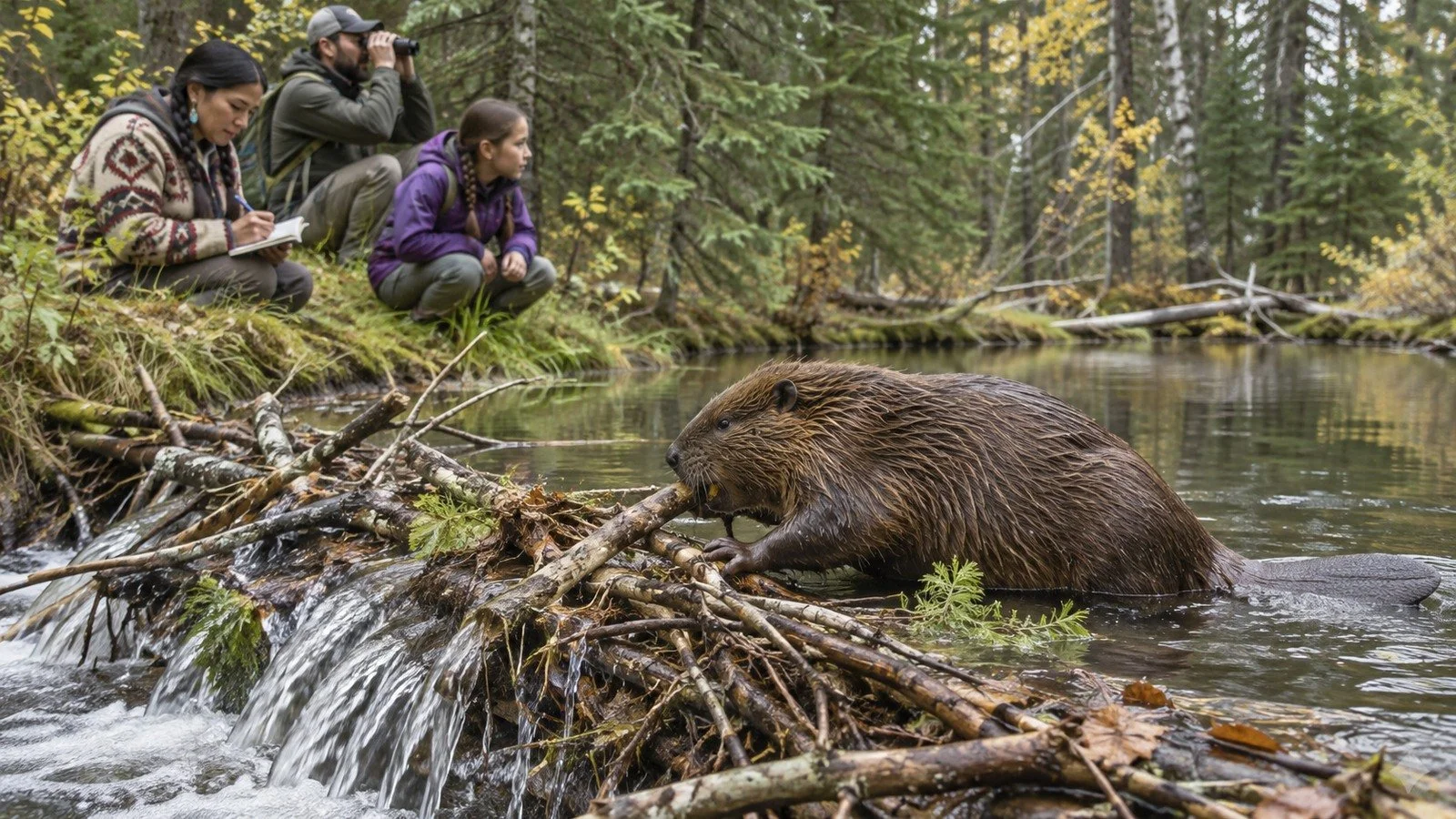
Canada's national parks protect some of the world's most remarkable places, from the Rocky Mountains to the highest tides on earth. The beaver, the maple tree and the Canadian horse are official national symbols, and the North is known as the "Land of the Midnight Sun".
41. The beaver became an official symbol of Canada on March 24, 1975, mainly because of its central role in the fur trade (Canadian Heritage, official symbols of Canada).
42. The beaver appeared on Canada's first postage stamp in 1851 (Canadian Heritage).
43. The maple tree was only adopted as Canada's national arboreal emblem in 1996, and the emblem is the generic maple, not just the sugar maple (Canadian Heritage).
44. The Canadian horse, nicknamed "the little iron horse", was recognized as the national horse of Canada in April 2002 (Canadian Heritage).
45. Banff is Canada's first national park and part of the Canadian Rocky Mountain Parks UNESCO World Heritage Site (Parks Canada, Banff National Park).
46. Wood Buffalo, on the Alberta–Northwest Territories border, is the largest national park in Canada and protects the largest herds of wood bison in the world (Parks Canada, Wood Buffalo National Park).
47. Wapusk National Park, near Churchill, Manitoba, protects one of the largest polar bear maternity denning areas in the world (Parks Canada, Wapusk National Park).
48. In the North, daylight can last up to 24 hours at the height of summer, which is why the region is called the "Land of the Midnight Sun" (Discover Canada).
49. Alberta's Badlands hold some of the world's richest deposits of prehistoric fossils and dinosaur finds (Discover Canada).
50. The caribou is a symbol of Canada's North (Discover Canada).
Economy and money
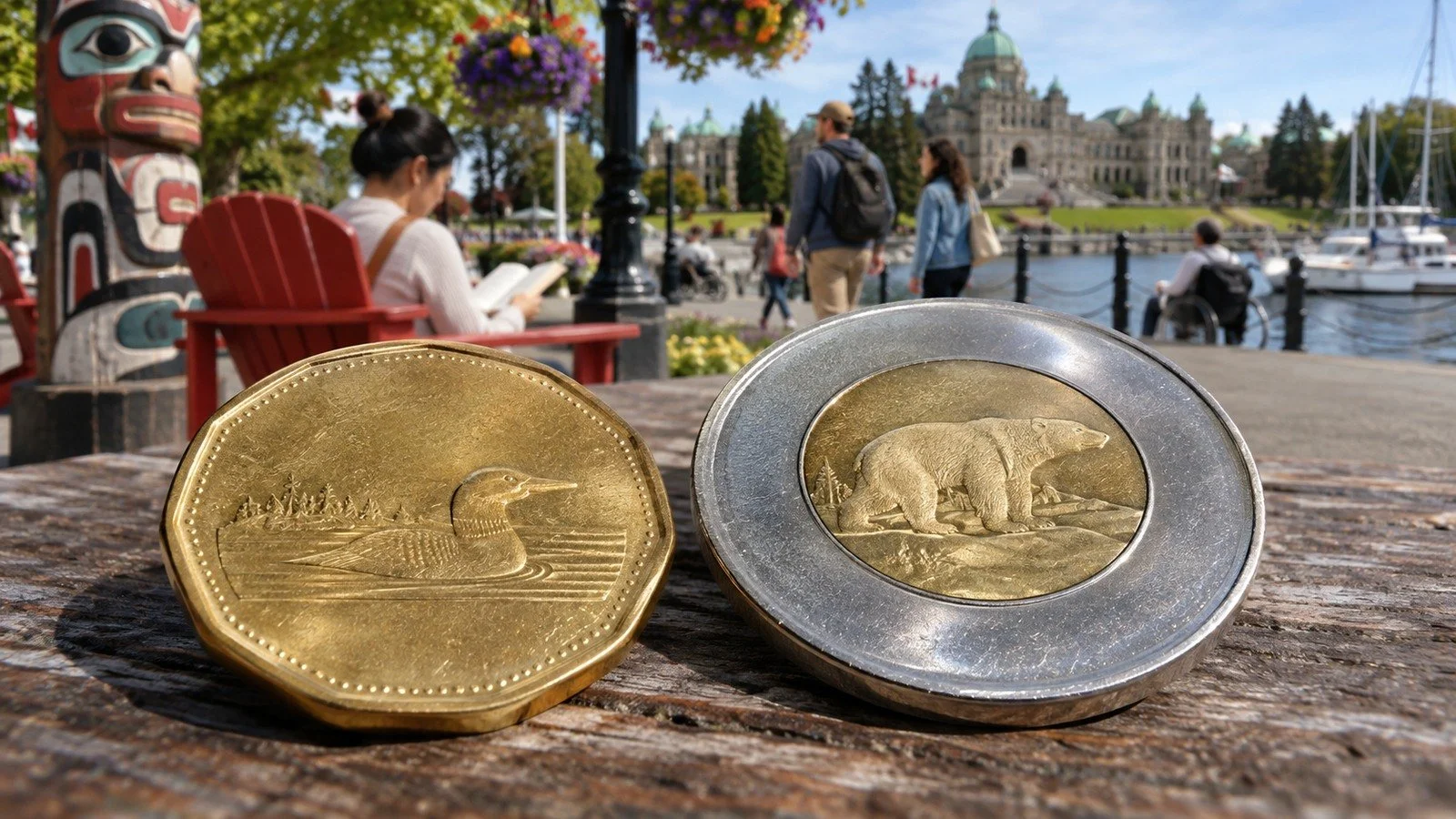
Canada is a trading nation with rich natural resources, a world-leading maple industry and a strong financial sector. Its coins include the "loonie" and the "toonie", and its bank notes are made of polymer.
51. The one-dollar coin was introduced in 1987 to replace the one-dollar bill, and it was nicknamed the "loonie" after the loon on its reverse (Royal Canadian Mint, 1-dollar coin).
52. The two-dollar coin, or "toonie", was introduced on February 19, 1996, and was Canada's first bi-metallic coin (Royal Canadian Mint).
53. More than one billion toonies have circulated since 1996, according to the Royal Canadian Mint.
54. The polar bear on the toonie was designed by wildlife artist Brent Townsend (Royal Canadian Mint, 2-dollar coin).
55. The Bank of Canada is preparing a vertical twenty-dollar polymer bank note featuring King Charles III, and the Government of Canada announced that Terry Fox will be featured on the new five-dollar note (Bank of Canada, bank notes).
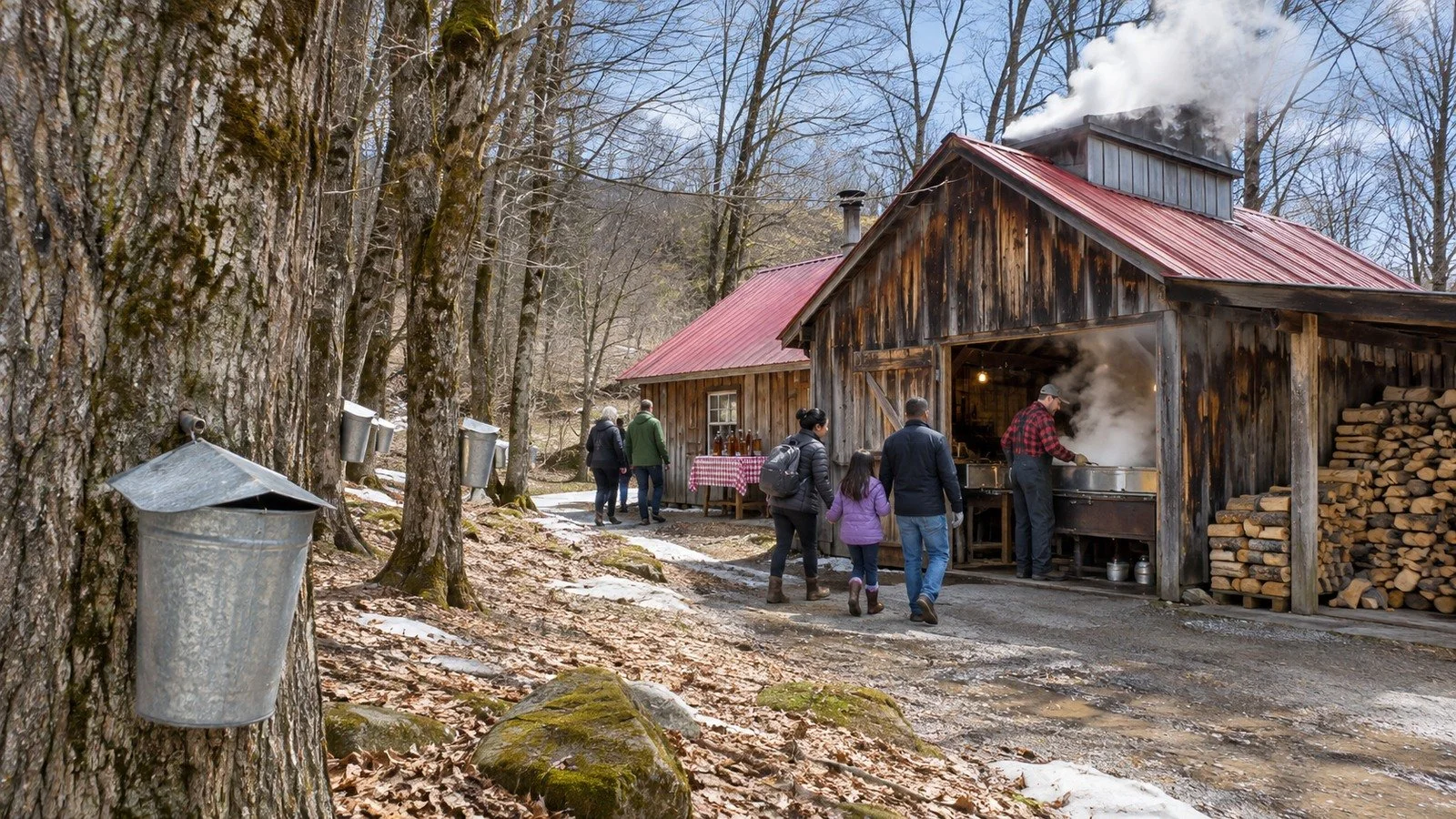
56. Canada is the largest producer and exporter of maple products in the world, and most production and exports come from Quebec (Canadian Heritage).
57. Canada exports maple products to about 60 countries (Canadian Heritage).
58. Quebec is Canada's largest producer of hydro-electricity and its main producer of pulp and paper (Discover Canada).
59. Saskatchewan has 40% of Canada's arable land and is the country's largest producer of grains and oilseeds, according to Discover Canada.
60. Canada enacted free trade with the United States in 1988, and Mexico joined in 1994 under the broader North American Free Trade Agreement (Discover Canada: Canada's economy).
Discover Canada is IRCC's citizenship study guide and some of its economic descriptions date from its original edition. Trade agreements and economic data change: check the linked pages and Statistics Canada for current figures.
Culture and national symbols
Canada's best-known symbols include the red and white flag with its maple leaf, the national anthem "O Canada", the coat of arms and the motto "From sea to sea". Many of them were adopted officially only in the 20th and 21st centuries.
61. The National Flag of Canada was adopted on January 28, 1965, and raised for the first time on Parliament Hill on February 15, 1965, now celebrated as National Flag of Canada Day (Canadian Heritage).
62. "O Canada" was proclaimed the national anthem on July 1, 1980, but it was first performed a century earlier, on June 24, 1880, in Québec City (Canadian Heritage).
63. The music of "O Canada" was composed by Calixa Lavallée, and the French lyrics were written by Adolphe-Basile Routhier; the official English lyrics are based on a 1908 version by Robert Stanley Weir (Canadian Heritage).
64. Red and white are not enshrined in law as Canada's national colours, despite a popular belief; they became Canada's colours through common use and the flag (Canadian Heritage).
65. The Coat of Arms of Canada was adopted by proclamation of King George V in 1921 (Canadian Heritage).
66. Canada's motto, A Mari usque ad Mare, means "from sea to sea" in Latin (Discover Canada: Canadian symbols).
67. The Maple Leaf Tartan became an official national symbol on March 9, 2011, and April 6 is Tartan Day (Canadian Heritage).
68. Canada started its own honours system with the Order of Canada in 1967, the centennial of Confederation (Discover Canada: Canadian symbols).
69. In the visual arts, Canada is perhaps best known for the Group of Seven, painters founded in 1920 who captured the rugged wilderness (Discover Canada: Modern Canada).
70. September 30 is the National Day for Truth and Reconciliation, one of Canada's important commemorative days (Canadian Heritage, important commemorative days).
Sports
Hockey is Canada's national winter sport and lacrosse its national summer sport. A Canadian invented basketball, Canada has hosted the Olympic Games three times, and the Stanley Cup and the Grey Cup were both donated by governors general.
71. Hockey became Canada's national winter sport and lacrosse its national summer sport under a law that received royal assent on May 12, 1994 (Canadian Heritage).
72. Lacrosse has its origins among the First Nations of North America, who played stick ball games long before European settlers arrived (Canadian Heritage).
73. In 1893, Lord Stanley, then Governor General, decided to offer a trophy to the best ice hockey team in the country: the Stanley Cup (Canadian Heritage).
74. The Grey Cup, the championship of the Canadian Football League, was donated by Lord Grey, the Governor General, in 1909 (Discover Canada: Modern Canada).
75. James Naismith, the inventor of basketball, was born in Ramsay Township, near Almonte, Ontario, and is a national historic person (Parks Canada, Naismith, James National Historic Person).
76. Canada has hosted the Olympic Games three times: Montreal 1976 (Summer), Calgary 1988 (Winter) and Vancouver 2010 (Winter) (Canadian Olympic Committee).
77. Soccer has the most registered players of any game in Canada (Discover Canada: Canadian symbols).
78. Curling, an ice game introduced by Scottish pioneers, is popular across Canada (Discover Canada).
79. The Clarkson Cup for women's hockey was established in 2005 by Adrienne Clarkson, the 26th Governor General (Discover Canada).
80. In 1972, Paul Henderson scored the winning goal for Canada in the Canada-Soviet Summit Series, often called "the goal heard around the world" (Discover Canada: Modern Canada).
Food and drink
Canadian food reflects its regions and its many cultures: maple syrup from the forests of Quebec and Ontario, potatoes from Prince Edward Island, wine from Niagara and the Okanagan, and national favourites such as poutine, the Nanaimo bar and the Caesar cocktail.
81. Poutine is one of Quebec's best-known specialties, and the city of Drummondville holds a festival in its honour, according to Bonjour Québec, Quebec's official tourism site.
82. The Nanaimo bar is a no-bake dessert bar that traditionally has three layers and is named after Nanaimo, British Columbia (The Canadian Encyclopedia, Nanaimo bar).
83. The Caesar, often called Canada's national cocktail, was created by Walter Chell in Calgary in 1969 (The Canadian Encyclopedia, Caesar).
84. Indigenous peoples were the first to recognize the value of the maple tree, long before European settlers arrived (Canadian Heritage).
85. Prince Edward Island, the smallest province, is known for its beaches, red soil and agriculture, especially potatoes (Discover Canada).
86. Ontario's Niagara region is known for its vineyards, wines and fruit crops (Discover Canada).
87. British Columbia's Okanagan Valley is known for its fruit orchards and wine industry (Discover Canada).
88. Newfoundland and Labrador has long been known for its fisheries and coastal fishing villages (Discover Canada).
Record-breaking facts and Canadian inventions
Canada is home to the world's highest tides, the largest freshwater lake and the largest freshwater island, the longest bridge over ice-covered water and the longest multi-use trail network. Canadians also gave the world insulin, standard time zones, the snowmobile and the Canadarm.
89. The Bay of Fundy has the world's highest tides, according to Parks Canada, Fundy National Park.
90. Lake Superior is the largest freshwater lake in the world (Discover Canada).
91. Manitoulin Island, in Ontario's Georgian Bay, is the world's largest freshwater island, covering 2,766 square kilometres (Government of Ontario, About Ontario).
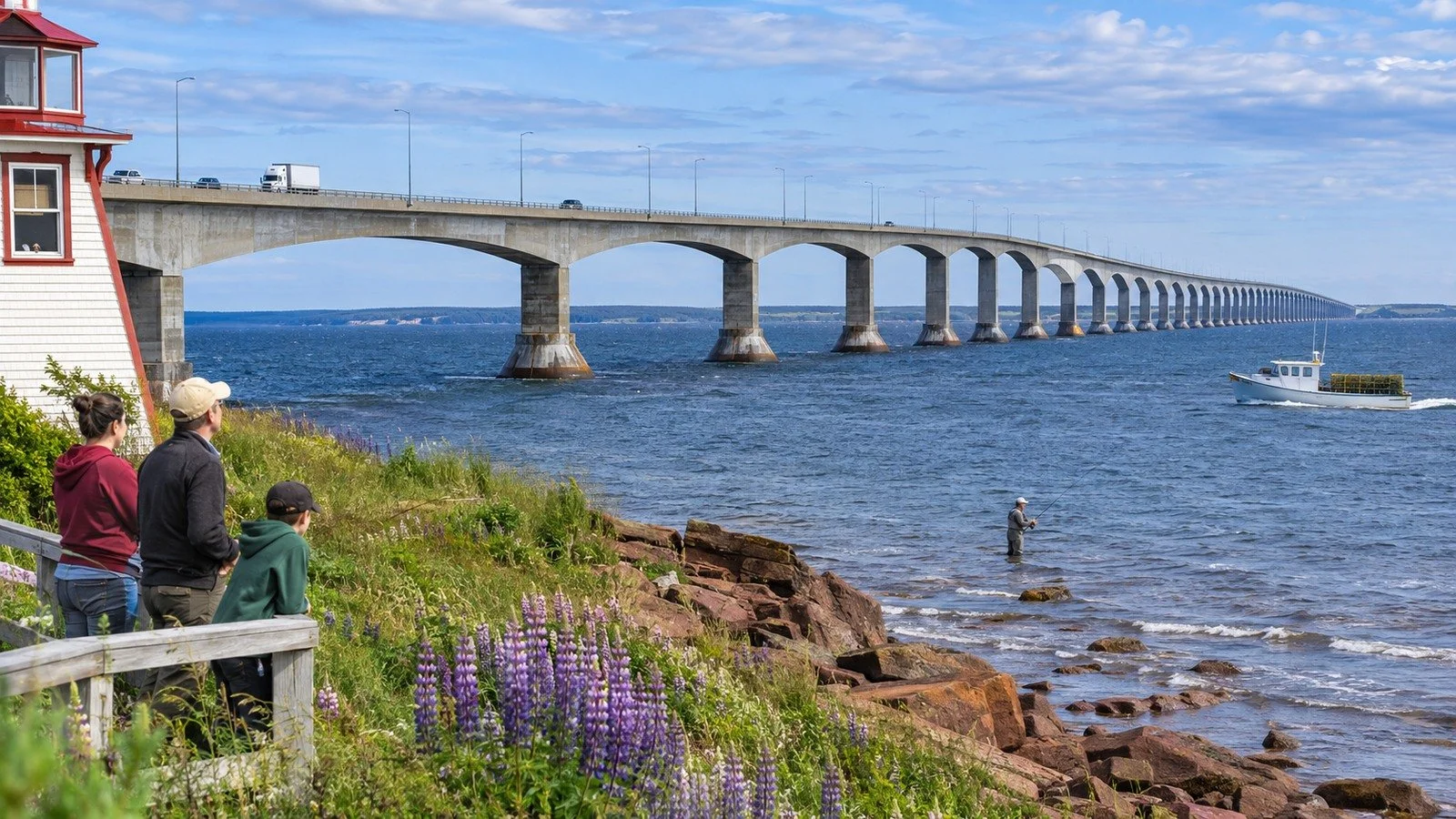
92. The Confederation Bridge, linking Prince Edward Island and New Brunswick, is 12.9 kilometres long and the longest bridge in the world crossing ice-covered water (Confederation Bridge).
93. The Trans Canada Trail describes itself as the longest multi-use trail system in the world (Trans Canada Trail).
94. Toronto's CN Tower has the highest viewing platform in the Western Hemisphere, and its EdgeWalk takes visitors around the outside of the main pod, 116 storeys above the ground (CN Tower).
95. Yukon holds the record for the coldest temperature ever recorded in Canada: -63°C (Discover Canada).
96. The Nobel Prize in Physiology or Medicine 1923 was awarded to Frederick Banting and John Macleod for the discovery of insulin; Discover Canada credits Sir Frederick Banting, of Toronto, and Charles Best with the discovery (The Nobel Prize; Discover Canada: Modern Canada).
97. Sir Sandford Fleming invented the world system of standard time zones (Discover Canada: Modern Canada).
98. Joseph-Armand Bombardier invented the snowmobile (Discover Canada: Modern Canada).
99. Dr. John A. Hopps invented the first cardiac pacemaker, and SPAR Aerospace and the National Research Council invented the Canadarm, a robotic arm used in space (Discover Canada: Modern Canada).
100. Reginald Fessenden contributed to the invention of radio by sending the world's first wireless voice message, and Alexander Graham Bell hit on the idea of the telephone at his summer house in Canada (Discover Canada: Modern Canada).
Records as described by Parks Canada, the Government of Ontario, the Confederation Bridge, the Trans Canada Trail, the CN Tower and IRCC's Discover Canada, as of November 2026. Some records are claimed by the organizations that run the attractions: check the linked pages for details.
Watch: Canada's story in a short video
If you prefer to watch rather than read, our short video "Canada: From the Beginning" tells the story of the country in under seven minutes. It is a friendly introduction before you dive into the facts above or study for the citizenship test.
Canada: From the Beginning | The Story of an Extraordinary Country, on the Global Opportunities YouTube channel.
More videos about Canada and moving here: Global Opportunities on YouTube.
Frequently asked questions
What are some interesting facts about Canada?
Canada is the second largest country on earth, at about 10 million square kilometres, and is bordered by three oceans, according to IRCC's Discover Canada. It has the world's highest tides in the Bay of Fundy, according to Parks Canada, and Ontario alone has more than 250,000 lakes. Canadians discovered insulin, invented standard time zones and created the Canadarm. The name "Canada" comes from kanata, an Iroquoian word for "village".
How many people live in Canada?
Statistics Canada estimated Canada's population at 41,798,407 on July 1, 2026 (Statistics Canada). The figure is preliminary and is revised as new data arrives. More than half of Canadians live in southern Quebec and Ontario, near the Great Lakes and the St. Lawrence River, while the three northern territories cover about one-third of the land mass. Check Statistics Canada for the latest estimate.
What is Canada's national animal?
The beaver. According to Canadian Heritage, the beaver became an official symbol of Canada on March 24, 1975, mainly because of its central role in the fur trade, and it appeared on Canada's first postage stamp in 1851. You can see it on the five-cent coin. Canada also has a national horse, the Canadian horse, recognized in 2002, and the maple tree is its national arboreal emblem.
What is Canada's national sport?
Canada has two. Under a law that received royal assent on May 12, 1994, hockey is the national winter sport and lacrosse the national summer sport, according to Canadian Heritage. Lacrosse has its origins among First Nations, who played stick ball games long before European settlers arrived. Soccer, though, has the most registered players of any game in Canada, according to Discover Canada.
What does the word "Canada" mean?
According to IRCC's Discover Canada, the explorer Jacques Cartier heard two guides use the Iroquoian word kanata, meaning "village". By the 1550s, the name Canada was appearing on maps. Cartier made three voyages across the Atlantic between 1534 and 1542, claiming the land for the King of France.
When did Canada become a country?
Canada became a country at Confederation in 1867, according to the Governor General of Canada. Other provinces and territories joined over time: according to Discover Canada, Alberta and Saskatchewan joined in 1905, Newfoundland and Labrador in 1949, and Nunavut was created in 1999. Canada Day is celebrated every July 1.
Who is Canada's head of state?
His Majesty King Charles III is King of Canada and Head of State, and the Governor General is his representative in Canada, according to the Governor General of Canada. Canada is a constitutional monarchy and a parliamentary democracy. According to Discover Canada, the Prime Minister selects the Cabinet ministers and is responsible for the operations and policy of the government. Parliament includes the elected House of Commons, with 343 seats according to Elections Canada, and the appointed Senate.
What are Canada's official languages?
English and French. According to IRCC's Discover Canada, English speakers and French speakers have lived together in Canada for more than 300 years. Canada is also home to more than 70 distinct Indigenous languages, according to Statistics Canada, and Inuktitut is an official language in Nunavut. If you need a language test for immigration or citizenship, see our English and French tests guide.
What is Canada famous for?
Canada is famous for its natural wonders, such as the Rocky Mountains, the national parks and the Bay of Fundy's tides; its wildlife, including beavers, polar bears and caribou; maple syrup, as the world's largest producer and exporter of maple products according to Canadian Heritage; hockey; and its multicultural cities, such as Toronto, Montreal and Vancouver. Inventions such as insulin, the snowmobile and the Canadarm are also part of its story.
Are these facts on the Canadian citizenship test?
Many of them come from Discover Canada, the official study guide for the citizenship test, published by IRCC (Discover Canada). The test covers Canada's history, symbols, geography and government, and the rights and responsibilities of citizenship. A list like this is a fun way to review, but always study the official guide. For who must take the test and how it works, see our Canadian citizenship guide.
Related guides
How Global Opportunities can help
Choosing a province and a pathway depends on your education, work experience, languages and goals. We can help you understand your options.
Our regulated consultant: Lic. Mildrete Monserrath Gutierrez Martinez, Regulated Canadian Immigration Consultant (RCIC), CICC licence R514880. Verify her licence on the CICC Public Register: https://college-ic.ca/protecting-the-public/find-an-immigration-consultant. Global Opportunities does not offer services for Quebec's immigration programs. Global Opportunities is a private firm and is not part of the Government of Canada or any provincial government.
Recorded seminars and lives: watch our recorded seminars in English or the Spanish recordings, and visit our YouTube channel.
More articles in English: read our Moving to Canada articles on topics such as health care, cost of living, the ECA and professional licences, and building community in Canada.
Personalized consultation: for a review of your own case, contact us or write to info@globalopp.ca.
Prefer email? Tell us what you need help with (moving to Canada) and we will reply: email info@globalopp.ca.
Contact Global Opportunities →
Sources
IRCC, Discover Canada: Canada's regions · Canada's history · Modern Canada · Canadian symbols · Canada's economy · How Canadians govern themselves
Canadian Heritage, official symbols of Canada · Important commemorative days
Statistics Canada: population estimates, second quarter 2026 · population by age and gender, 2026 · 2021 Census, Indigenous peoples · 2021 Census, languages · 2021 Census, ethnocultural and religious diversity
Elections Canada, seats in the House of Commons · Senate of Canada, about
Department of Justice Canada, Canadian Charter of Rights and Freedoms
International Boundary Commission: about · boundary facts
Parks Canada: Banff · Wood Buffalo · Wapusk · Fundy · L'Anse aux Meadows · James Naismith, National Historic Person
Royal Canadian Mint: 1-dollar coin · 2-dollar coin · The Toonie turns 30
The Canadian Encyclopedia: Nanaimo bar · Caesar
Confederation Bridge, about us · Trans Canada Trail · CN Tower
The information in this guide comes from the official and reputable sources linked in each fact and listed above, as they read when we checked them in November 2026, and it may have changed since. Population estimates are revised, and some facts come from older official publications such as IRCC's Discover Canada. This guide is general and for reference only. It is not immigration, legal, tax or professional advice. Global Opportunities is not responsible for how anyone interprets this content, for decisions made based on it, or for changes made to the sources after it was written: what you read depends on when you read it. Always confirm details with the official sources. Global Opportunities is a private firm, is not part of the Government of Canada or of any regulator, and does not offer jobs. For your own case, book a consultation.
Last reviewed: November 2026