
Exchanging Your Driver's Licence in Canada: Rules by Province for Newcomers
Can you drive in Canada with a licence from your home country? Yes, for a limited time after you move, and then you must switch to a licence from your new province or territory. Driver licensing is provincial in Canada, so the deadline, the list of countries that can exchange without tests and the steps for everyone else depend on where you live. This guide summarises each province's official rules, with a link to the page that counts.
About our sources: This guide summarises what official sources (provincial and territorial governments and their licensing agencies, such as ServiceOntario, ICBC, SGI and Manitoba Public Insurance) said when we checked them in November 2026. We link every source so you can read it yourself. Rules, lists of countries and requirements change, sometimes without notice, and the official page is the one that counts. This is general information, not legal or immigration advice. Global Opportunities is not responsible for how this information is interpreted or for changes made after it was written.
Driving is one of the first practical questions newcomers ask: can I rent a car when I land, can I drive to work in my first month, and do I have to start from zero with a learner's permit? The honest answer is "it depends on the province and on the country that issued your licence." Canada has no single national driver's licence. Each province and territory issues its own licence, keeps its own list of countries it recognizes and sets its own deadline for new residents.
We wrote this guide for someone who is about to move, or has just moved, and wants to plan ahead. For each province we cover three things: how long you can drive on your current licence, whether your country is on the exchange list, and what you do if it is not. Our province guides go deeper into insurance, car rental, winter driving and parking in each province.
Watch our recorded seminars and lives →
Prefer Spanish? Read our Spanish guide.
In this guide
How driver's licences work in Canada
Can I drive in Canada with a foreign licence, and for how long?
What is a licence exchange agreement?
What if my country has no exchange agreement?
Graduated licensing in Canada, explained simply
Translations and the International Driving Permit
Ontario
British Columbia
Alberta
Saskatchewan
Manitoba
New Brunswick
Nova Scotia
Prince Edward Island
Newfoundland and Labrador
Yukon, the Northwest Territories and Nunavut
Licences from Latin America, Asia, Africa and the Middle East
A step-by-step plan for your first months
Frequently asked questions
Related guides
How Global Opportunities can help
Sources
How driver's licences work in Canada
In Canada, driver's licences are issued by the provinces and territories, not by the federal government. Each one sets its own rules for new residents, so moving from Toronto to Calgary means following Alberta's rules, even if you already hold an Ontario licence.
Each province uses its own agency or office. In Ontario, you apply at a DriveTest centre or at ServiceOntario (Government of Ontario, exchange an out-of-province licence). In British Columbia, licensing is handled by ICBC (ICBC, moving from another country); in Saskatchewan, by SGI (SGI Driver's Handbook, Saskatchewan's driver's licence program); and in Manitoba, by Manitoba Public Insurance (MPI, new to Manitoba). In Alberta you go to a private registry agent that offers government services (Government of Alberta, exchange a licence from outside Alberta).
Most provinces use similar names for licence classes. The standard licence for a car is usually called Class 5 (in Ontario, Class G), and the learner's stage is often Class 7 (in Ontario, G1). When an official page says you can exchange "for a Class 5," it means a regular passenger-car licence.
Can I drive in Canada with a foreign licence, and for how long?
Yes. Every province lets new residents drive on a valid licence from home for a limited period. When we checked in November 2026, that period ranged from as soon as you take up residence (New Brunswick) to 180 days (Nova Scotia). After it ends, you must hold a licence from your new province.
Here is what each official page said in November 2026:
Ontario: 60 days after you move (Government of Ontario).
British Columbia: 90 days after moving (ICBC).
Alberta: exchange within 90 days of becoming a resident, even if you travel during that time (Government of Alberta).
Saskatchewan: 90 days after moving (SGI Driver's Handbook).
Manitoba: up to three months (MPI, new to Manitoba).
New Brunswick: you must get a New Brunswick licence as soon as you take up residence; temporary residents with a work or study permit valid for more than six months may drive on their home licence for up to six months from the day they land (Government of New Brunswick, licences for new residents).
Nova Scotia: up to 180 days from the day you become a resident (Government of Nova Scotia).
Prince Edward Island: up to four months after becoming a resident, which may be extended if you have started the exchange (Government of PEI, Driver License Reciprocity sheet, October 2022).
Newfoundland and Labrador: exchange within three months of becoming a resident (Government of Newfoundland and Labrador, licence application process).
Two practical points. First, the clock usually starts when you become a resident, not when you first visit. Second, visitors and some students follow different rules: for example, ICBC says the 90-day rule does not apply to tourists visiting for up to six months or to students with a valid student exemption (ICBC), and Alberta lets visitors drive on a valid home licence for up to one year (Government of Alberta). Read your province's section below.
Please note: deadlines and exceptions as published by each province in November 2026. They can change: check the official page for your province before you rely on them.
What is a licence exchange agreement?
An exchange agreement (also called reciprocity) means a province accepts a licence from a specific country and gives you an equivalent local licence without the knowledge and road tests, or with only a vision test. Each province has its own list, so a country can be on one list and not on another.
Every province exchanges licences from the other Canadian provinces and territories, and most accept licences from U.S. states, with conditions. Beyond that, the lists are mostly made up of European countries plus Australia, New Zealand, Japan, South Korea, Taiwan and, in many provinces, Ukraine. Each section below lists the countries exactly as the official page names them.
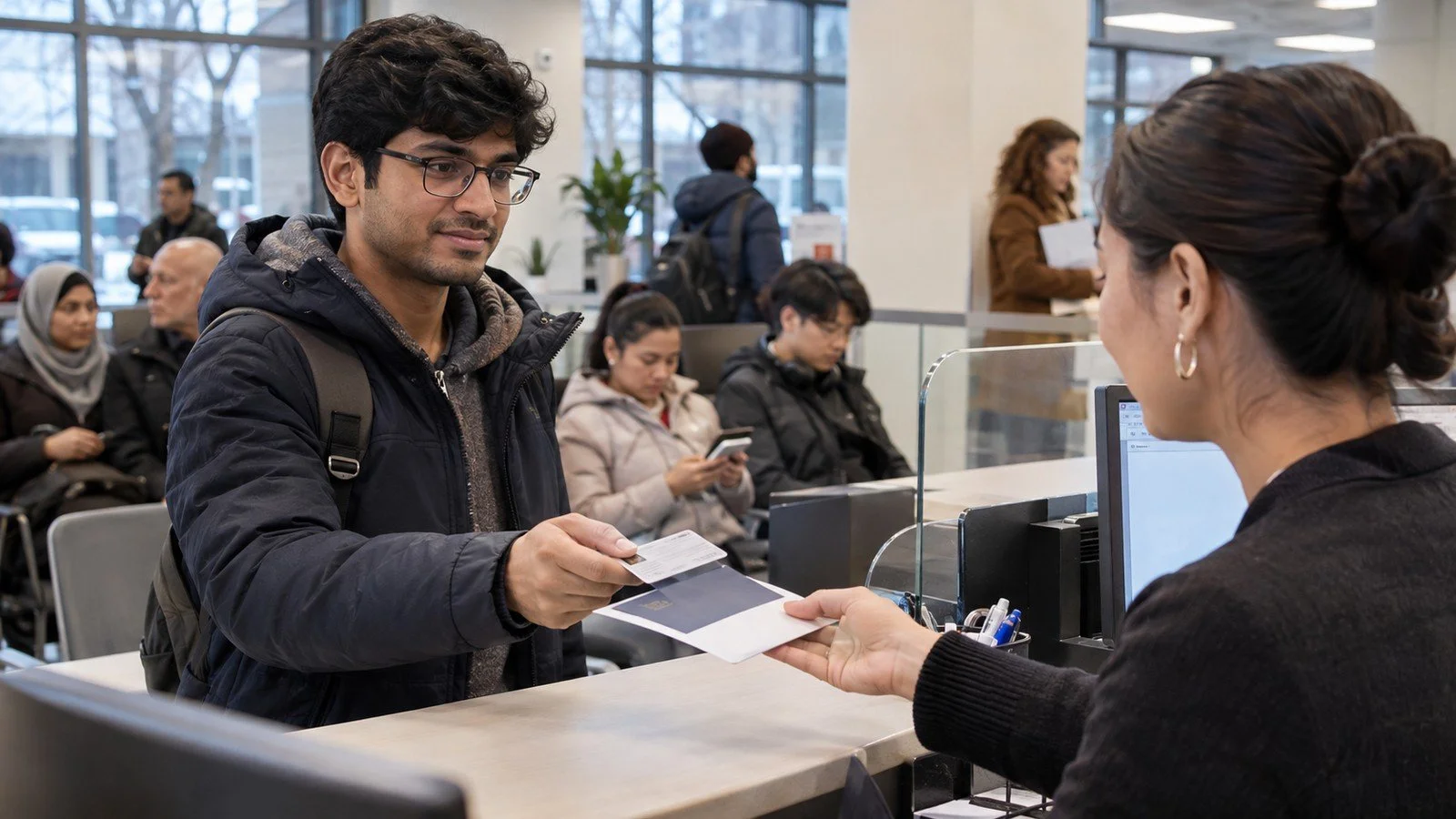
Even when your country is on the list, an exchange is not automatic. Provinces usually ask you to:
show a valid, original licence (not a copy);
surrender it when you get the new one;
prove your identity, residence and legal status in Canada;
provide a translation if the licence is not in English or French;
in some provinces, show a driving record or proof of how long you have been driving.
Being on a list also does not mean every licence class is exchanged. Many lists cover only passenger cars (Class 5), and motorcycle or commercial licences have separate rules.
What if my country has no exchange agreement?
If your country is not on your province's list, you can still get a licence. You usually take a knowledge test and a road test, and many provinces give credit for proven driving experience so you do not have to spend the full learner period on the road.
How much credit you get, and how you prove it, varies a lot:
Ontario gives credit for up to one year of driving experience if you show a valid original foreign licence and an official authentication letter from the government or agency that issued it, in English or French (Government of Ontario).
Alberta lets you apply to its GDL Exemption Program, which reviews your previous driving history and can exempt you from part or all of graduated licensing (Government of Alberta).
British Columbia requires proof of at least two years of non-learner driving experience to be exempt from its graduated licensing program (ICBC).
Saskatchewan says the nine-month learning period and the driver training requirement may be waived if you can prove past driving experience (SGI Driver's Handbook).
The best thing you can do before you move is gather proof of your driving history: your original licence, a recent driving record (often called a driver's abstract) from the authority that issued it and, where your province accepts one, an official letter confirming when you were first licensed. Keep originals; several provinces do not return surrendered documents.
Please note: experience credit is decided by each province's licensing office for your own case, based on your documents. Check the linked pages for what your province accepts.
Graduated licensing in Canada, explained simply
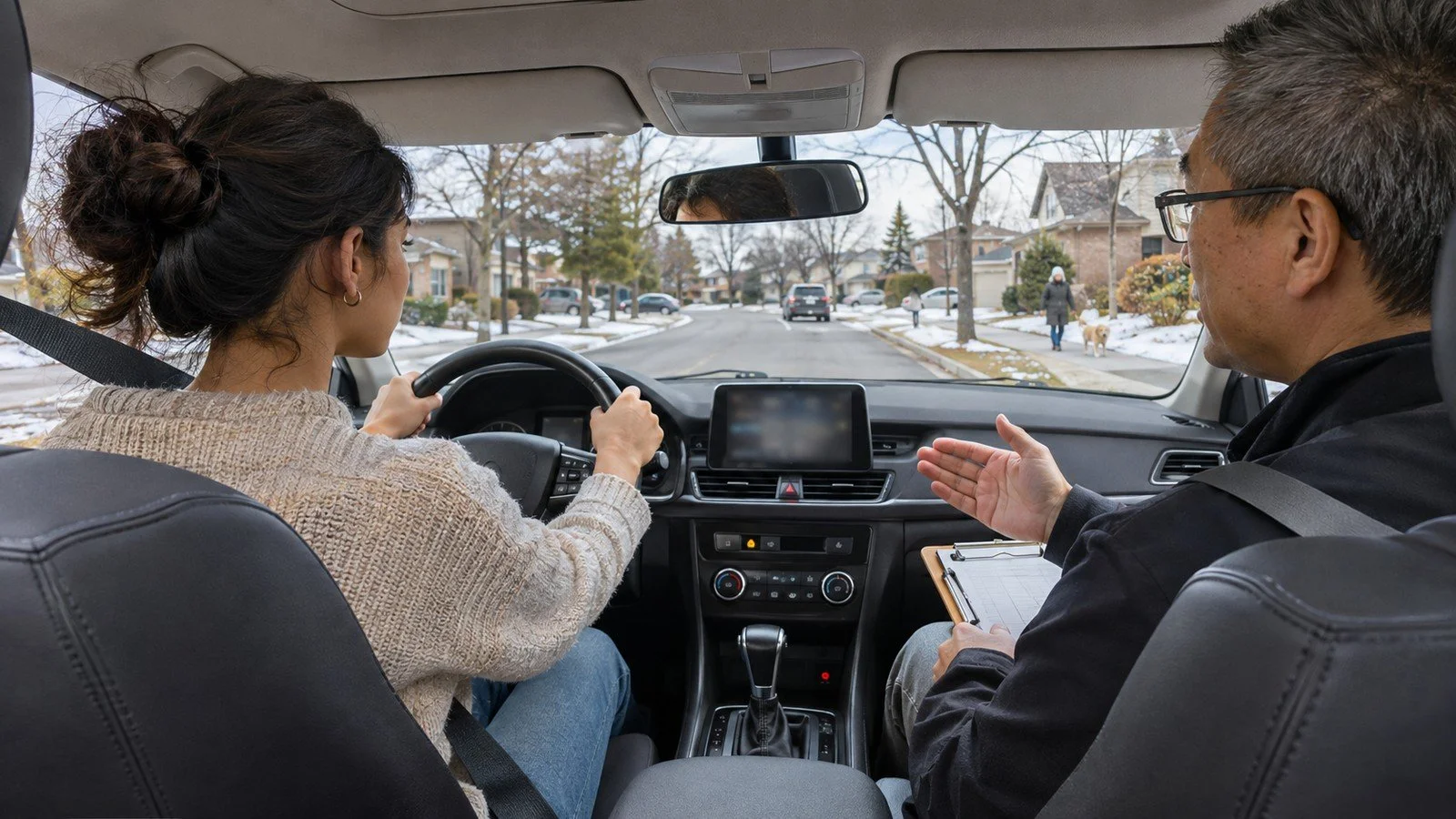
Graduated licensing (GDL or GLP) is the system Canadian provinces use for new drivers: a learner stage, then a probationary or novice stage with restrictions, and finally a full licence. Newcomers whose experience cannot be credited usually go through it, often with shorter waiting periods.
The names change by province. In Ontario the stages are G1, G2 and G (Government of Ontario, get a G driver's licence: new drivers). In British Columbia they are the L (learner) and N (novice) stages (ICBC, get your L). Alberta uses Class 7 (learner) and Class 5-GDL (probationary) (Government of Alberta, steps to getting a driver's licence). Saskatchewan, Manitoba, New Brunswick, Nova Scotia, Prince Edward Island and Newfoundland and Labrador publish their own programs (SGI; MPI handbook; New Brunswick; Nova Scotia; PEI GDL booklet; Newfoundland and Labrador).
What it usually means in practice:
Learner stage: you drive only with a fully licensed driver beside you, with zero alcohol and other conditions.
Novice stage: you can drive alone, with restrictions (for example, zero alcohol and limits on passengers or night driving, depending on the province).
Full licence: no special restrictions once you pass the final test or complete the probation.
The restrictions are specific and enforced, so read your province's page before you get behind the wheel. Insurance is also affected: a driver with no recognized Canadian or foreign history usually pays more at first. Our province guides explain how auto insurance works in each province.
Translations and the International Driving Permit
If your licence is not in English or French, most provinces require a translation from an approved source. An International Driving Permit (IDP) from your home country can serve as a translation in several provinces, but it is not a licence on its own.
Some examples from official pages:
Ontario asks for a translation by an approved translator, dated within six months of your application, and says approved translators include foreign embassies, consulates and high commissions (Government of Ontario).
ICBC asks for translations by an ICBC-approved translator, at its discretion (ICBC).
Alberta strongly recommends that visitors whose licence is not in English carry an IDP from their home jurisdiction along with the licence (Government of Alberta).
Saskatchewan accepts an IDP as a translation document (SGI Driver's Handbook).
Newfoundland and Labrador publishes its own translation requirements for foreign licences.
Get your IDP before you leave home: it is issued in the country that issued your licence. The Canadian Automobile Association (CAA) issues IDPs to Canadian licence holders who travel abroad (CAA, International Driving Permit), not to visitors.
Ontario
You can drive in Ontario on a valid licence from another province, state or country for 60 days after you move. After that, you need an Ontario licence. Licences from the countries below can be exchanged; everyone else takes the vision test, knowledge test and road tests, with possible credit for experience.
According to the Government of Ontario's page to exchange an out-of-province licence, checked in November 2026:
Exchange is possible if you are relocating from any Canadian province or territory, the Canadian Armed Forces, U.S. states (not U.S. protectorates or territories), or from Australia, Austria, Belgium, Croatia, France, Germany, Great Britain, Hungary, Denmark, the Isle of Man, Japan, South Korea, Kosovo, New Zealand, Northern Ireland, the Republic of Ireland, Switzerland, Taiwan or Ukraine.
You cannot exchange a learner's permit, a licence from a jurisdiction not listed, or some licence classes, such as commercial licences issued outside Canada.
If your jurisdiction has no exchange agreement, you pass the vision test, the knowledge test and the G2 road test, wait at least 12 months before the G road test, and then pass it. Since July 1, 2026, you can get credit for up to one year of driving experience with a valid original foreign licence and an official authentication letter from the issuing government or agency, in English or French.
You apply in person at a DriveTest centre or at ServiceOntario Bay and College in downtown Toronto, with your original licence, identity documents and proof of experience. Since May 11, 2026, applicants for a Class G or M licence declare that Ontario is their primary residence and that their presence in Canada is legal.
More on daily driving, insurance and parking in our Ontario guide.
Please note: rules as published by the Government of Ontario in November 2026. The list of exchange countries can change.
British Columbia
After moving to B.C., you have 90 days to switch to a B.C. licence. Licences from the jurisdictions ICBC lists can be exchanged without additional testing; others need a knowledge test and a road test, and two years of proven experience lets you skip graduated licensing.
According to ICBC's page for people moving from another country, checked in November 2026:
The 90-day rule does not apply to tourists visiting for up to six months, to students with a valid student exemption who study full time at a designated institution, or to workers in the Seasonal Agricultural Worker Program, who may drive for up to 12 months on a valid home licence.
Exchange jurisdictions: every Canadian province and territory, most U.S. states (including Washington DC and Puerto Rico), and Austria, Australia, Belgium, France, Germany, Guernsey, the Isle of Man, Jersey, Ireland, Japan, the Netherlands (except the former territories in the Antilles), New Zealand, South Korea, Switzerland, Taiwan and the United Kingdom, with conditions for some.
Other countries: you can still apply, but you must pass a knowledge test and a road test within the process, and ICBC recommends starting early because road test appointments take time.
Experience: proof of at least two years of non-learner driving experience is needed to be exempt from the Graduated Licensing Program; otherwise you can get a Class 7 licence with restrictions. Class 5, 6, 7 and 8 knowledge tests are available in 12 languages.
You surrender your previous licence when you apply, and B.C. allows only one driver's licence per person.
More in our British Columbia guide.
Please note: rules as published by ICBC in November 2026. ICBC decides how much experience is credited for each driver.
Alberta
New Alberta residents must exchange their licence within 90 days. Licences from a long list of recognized countries can be exchanged without a knowledge or road test. Drivers from other countries take a Class 7 knowledge test and can apply to have their experience credited through the GDL Exemption Program.
According to the Government of Alberta's page on exchanging a licence from outside Alberta, checked in November 2026:
Recognized jurisdictions (usually Class 5, sometimes Class 6 too): Australia, Austria, Belgium, Bulgaria, Croatia, Cyprus, the Czech Republic, Estonia, Finland, France, Germany, Greece, Guernsey, Hungary, Iceland, the Isle of Man, Italy, Jersey, Japan, the Kingdom of Denmark, Latvia, Liechtenstein, Lithuania, Luxembourg, Malta, the Netherlands, New Zealand, Norway, Poland, Portugal, the Republic of Ireland, the Republic of Korea, Romania, Slovakia, Slovenia, Spain, Switzerland, Sweden, Taiwan and the United Kingdom. U.S. licences (Classes 5, 6 and 7) and Ukrainian Class B and BE licences can also be exchanged without extra testing.
To get a full Class 5 through an exchange, you show proof of two or more years of driving experience; otherwise you may be placed in graduated licensing.
Other countries: you take a Class 7 knowledge test at a registry, surrender your licences and apply for the GDL Exemption Program. Your file is reviewed by Service Alberta's Special Investigations Unit, you return after 10 business days and, if eligible, book a road test. With two or more years of credited experience you get a full Class 5; with less, a Class 5-GDL.
Visitors can drive in Alberta on a valid home licence for up to one year.
More in our Alberta guide.
Please note: rules as published by the Government of Alberta in November 2026. The SIU decides on GDL exemptions case by case.
Saskatchewan
New residents may drive on a valid out-of-province licence for 90 days after moving to Saskatchewan. SGI honours licences from the countries below, and it may accept others. If yours is not honoured, you take the driver's examination, and proof of past experience may shorten the learning period.
According to the SGI Driver's Handbook page on Saskatchewan's driver's licence program, checked in November 2026:
Licences may be honoured from: Australia, Austria, Belgium, Bulgaria, Croatia, Cyprus, Czechia, Denmark, Estonia, Finland, France, Germany, Greece, Hungary, Iceland, the Isle of Man, Italy, Japan, Jersey, Latvia, Liechtenstein, Lithuania, Luxembourg, Malta, the Netherlands, New Zealand, Norway, Poland, Portugal, the Republic of Ireland, Romania, Slovakia, Slovenia, South Korea, Spain, Sweden, Switzerland, Taiwan, Ukraine, the United Kingdom and the United States. They may be exchanged for a Class 5 licence.
If you come from an honoured country, you provide a valid licence and a copy of your driving record, with a translation document acceptable to SGI (such as an International Driving Permit).
SGI says it may also accept a licence from a country not listed and asks you to check with a motor licence issuer or driver examination office.
Other countries: the nine-month learning period and the driver training requirement may be waived if you can prove past driving experience with a valid licence in English or French, or with an acceptable translation.
SGI also has a Moving to Saskatchewan page. More in our Saskatchewan guide.
Please note: rules as published by SGI in November 2026. SGI decides whether a licence is honoured.
Manitoba
In Manitoba you can drive on your current valid licence for up to three months. Licences from countries on Manitoba Public Insurance's lists can be exchanged without a knowledge or road test; drivers from other countries take both tests.
According to Manitoba Public Insurance (MPI), checked in November 2026 (new to Manitoba; countries eligible for licence exchange):
Reciprocal countries: Australia, Austria, Germany, France, Ireland, the Isle of Man, Japan, Northern Ireland, South Korea, Switzerland, Taiwan, the United Kingdom, and the United States and its territories (including Puerto Rico), each with the classes and conditions MPI lists.
Simplified exchange: Belgium, Bulgaria, Canadian Forces Europe, Croatia, Cyprus, the Czech Republic, Denmark, Estonia, Finland, Greece, Hungary, Iceland, Italy, Latvia, Liechtenstein, Lithuania, Luxembourg, Malta, the Netherlands, Norway, Poland, Portugal, Romania, Slovakia, Slovenia, Spain, Sweden and Ukraine.
Other countries: after three months, you need to pass a knowledge test and a road test to keep driving.
MPI reviews surrendered licences for authenticity. If the licence is not your original, your previous experience is not accepted and you complete graduated licensing.
More in our Manitoba guide.
Please note: rules and lists as published by MPI in November 2026.
New Brunswick
New Brunswick asks new residents to get a New Brunswick licence as soon as they take up residence. Drivers from Canada, the U.S. and the reciprocity countries below can exchange without tests; other foreign drivers take the full exam.
According to the Government of New Brunswick's page on licences for new residents, checked in November 2026:
Reciprocity countries (Class 5, and a motorcycle endorsement where the licence shows one): Austria, Australia, Belgium, Denmark, England, France, Germany, the Isle of Man, Ireland, Italy, Japan, the Netherlands, New Zealand, Norway, Portugal, Scotland, South Korea, Spain, Sweden, Switzerland, Taiwan, Ukraine and Wales. You still bring proof of identity, address, legal presence and a translation if needed.
Other countries: a full driver licence examination, with a vision test, a written exam and a road test.
Temporary residents with a work or study permit valid for more than six months can apply for a licence, or drive on their valid home licence for up to six months from the day they land in Canada.
More in our New Brunswick guide.
Please note: rules as published by the Government of New Brunswick in November 2026.
Nova Scotia
Nova Scotia gives new residents up to 180 days to exchange. Licences from listed countries need only a vision test; others need full testing (vision, knowledge and road tests).
According to the Government of Nova Scotia's page to exchange your out-of-province licence, checked in November 2026:
Listed countries (each with a minimum licence class): Australia, Austria, Belgium, Denmark, France, Germany, Hungary, Ireland, the Isle of Man, Italy, Japan, the Netherlands, New Zealand, Portugal, South Korea, Sweden, Switzerland, Taiwan, Ukraine and the United Kingdom.
Other countries or classes: full testing; depending on your class and how long you have held your licence, you may enter the Graduated Driver Licence program.
Exchanges are in person at Access Nova Scotia or a Registry of Motor Vehicles office, and you receive a 30-day temporary licence while the card is mailed.
Students attending college or university in the province also have 180 days to exchange.
More in our Nova Scotia guide.
Please note: rules as published by the Government of Nova Scotia in November 2026.
Prince Edward Island
New PEI residents can drive on their licence for up to four months. PEI has reciprocal and "unilateral" exchange lists; drivers from other countries take a knowledge test, a newcomer course and a road test, or use an experienced-driver option.
According to the Government of PEI's Driver License Reciprocity sheet (dated October 2022, the version online in November 2026):
Reciprocal exchange: every Canadian province and territory, every U.S. state, and Austria, Australia, France, Germany, Japan, South Korea, Switzerland, Taiwan, Ukraine and the United Kingdom.
Unilateral exchange (Class 5, with an IDP or a recent driver abstract or official letter): Belgium, Denmark, Ireland, the Netherlands, New Zealand, Norway, Portugal, Spain and Sweden.
Other countries: a written knowledge test, the Novice Driver Course for Newcomers, graduated licensing or a certified driving school, and a road test. Experienced drivers who can prove at least two years of driving may use the Licensed Driver Education Program through a certified driving school.
Visitors with a visitor visa may drive for the duration of their visa.
Because the sheet is from 2022, confirm the current rules with Access PEI. More in our Prince Edward Island guide.
Please note: rules as published by the Government of PEI in its 2022 reciprocity sheet. They may have changed.
Newfoundland and Labrador
New residents must exchange within three months, by appointment. Drivers from reciprocity countries exchange without tests; drivers from other countries take written, vision and road tests and enter graduated licensing, with a possible shortcut if they surrender a valid foreign licence.
According to the Government of Newfoundland and Labrador's licence application process for new residents, checked in November 2026:
Reciprocity countries (Class 5, and for some also Class 6): Germany, Austria, Switzerland, the United Kingdom, South Korea, Ukraine, Denmark, France, the Isle of Man, Northern Ireland, Ireland, Japan, Taiwan and Belgium.
Other countries: written, vision and road tests, and placement in graduated licensing. A valid foreign licence can exempt you from the mandatory wait between Class 5 Level I and Level II, but only if you surrender it.
Visitors can drive for up to three months without a provincial licence.
More in our Newfoundland and Labrador guide.
Please note: rules as published by the Government of Newfoundland and Labrador in November 2026.
Yukon, the Northwest Territories and Nunavut
Each territory has its own rules. In the Northwest Territories, foreign nationals living there can drive with a valid foreign licence plus an International Driving Permit, and some countries' licences can be transferred.
According to the Government of the Northwest Territories (information for foreign nationals; transfer a licence to the NWT), checked in November 2026:
A foreign national living in the NWT can drive legally with a valid licence from another country and an IDP; IDPs are valid for 12 months.
If you are applying for a Canadian licence for the first time, you may be able to transfer your foreign licence if your country is eligible; if not, you pass a knowledge test and a road test. The office in your community confirms eligibility.
The transfer page says that after moving to the NWT, you have 30 days to transfer your licence.
For Yukon, see the Government of Yukon's page to transfer your driver's licence. For Nunavut, see apply for a driver's licence and contact a Motor Vehicles office. Our territories guide has more detail on northern driving.
Please note: rules as published by the GNWT in November 2026. Confirm Yukon and Nunavut rules directly with each territory.
Licences from Latin America, Asia, Africa and the Middle East
When we checked in November 2026, no Latin American country appeared on the exchange lists of the provinces above. The same is true for most countries in Asia (except Japan, South Korea and Taiwan), Africa and the Middle East. If your licence comes from one of them, plan for a knowledge test and a road test.
This is not a judgment about how people drive; it reflects which agreements each province has signed. Two details are worth knowing:
Puerto Rico appears as part of the United States on ICBC's list and in MPI's "United States and its territories" entry, while Ontario's page excludes U.S. territories (ICBC; MPI; Government of Ontario).
Spain and Portugal appear on several lists (for example Alberta, Saskatchewan, Manitoba and New Brunswick), which matters if you hold a licence from one of them.
What helps most when your country has no agreement:
Bring your original licence and keep it valid. An expired licence may not count.
Get a recent driving record from the authority that issued your licence and, for Ontario, an official authentication letter in English or French.
Get an IDP at home before you travel, as a translation.
Study the provincial driver's handbook before the knowledge test. Rules about right of way, school buses, pedestrians and winter driving can be very different from home.
Book your road test early, because appointments can take weeks.
A step-by-step plan for your first months
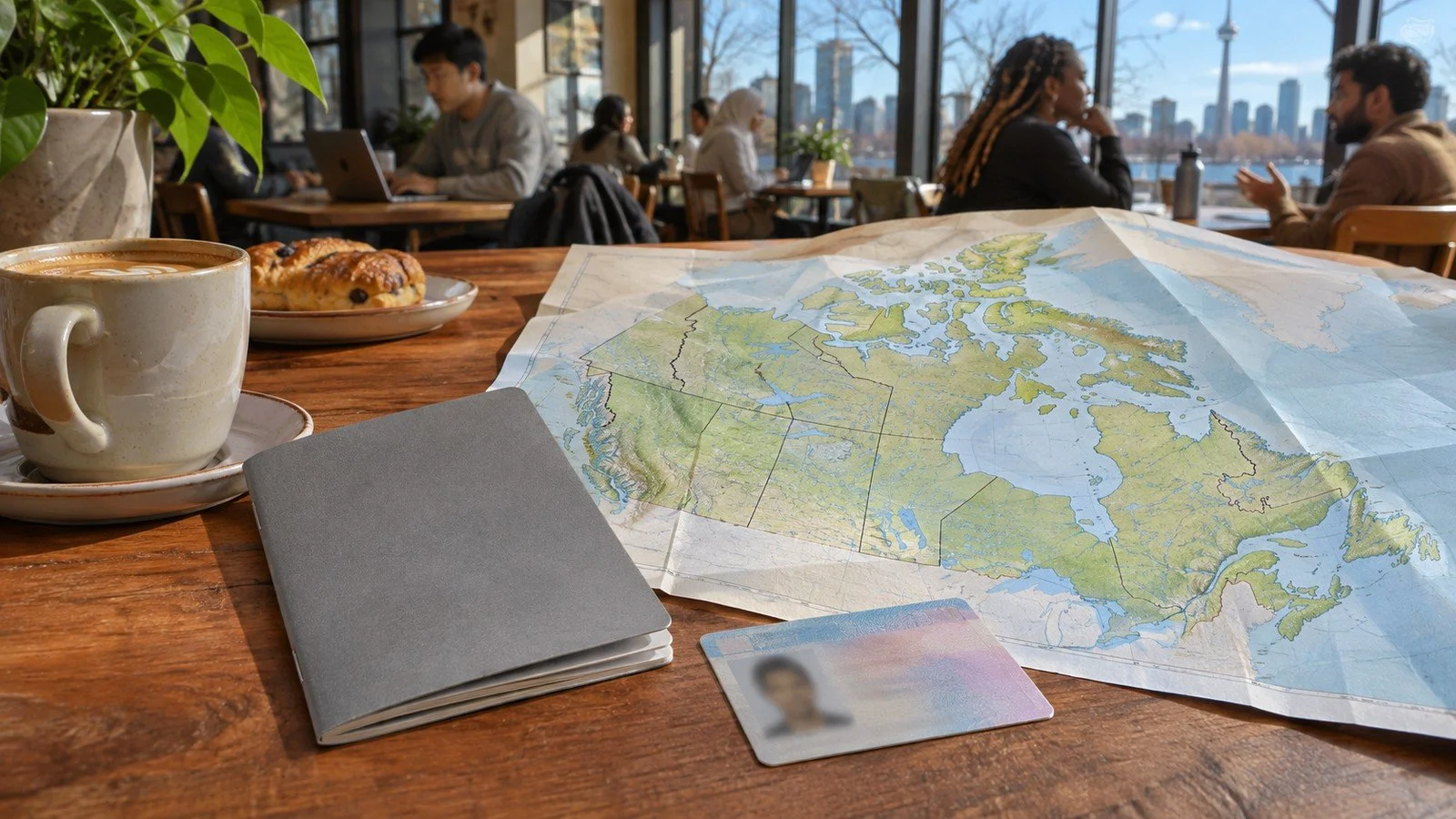
Treat your licence like your health card or SIN: start the process in your first weeks, not near the deadline.
Before you move: read your future province's page, get a driving record and, if needed, an IDP and an authentication letter. Renew your licence if it will expire soon.
When you arrive: you can usually drive on your home licence during your province's grace period. A rental company may ask for an IDP; check with the company.
Weeks 1 to 4: once you have proof of address, book your exchange or knowledge test. Bring original documents.
Before the deadline: finish the exchange or have your learner licence and road test booked. Driving after the deadline on a foreign licence can mean you are unlicensed and uninsured.
Insurance: ask your insurer how your foreign experience is counted, and keep proof of it.
Frequently asked questions
Can I drive in Canada with a foreign driver's licence?
Yes, for a limited period. Each province lets new residents drive on a valid licence from home for a set time, from as soon as you take up residence in New Brunswick to 180 days in Nova Scotia, according to the official pages we checked in November 2026. Visitors often follow different rules. See the section "Can I drive in Canada with a foreign licence, and for how long?"
How long can I drive in Ontario with a foreign licence?
According to the Government of Ontario, 60 days after you move to Ontario. After that, you need an Ontario licence. See the Ontario section.
Can I exchange my Mexican, Colombian or Brazilian licence in Canada without tests?
Not on the official lists we checked in November 2026: no Latin American country appeared on any province's exchange list. You can still get a licence by passing the knowledge and road tests, and many provinces credit proven experience. See "Licences from Latin America, Asia, Africa and the Middle East."
Which countries have a licence exchange agreement with Canada?
There is no national list: each province has its own. Most include Canadian provinces, U.S. states, many European countries, Australia, New Zealand, Japan, South Korea and Taiwan, and often Ukraine. Check your province's section in this guide and its official page.
Do I need an International Driving Permit in Canada?
It depends on the province and on your licence language. An IDP is a translation, not a licence, and it must come from your home country. Alberta strongly recommends one for visitors whose licence is not in English, and Saskatchewan accepts it as a translation document. See "Translations and the International Driving Permit."
Do I have to start as a learner if my country has no agreement?
Usually you take the knowledge test first, but many provinces credit your experience. Ontario credits up to one year with an authentication letter, B.C. exempts you from graduated licensing with two years of proven experience, and Alberta reviews your history under the GDL Exemption Program. See "What if my country has no exchange agreement?"
Can I keep my foreign licence after I exchange it?
In most provinces, no: you surrender it. New Brunswick says that, in rare cases, the foreign licence may be returned if you prove you are going back to your home country, while it is still held (Government of New Brunswick). Ask your province before you surrender it if you will need it abroad.
Can international students drive on their home licence?
Sometimes. ICBC exempts students with a valid student exemption from the 90-day rule, PEI allows full-time students with a valid licence (and an IDP if needed), and Nova Scotia asks students to exchange within 180 days. Check your province's section.
Does my driving experience abroad lower my car insurance?
It can. Insurers and public insurers set their own rules, and some ask for a driving record from your home country. ICBC, for example, describes how it credits driving experience for insurance on its moving from another country page. Ask your insurer and keep your records.
Can Global Opportunities help me get a driver's licence?
No. Driver licensing is handled by each province, and we do not offer licensing services. We help with immigration applications and planning your move; this guide is general information so you know what to expect.
Related guides
Newcomer guide: work permits, Toronto life and jobs in Canada
Your first winter in Canada (POR VERIFICAR: not live yet)
Avoiding immigration scams in Canada (POR VERIFICAR: not live yet)
How Global Opportunities can help
Choosing a province and a pathway depends on your education, work experience, languages and goals. We can help you understand your options.
Our regulated consultant: Lic. Mildrete Monserrath Gutierrez Martinez, Regulated Canadian Immigration Consultant (RCIC), CICC licence R514880. Verify her licence on the CICC Public Register: https://college-ic.ca/protecting-the-public/find-an-immigration-consultant. Global Opportunities does not offer services for Quebec's immigration programs. Global Opportunities is a private firm and is not part of the Government of Canada or any provincial government.
Recorded seminars and lives: watch our recorded seminars in English or the Spanish recordings, and visit our YouTube channel.
More articles in English: read our Moving to Canada articles on topics such as health care, cost of living, the ECA and professional licences, and building community in Canada.
Personalized consultation: for a review of your own case, contact us or write to info@globalopp.ca.
Prefer email? Tell us what you need help with (moving to Canada) and we will reply: email info@globalopp.ca.
Contact Global Opportunities →
Sources
Government of Ontario, Exchange an out-of-province driver's licence · Get a G driver's licence: new drivers
Government of Alberta, Exchange a licence from outside Alberta · Steps to getting a driver's licence
SGI Driver's Handbook, Saskatchewan's driver's licence program · Graduated driver licensing program · Moving to Saskatchewan
Manitoba Public Insurance, New to Manitoba · Countries eligible for driver's licence exchange · Driver's handbook, graduated licensing
Government of New Brunswick, Licences for new residents · Graduated licences
Government of Nova Scotia, Exchange your out-of-province driver's licence · Graduated Driver Licensing
Government of PEI, Driver License Reciprocity (October 2022) · Graduated Driver Licensing booklet
Government of Newfoundland and Labrador, Licence application process · Translation of foreign driver licences · Graduated Driver Licencing program
Government of the Northwest Territories, Information for foreign nationals · Transfer a licence to the NWT
Government of Nunavut, Apply for a driver's licence · Motor Vehicles offices
The information in this guide comes from the official sources linked in each section and listed above, as they read when we checked them in November 2026, and it may have changed since. It is general and for reference only. It is not legal, immigration or professional advice. Global Opportunities is not responsible for how anyone interprets this content, for decisions made based on it, or for changes made to the sources after it was written: what you read depends on when you read it. Lists of exchange countries, deadlines, licence classes and testing requirements change, and each provincial or territorial licensing office decides every application. Always confirm the current rules with the official office in your province or territory. Global Opportunities is a private firm, is not part of the Government of Canada or of any provincial government or licensing agency, and does not offer driver licensing services or jobs. For your own immigration case, book a consultation.
Last reviewed: November 2026